



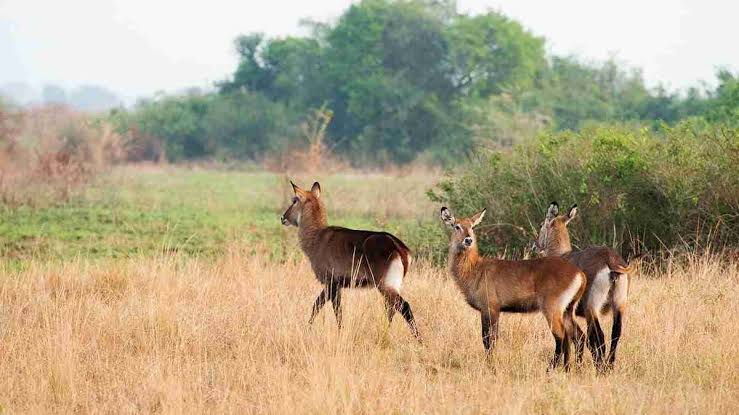
Best Camera Gear for Murchison Falls Safari
Murchison Falls rewards photographers who arrive prepared. In a single day you might frame a Rothschild’s giraffe against golden savannah on the Buligi tracks, a shoebill standing statue-still in the delta reeds, and the Nile exploding through a seven-metre gorge in a wall of spray. Each of those moments asks something different from your kit, and the gap between a snapshot and a keeper usually comes down to focal length, protection, and having enough storage to keep shooting.
This guide covers the camera gear that genuinely earns its place in your bag for a Murchison Falls safari — telephoto reach for wildlife and birds, weather protection for the boat cruise, stabilisation for game drives, and the batteries and backup you need when you are days from the nearest camera shop.
Camera Bodies: One Is Good, Two Is Better
Any modern mirrorless or DSLR body with fast autofocus and a decent burst rate will serve you well here. Animal-eye autofocus, now common on Sony, Canon and Nikon mirrorless systems, makes a real difference when a lion turns its head or a bee-eater launches from a branch.
If you can, travel with two bodies. Changing lenses on a bouncing game-drive vehicle or a Nile boat invites dust and spray onto your sensor — the one thing you cannot easily clean in the field. Keeping a long telephoto on one body and a wider zoom on the other means you are always ready, whether an elephant fills the frame ten metres away or a distant leopard demands every millimetre of reach.
Crop-sensor bodies deserve a mention too. Their 1.5x or 1.6x factor effectively extends your telephoto, turning a 400mm lens into roughly 600mm of reach — a genuine advantage for smaller birds and shy game.
Telephoto Lenses: Your Workhorse for Wildlife
A telephoto zoom is the backbone of any safari kit, and Murchison’s mix of open grassland and wide river channels makes reach the priority. A 200–600mm zoom is the sweet spot for most travellers — enough length for distant lions on the Pakuba track or a fish eagle across the water, with the flexibility to zoom back for a herd of buffalo at the shoreline. Internal-zoom designs are ideal because the lens does not extend, keeping dust out and balance steady while you track movement.
If weight matters more to you, a 100–400mm is a superb all-rounder: lighter, quicker to acquire subjects, and easier to hand-hold from a boat. Many photographers pair it with a 1.4x teleconverter to reach the 400–600mm range when needed. Whichever you choose, aim to keep your shutter speed at 1/1000s or faster for moving animals, and lean on your lens’s stabilisation for early-morning light.
Wide-Angle and Mid-Range for the Falls and Landscapes
The falls themselves are the one subject a telephoto cannot capture. From the top-of-the-falls hike, or from the boat looking up at the base, a wide-angle zoom (something in the 16–35mm range) conveys the scale of the Nile forcing itself through the gorge. A mid-range 24–70mm or 24–105mm covers wider wildlife scenes, delta panoramas, lodge life and the golden-hour savannah when a long lens is simply too tight.
Protecting Gear from Nile Spray and Dust
The launch cruise from Paraa to the base of the falls runs roughly two to three hours, and the final approach is where the drama — and the danger to your equipment — peaks. Near the cascade the mist is less a gentle haze and more like standing in steady rain. Come ready.
Pack a proper rain cover or waterproof sleeve for each lens, and carry five or more microfibre cloths, because you will constantly wipe the front element between frames. A UV filter gives the glass a sacrificial layer that is far cheaper to replace than a front element, and a deep lens hood helps keep drifting spray off it. Stow gear in a dry bag when you are not actively shooting, and resist the temptation to swap lenses anywhere near the falls — trapped moisture inside a body is a trip-ending problem.
Dust is the other constant, kicked up on the murram tracks during game drives. Keep bodies bagged between sightings and bring a blower and cleaning kit for the daily wipe-down back at your lodge.
Stabilisation: Bean Bags Beat Tripods Here
A tripod is largely useless inside a safari vehicle. The tool that actually works is a bean bag draped over the window frame or roof hatch, giving you a rock-steady rest for a heavy telephoto. Many operators can provide one, but a lightweight refillable model in your luggage guarantees you have it. A monopod helps on the top-of-the-falls hike, and a compact travel tripod earns its keep only if you plan long exposures to smooth the water.
Power, Storage and Backup
You will shoot far more than you expect, and reliable power is not guaranteed at remote camps. Carry three or more fully charged batteries per body — cold, misty mornings drain them faster — plus a multi-battery charger and, ideally, a power bank or vehicle inverter for topping up between drives.
On memory, redundancy is everything. Bring several high-capacity, fast cards (128GB or larger, with quick write speeds for burst shooting) rather than one huge card that could fail and take the whole trip with it. Each evening, offload the day’s images to a laptop and a portable SSD, or to a battery-powered card backup device. Two copies, ideally kept in separate bags, means a lost or corrupted card never costs you the shoot.
Frequently Asked Questions
- Do I really need a 600mm lens for Murchison Falls?
-
Not strictly, but you will value the reach. Much of Murchison’s wildlife — and certainly its birds — is viewed across open ground or water. A 200–600mm zoom, or a 100–400mm with a teleconverter, covers the vast majority of situations comfortably.
- Will my phone be enough for the boat cruise?
-
A phone captures the falls and nearby hippos surprisingly well, and the ultra-wide lens suits the cascade. For crocodiles, distant elephants and birds along the bank, though, a dedicated telephoto is the difference between a record shot and a frame worth printing.
- How do I stop spray ruining my camera at the falls?
-
Use a rain cover, keep a UV filter and hood fitted, wipe the front element with microfibre cloths between shots, and store everything in a dry bag when you are not shooting. Never change lenses near the mist.
- When is the light best for photography?
-
Aim for the golden hours — roughly 6:00–7:30am and 5:30–6:30pm — which also coincide with peak animal activity. Overcast skies are excellent for even light, so do not pack the camera away when clouds roll in.
Plan Your Safari
The right kit is only half the picture — being in the right place at the right time is the rest. Our guides know exactly where the lions rest on the Pakuba track, when the shoebill is most likely showing in the delta, and how to position the boat for that spray-and-rainbow frame at the base of the falls. Browse our Murchison Falls safaris or talk to us about a tailored photography safari, and we will help you come home with images worthy of the Pearl of Africa.