







- Route: Kampala/Entebbe → Ziwa Rhino Sanctuary → Murchison Falls National Park
- Main Experience: Guided rhino tracking
- Additional Highlight: Top of Murchison Falls where timing permits
- Accommodation: Selected budget, midrange, luxury or high-end lodge
- Meal Plan: According to confirmed safari package
Your 3-day Murchison Falls safari begins early in Kampala or Entebbe.
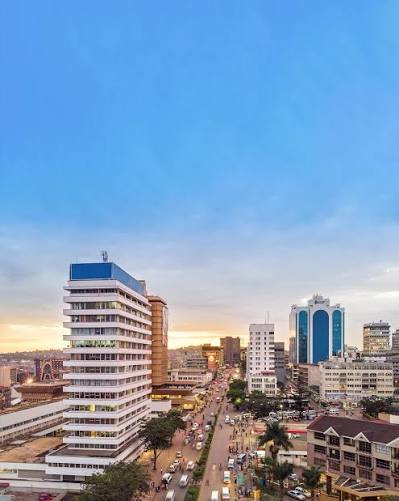
After meeting your professional Uganda safari guide, you leave the busy urban environment and begin travelling north toward Uganda's wildlife country. The transformation is gradual. Traffic and dense development begin to thin. Roadside trading centres give way to agricultural landscapes, villages and increasingly open countryside. This first road journey is part of the experience rather than simply dead time between Kampala and the national park.
It provides a glimpse of everyday life beyond the capital and introduces you to landscapes that many travellers arriving and departing through Entebbe would otherwise never see. Your first major wildlife destination is Ziwa Rhino Sanctuary. And this is where the safari changes completely. Instead of remaining inside the vehicle, you prepare to meet one of Africa's largest terrestrial mammals on foot.
Rhino Tracking at Ziwa Rhino Sanctuary
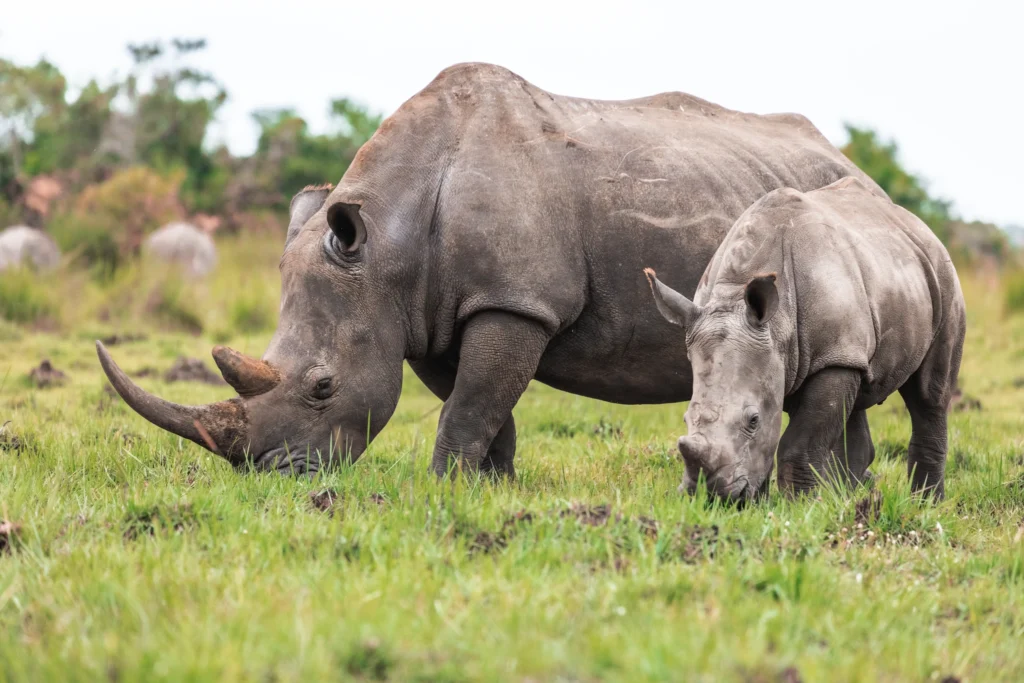
Your first major wildlife experience of the safari is guided rhino tracking at Ziwa Rhino Sanctuary. For many travellers, this is their first close encounter with a rhinoceros in a natural environment, and experiencing it on foot makes the activity very different from viewing large mammals from inside a safari vehicle. After arriving at the sanctuary, your guide helps coordinate the tracking arrangements before you meet the specialist ranger who will lead the experience. The ranger briefing is an important part of the activity because rhinos are extremely large wild animals and every encounter must be approached according to the instructions of the tracking team.
The exact tracking experience varies from one visit to another. Rhinos are not positioned beside the visitor centre waiting for tourists. Their location changes as they move between feeding areas, resting places, shade and water. This means that one visit may involve a relatively short walk, while another can require more time before the rhinos are located. Weather, vegetation, animal movements and the location of the rhinos all influence the experience. This unpredictability is one of the reasons we consider Ziwa much more than a roadside stop between Kampala and Murchison Falls. It is a genuine wildlife activity and deserves enough time in the itinerary to be enjoyed without rushing.
How Does Rhino Tracking at Ziwa Work?
Rhino tracking normally begins with a briefing from the sanctuary's ranger team. The ranger explains how the activity will be conducted, how visitors should behave when approaching the animals and what instructions should be followed during the encounter. Depending on the location of the rhinos, you may first travel a short distance before beginning the walking portion of the activity. Once on foot, the ranger leads the group through the sanctuary while remaining aware of the rhinos' movements and behaviour. The objective is not to chase the animals or force an encounter. Instead, the tracking team works to position visitors where the rhinos can be observed responsibly while maintaining appropriate safety procedures.
The walk also provides an opportunity to slow down and notice details that are easily missed from a moving vehicle. Your ranger may point out tracks, dung, feeding signs, vegetation and other wildlife encountered along the way. Although rhinos are the main attraction, the wider sanctuary environment forms an important part of the experience.
What Does It Feel Like to See a Rhino on Foot?
Photographs rarely communicate the true size of a rhinoceros. From a distance, the animal can initially appear calm and almost motionless. As you move into an appropriate viewing position under the ranger's direction, its physical scale becomes much more obvious. The shoulders are enormous. The head is heavy and low. The feet look surprisingly compact relative to the animal's body, and the horn immediately draws attention.
Yet some of the most interesting moments are often quieter ones. You may watch a rhino feeding methodically on grass, resting in the shade, interacting with another rhino or simply standing alert to its surroundings.
Being on foot removes the physical barrier of the safari vehicle and creates a very different awareness of the landscape. You become more conscious of distance, wind, sound and the instructions of your ranger. For many guests, that combination makes rhino tracking one of the most memorable experiences of their 3-day Murchison Falls safari.
How Long Does Rhino Tracking Take?
The exact duration varies because the rhinos move freely within the managed sanctuary environment and their location changes throughout the day. Travellers should therefore avoid planning the day around an unrealistically precise tracking duration.
Your safari guide considers the Ziwa experience together with the remaining drive to Murchison Falls, lunch, road conditions, park entry procedures and the planned visit to the Top of the Falls. This is one of the reasons an experienced driver-guide is valuable on a short safari. Day 1 contains several components, and good time management helps keep the experience enjoyable rather than rushed.
How Difficult Is Rhino Tracking at Ziwa?
For travellers with ordinary mobility and a reasonable level of fitness, rhino tracking is generally manageable. However, this is still an outdoor walking activity rather than a paved attraction. The ground can be uneven, vegetation conditions vary and temperatures can become warm. The walking distance also depends partly on where the rhinos are located.
If you have limited mobility, a previous injury or another condition that may affect walking, tell us before the safari. We can discuss the activity realistically and seek current guidance regarding the most appropriate arrangement. Travellers should never feel pressure to conceal mobility concerns simply because an activity appears on a standard itinerary. It is better for us to understand your needs before departure so the safari can be planned properly.
What Should You Wear for Rhino Tracking?
Comfortable outdoor clothing is normally more useful than specialized safari fashion. We recommend closed walking shoes with reasonable grip because the activity takes place on natural ground. Lightweight long trousers are useful for protecting your legs from vegetation, dust and insects.
A breathable shirt is normally appropriate in warm conditions, while a light rain layer can be useful during wetter periods. Neutral colours such as khaki, brown, olive, grey and other subdued tones are practical for wildlife activities. There is usually no need to purchase an entirely new safari wardrobe. A hat, sunscreen and drinking water are also useful, particularly on warmer days.
What Should You Carry During the Rhino Walk?
Carry only what you realistically need. A camera or phone, a small amount of drinking water and basic personal items are usually sufficient for most visitors. Large bags can become inconvenient while walking and may make photography more difficult.
If you are travelling with substantial camera equipment, consider carrying one body and the most useful lens rather than bringing your entire photography bag into the field. Your main luggage remains with the safari vehicle according to the day's arrangements.
Photography During Rhino Tracking
Rhino tracking can provide excellent photographic opportunities, but photographers should remember that this is a guided wildlife encounter rather than a controlled photo session. The ranger determines how the group approaches and where visitors can safely position themselves.
Do not move away from the group simply because another angle looks better. A moderate telephoto zoom can be particularly useful because it gives you flexibility if the viewing distance changes. A wider focal length can also be valuable when you want to include the rhino within its surrounding habitat rather than filling the entire frame with the animal. Try to photograph more than the obvious portrait.
Images showing a rhino feeding within grassland, interacting with another animal or framed by vegetation often tell a stronger story than a tightly cropped headshot. Visitors using smartphones can also obtain excellent photographs when viewing conditions are suitable, but digital zoom should be used carefully because image quality can deteriorate quickly.
Rhino Tracking Safety
The most important rule during rhino tracking is simple: follow the ranger's instructions immediately and consistently. Rhinos are powerful wild animals. Their apparently relaxed behaviour should never be interpreted as permission to approach independently. Your ranger understands the activity procedures and monitors the animals' behaviour throughout the encounter.
Visitors should remain with the group, avoid sudden unnecessary movement, keep noise under control and never attempt to move closer for a photograph without instruction. Parents travelling with children should tell us the children's ages before booking so that current activity requirements can be checked during the planning process.
Why Ziwa Is Important to Uganda's Rhino Conservation Story
The rhino experience at Ziwa is not only about adding another large mammal to a safari checklist. It is connected to Uganda's wider efforts to restore rhinoceroses after they disappeared from the country's wild landscapes during the twentieth century. The sanctuary became central to Uganda's modern rhino recovery programme by providing a protected environment in which southern white rhinos could breed under intensive conservation management.
Over time, successful breeding increased the country's rhino population and helped create the foundation for a broader long-term restoration programme. Uganda's rhino conservation story has continued to evolve, including efforts to establish rhinos beyond the original sanctuary setting. For this reason, older descriptions that simply call Ziwa the only place where rhinos exist in Uganda increasingly fail to explain the full conservation picture.
For visitors, this context adds meaning to the tracking experience. The rhinos you observe are part of a much larger conservation story involving habitat protection, breeding, veterinary work, ranger protection, monitoring and the long-term objective of restoring rhinoceroses to suitable protected landscapes. A good ranger briefing can therefore transform the activity from a wildlife sighting into an introduction to one of Uganda's most important species-restoration programmes.
Our Safari Planning Tip
Do not treat Ziwa as an optional photo stop if this is your first Uganda wildlife safari. The walking experience is completely different from the vehicle-based game viewing you will do in Murchison Falls National Park.
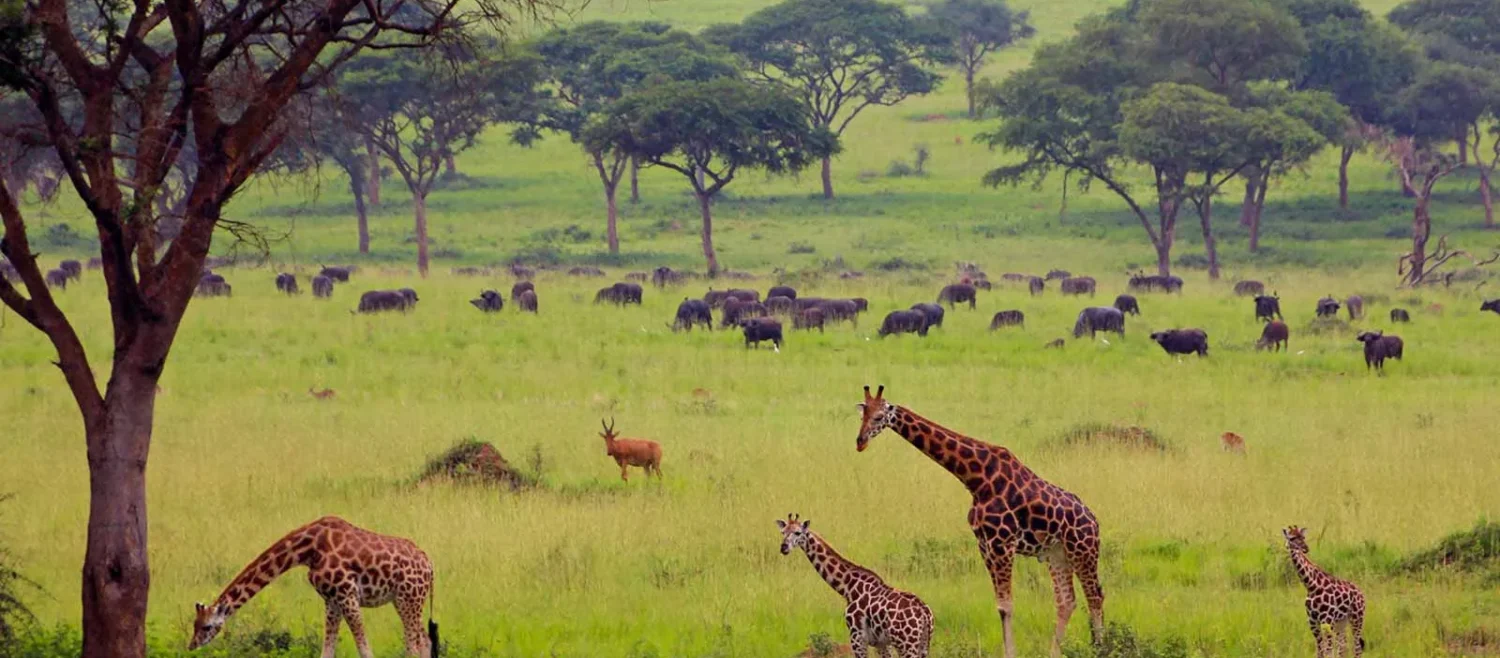
It also gives the three-day itinerary an excellent progression: wildlife on foot on Day 1, wildlife from a safari vehicle on Day 2 and wildlife from a boat on the Victoria Nile later that same day.
Continuing from Ziwa to Murchison Falls National Park
After rhino tracking, you return to the safari vehicle and continue north toward Murchison Falls National Park. This section of the journey provides time to relax after the walk, review photographs and watch the changing landscape through the windows of the vehicle.
Depending on your exact departure point, tracking duration, road conditions and final itinerary, lunch is arranged at an appropriate point along the route. We deliberately avoid presenting safari road journeys as if every vehicle will reach every location at exactly the same minute. Traffic leaving Kampala, road works, weather, rhino movements, comfort stops and individual traveller needs can all affect timing.
The important objective is to manage the day efficiently while preserving the experiences that make the itinerary worthwhile.
Lunch on Day 1
Lunch arrangements depend on the confirmed safari package and operational schedule. On some departures, lunch may be taken before continuing toward the national park. Other arrangements may use a suitable restaurant or lodge according to the timing of the day.
If you have vegetarian, vegan, gluten-free or other dietary requirements, provide this information before the safari rather than waiting until Day 1. Uganda's safari lodges and established restaurants can cater for many dietary needs when given advance notice, but prior communication makes the process significantly easier.
What Is the Road Journey Like?
The road transfer is an important practical consideration when booking a short Murchison Falls safari. This is not a fly-in itinerary unless specifically arranged.You should therefore expect to spend several hours travelling by road during Day 1 and again on Day 3.
Road conditions can change over time and may vary between paved highways, access roads and park tracks. Weather can also influence the final sections of the journey. Rather than focusing exclusively on a theoretical drive time, we recommend thinking of Day 1 as a travelling safari day containing several experiences. You leave Kampala or Entebbe, watch the countryside change, track rhinos, stop for lunch, continue north, enter the Murchison landscape and, where timing allows, finish the afternoon beside one of the Nile's most dramatic natural features. Seen in that context, the journey itself becomes part of the safari.
Entering the Murchison Falls Landscape
As you approach the conservation area, the atmosphere of the journey changes again. Human settlement gradually gives way to increasingly natural landscapes, and your attention shifts from the road journey toward the wildlife and scenery of the park.
Murchison Falls is Uganda's largest national park and forms part of a much wider conservation landscape associated with the Nile and surrounding protected areas.The park's size is one reason travellers should not imagine that every attraction sits close together.
Game-drive areas, lodge locations, river crossings, boat departure points, forest zones and the falls themselves occupy different parts of a large ecosystem. Good itinerary planning therefore depends on more than listing activities. Lodge location, park entry point, boat timing and the next morning's game-drive plan all influence how efficiently the safari operates.
Visiting the Top of Murchison Falls
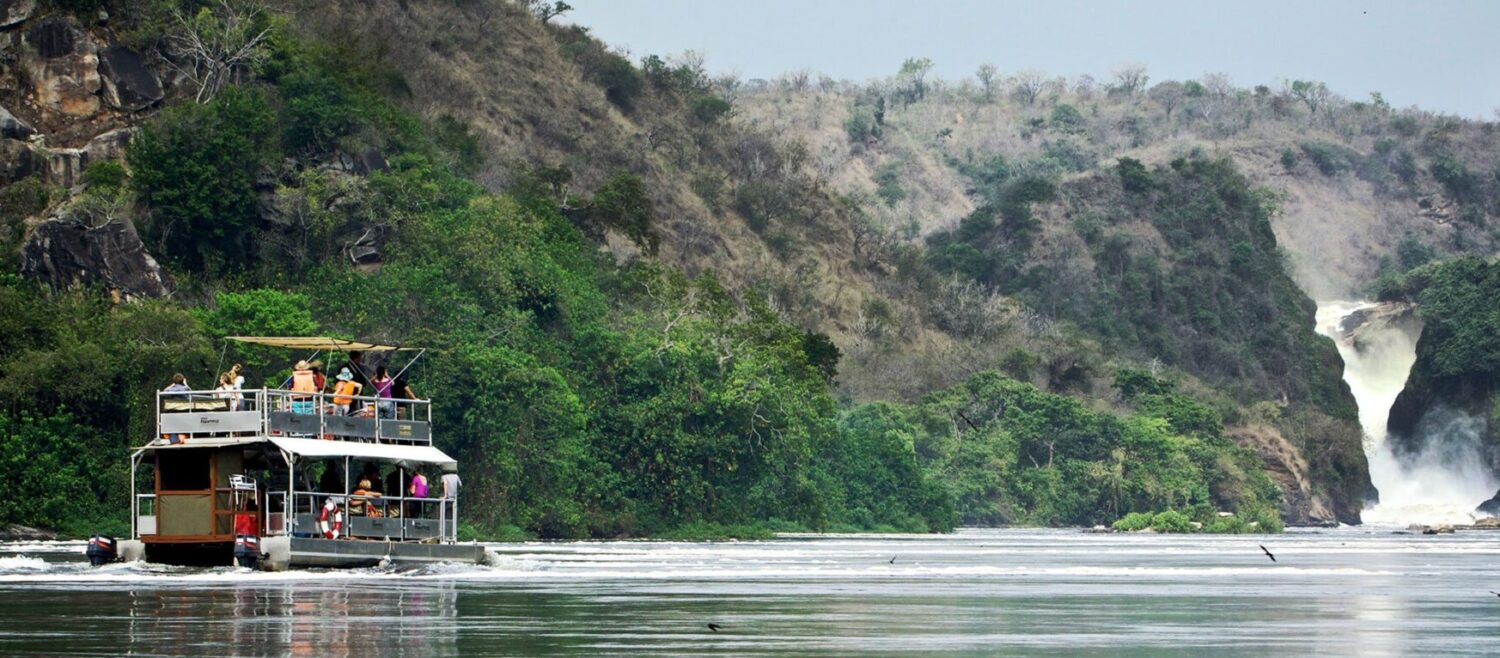
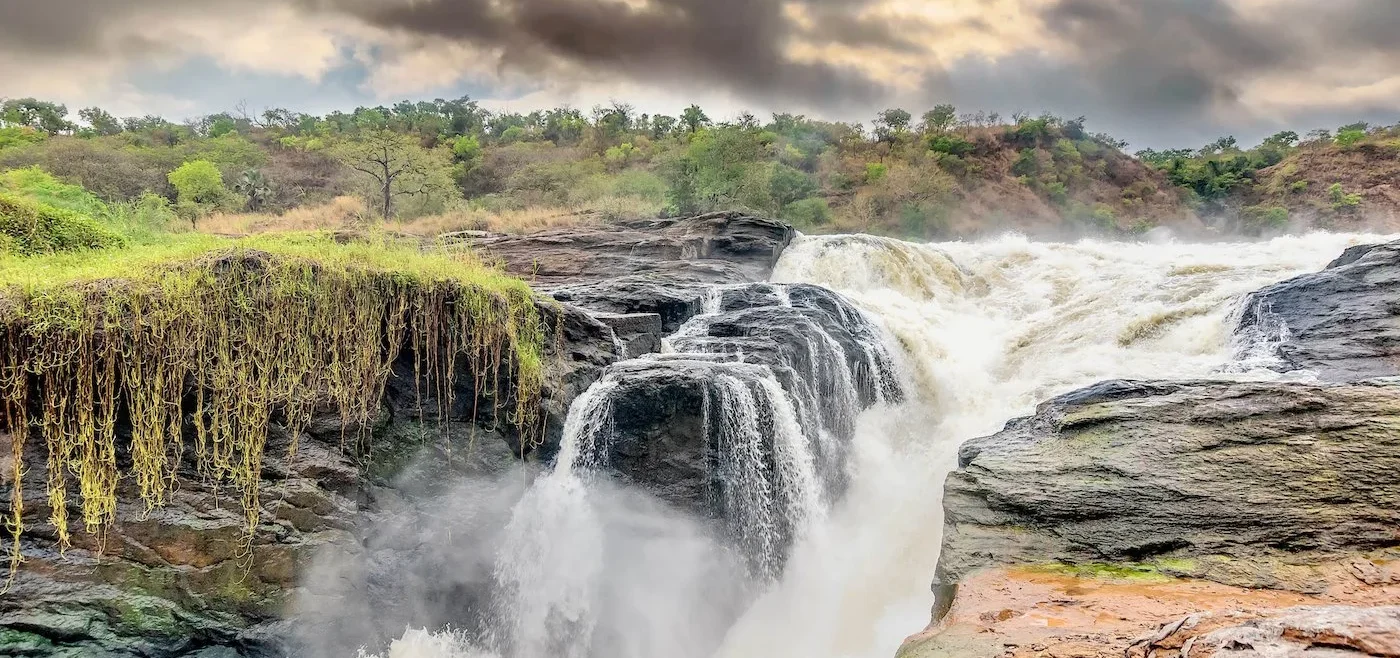
Where the day's timing and confirmed itinerary allow, one of the best ways to finish Day 1 is with a visit to the Top of Murchison Falls. This is not simply another viewpoint. It is where the scale and force of the Nile become physically apparent.
Upstream, the river is broad. As it reaches the rocky gorge, an enormous volume of water is compressed into a dramatically narrower passage before surging through the rocks and dropping downstream. The experience is intensely sensory.
You hear the falls before you fully appreciate them. The sound grows stronger as you approach the viewpoints. Spray can hang in the air. The water below appears chaotic, powerful and almost constantly changing. Standing above the falls gives you a very different appreciation of Murchison than seeing the waterfall only from the river.
Why Visit the Top of the Falls?
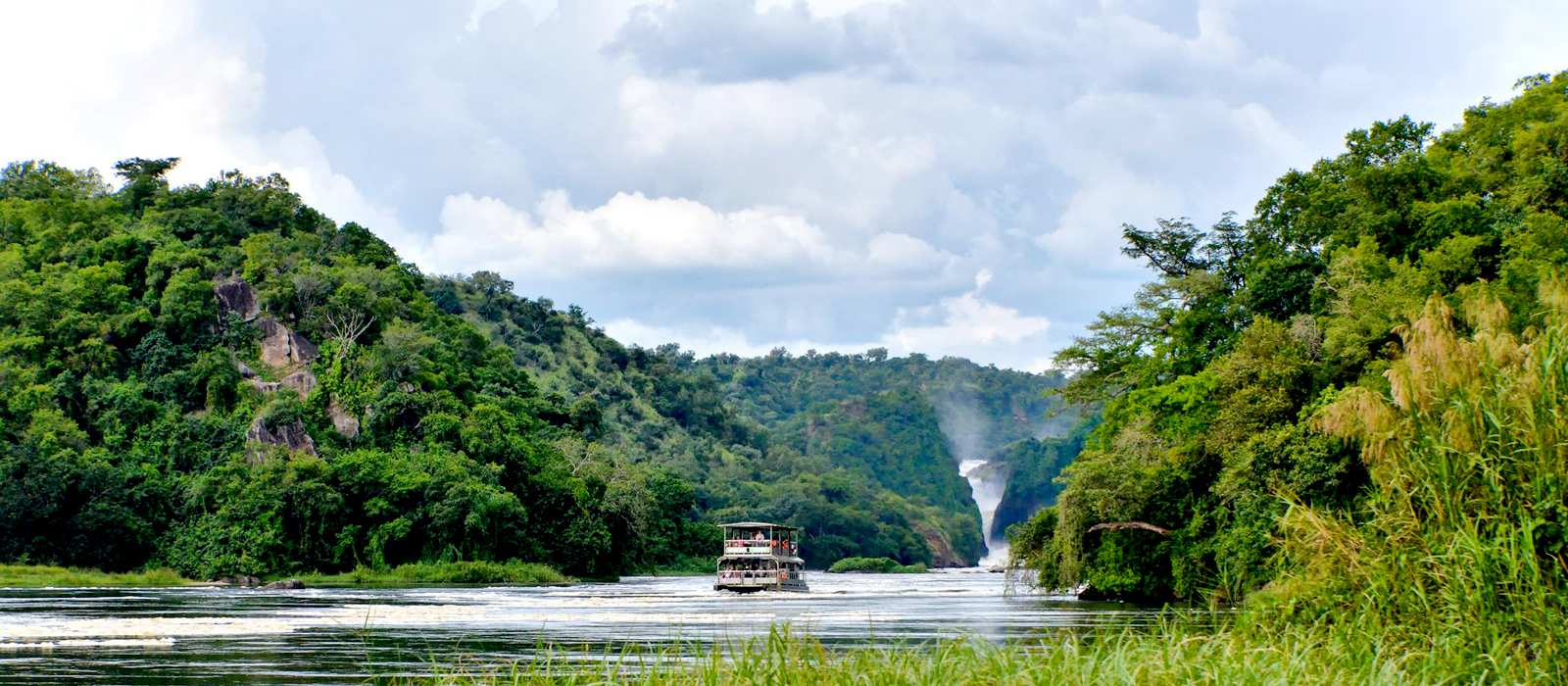
The Top of the Falls helps explain the geography behind the national park's name. During the following day's boat safari, you will approach the falls from downstream. That view emphasizes the height of the surrounding escarpment, the river corridor and the waterfall within the wider landscape.
At the top, the experience is about power and proximity. You are close enough to appreciate the speed, noise and compression of the Nile as it enters the gorge. For travellers interested in landscape photography, geology or simply dramatic natural scenery, it is one of the essential experiences of the park.
Top of Murchison Falls vs Bottom of Murchison Falls
Travellers sometimes ask whether they need to visit both the top and bottom of Murchison Falls. Our answer for a first visit is generally yes, because the two experiences are fundamentally different.
| Experience | What Makes It Different? |
|---|---|
| Top of Murchison Falls | Close-range appreciation of the Nile squeezing through the rocky gorge, with powerful sound, spray and dramatic viewpoints. |
| Bottom of Murchison Falls | Reached by boat from downstream, combining river wildlife viewing with a scenic approach toward the waterfall. |
If you experience only the top, you miss the wildlife-rich journey along the Nile. If you experience only the boat approach, you do not fully appreciate what happens to the river as it enters the gorge. Together, the two experiences tell a much more complete story.
Photography at the Top of Murchison Falls
The Top of the Falls presents very different photographic challenges from wildlife photography. The scene contains bright water, dark rocks, mist, fast movement and often strong contrast. A wide-angle lens can be useful for capturing the broader landscape, while a standard zoom allows you to isolate sections of the gorge and rushing water.
Protect your camera from spray when standing near exposed viewpoints. If you are using a smartphone, clean the lens regularly because fine moisture can quickly soften photographs without being obvious on the screen.
Rather than taking only one photograph from the first viewpoint, look for images that show the relationship between the Nile, rock walls and surrounding landscape. People can also provide useful scale when photographed safely from designated areas.
Photography Tip
Do not use every minute at the falls looking through a camera. Take the photographs you want, then put the camera down for a few minutes and simply watch the Nile. The sound and physical power of the water are a major part of the experience and cannot be captured completely in a still image.
Arriving at Your Murchison Falls Safari Lodge
After the day's activities, continue to your confirmed safari lodge for check-in. Your exact transfer depends heavily on where you are staying. Murchison Falls has accommodation in different locations inside and outside the wider protected landscape, and lodge location can influence game-drive timing, river access and the amount of driving required the following morning.
This is why we do not select accommodation based only on room photographs or star-style labels. A lodge can look attractive online but be less convenient for a particular itinerary. When planning a short safari, location matters.
Budget, Midrange or Luxury Accommodation?
The core wildlife experiences of the safari do not require luxury accommodation. A traveller staying at a well-chosen budget or midrange property can still enjoy the same national park, wildlife, rhino tracking and Nile cruise.
The main differences between accommodation categories are generally found in room quality, location, service level, privacy, facilities, dining and overall atmosphere.
Budget accommodation is appropriate for travellers who want to prioritize the safari experiences and keep overall costs lower.
Midrange accommodation tends to offer the best balance for many travellers, combining comfortable rooms, good meals and convenient safari access without the price of a premium lodge.
Luxury and high-end accommodation can add more privacy, stronger design, enhanced service, premium locations and a more immersive lodge experience.
Later in this page, we compare accommodation choices in greater detail and explain how lodge location affects your three-day itinerary.
Evening at the Lodge
After check-in, the evening is usually intentionally relaxed. Day 1 has already included an early departure, a substantial road journey, rhino tracking and potentially the Top of the Falls. This is not the evening to overload the schedule unnecessarily.
Depending on your lodge, you may have time to shower, enjoy a drink, watch the changing evening light or simply sit outside and listen to the sounds of the surrounding landscape. Dinner is served according to the lodge's arrangements. Your guide will normally discuss the next morning's departure time with you before the evening ends. That departure is likely to be early. There is a good reason for it.
Our Day 1 Operator Insight
The biggest mistake on a short Murchison safari is trying to turn Day 1 into a race. Travelers sometimes assume that because the itinerary contains only three days, every possible activity must be squeezed into every available hour. We prefer to protect the quality of the core experiences. Rhino tracking deserves enough time to be enjoyed. The Top of the Falls deserves more than a five-minute photo stop. And guests should arrive at their lodge with enough time to prepare for the following morning. If a late pickup, unusually long tracking experience or road delay makes the schedule unrealistic, an experienced guide should manage the itinerary sensibly rather than compromising safety or rushing every stop.


