


Murchison falls national park game drive
There is a particular hour at Murchison Falls when the northern grassland turns from grey to gold, the air is still cool, and a lion is more likely to be walking a track than sleeping under a thorn tree. Get onto the plains at that moment and the game drive becomes the reason people fall in love with Uganda’s largest national park.
This guide covers game drives on the northern bank as we run them: the Buligi tracks, the Victoria and Albert routes, when to go out, what you can realistically expect to see, the ranger and permit rules, and the honest trade-offs between self-driving and taking a guide.
Why the northern bank
Murchison is split by the Victoria Nile into a northern and southern sector, and almost all game viewing happens in the north. The open savannah, Borassus palm stands and riverine woodland here hold the park’s big concentrations of grazers and predators, while the wooded southern bank is quieter and better suited to chimpanzee tracking in Budongo and Rabongo.
To reach the tracks you cross the Victoria Nile on the Paraa ferry. It runs roughly on the hour between about 07:00 and 19:00 and is free for park visitors, but in peak season queues form early — a reason many guests stay at a lodge already on the northern bank, near the Pakuba airstrip, to be first onto the plains at dawn.
The Buligi circuit
The Buligi tracks are the heart of a Murchison game drive and where most drivers head first. This network of roughly 120 to 170 kilometres of track begins about seven kilometres north of Paraa and fans out through the triangle of land between the Victoria and Albert Niles toward the delta where the two rivers meet.
What makes Buligi so productive is the sequence of habitats packed into a single loop — open grassland, whistling-thorn bushland, and belts of woodland along the water, each holding a different mix of animals. Sparse tree cover keeps visibility high, so a slow three-to-four-hour drive typically turns up Uganda kob, Jackson’s hartebeest, Defassa waterbuck, oribi, warthog and buffalo without much effort.
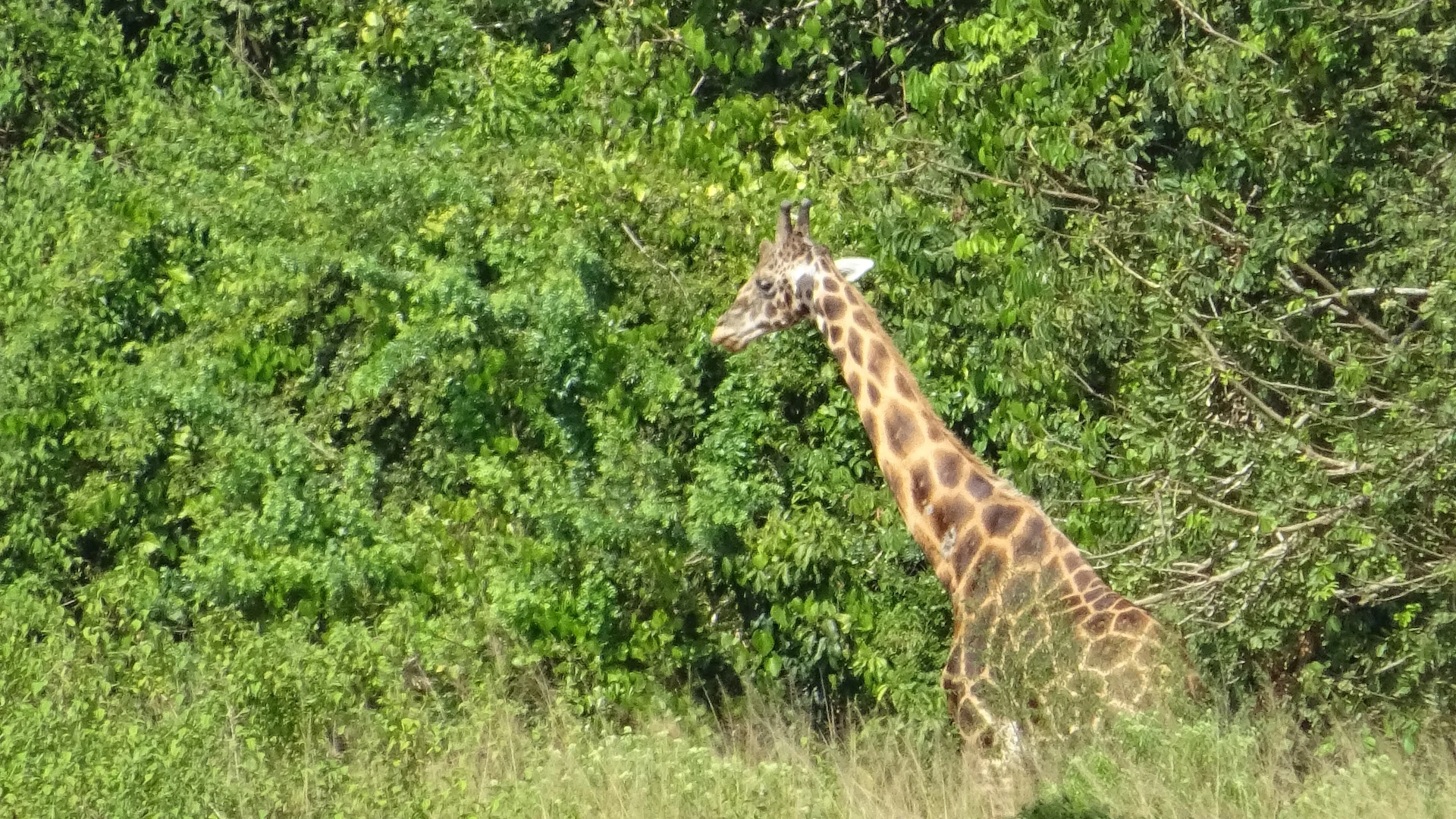
This is also where you look for the park’s headline species. Murchison protects one of the world’s most important populations of Rothschild’s giraffe, common through the central Buligi grassland, and lions are frequent along the mid-Buligi stretch near the Queens and Albert junctions where they hunt kob. Elephants gather toward the delta margins, and patient drivers occasionally find leopard along the drainage lines.
The Victoria and Albert tracks
The Victoria track is a shorter route, about 17 kilometres, running between the Queens track and Buligi and leading down toward the delta. Because it forms a loop and connects with the other tracks, it works well as a round trip and pairs naturally with the delta edge, where water birds — great egret, African darter, giant kingfisher, squacco heron and the sought-after shoebill in the papyrus — add to the mammal sightings.
The Albert track runs west, parallel to the Lake Albert shoreline, and sees far less traffic. It is a quieter, more scenic drive through isolated grazing zones, good for hartebeest, warthog and morning birdlife, and it can be tacked onto a Buligi loop to extend a half-day into a full-day itinerary. Serious drivers often chain Buligi, Albert and Pakuba tracks together for the widest spread of country in one outing.
Timing and seasons
Time of day matters more than anything else. Aim to be on the tracks by 06:30, when predators are still active and the light is soft; a late-afternoon drive from about 16:30 is the second-best window. The heat of midday, roughly 11:00 to 15:00, is slow going as animals seek shade — a good time to break for the boat cruise or lunch.
Seasonally, the dry months of June to September and December to February are strongest. Thinner grass and shrinking waterholes concentrate wildlife near the river and roads, and the tracks stay firm. In the wet seasons the grass is high and a four-wheel-drive becomes essential, as the black-cotton soils turn greasy quickly.
Rangers, permits and night drives
Park entry for foreign non-residents is about US$45 per person per 24-hour period, separate from the drive itself. If you drive your own vehicle without a guide, UWA charges a self-drive fee of around US$10 per vehicle for the day. Hiring a UWA ranger guide costs roughly US$25 per guide per day, and they are worth it — rangers know where the lions denned last night and read the grass in ways a first-time visitor cannot.
A ranger is not compulsory for daytime drives, but it is mandatory for night game drives, which are restricted to guests sleeping inside the park. These run from about 18:30 for two to three hours with a spotlight and turn up genet, civet, bush baby, nightjar and the occasional leopard or hyena — a genuinely different park after dark. Expect around US$30 to US$40 per person for the night outing.
Self-drive versus guided
Self-driving is cheaper and gives you complete freedom over pace and route, which appeals to confident, experienced travellers with a proper 4×4 and a good map. The catch is that the track network is unsigned in places, and without a trained eye you will drive past far more than you see.
A guided drive — either a private guide with your operator or a UWA ranger riding along — dramatically improves your sightings and your understanding of what you are looking at, and it removes the stress of navigation and self-recovery if you get stuck. For most first-time visitors, a guide is the better value even though it costs a little more.
Photography on the plains
The savannah rewards a long lens — 200mm and up — for giraffe against acacia, lion prides in dust-filtered light and elephants crossing open ground. Shoot early and late when the low sun models the grass; harsh midday light flattens everything. Unlike a moving boat, a vehicle lets you reposition for the sun and hold a shooting angle, so a beanbag on the window sill and a little patience beat any amount of zoom.
Frequently Asked Questions
- Which track is best for a first game drive?
-
Start with the Buligi circuit — it holds the highest density of wildlife and reliably shows giraffe, kob, buffalo and, with luck, lion. Add the Victoria or Albert tracks if you have a full morning to spare.
- Do I need a ranger guide?
-
Not for daytime drives, though hiring one at about US$25 sharply improves your sightings. A UWA ranger is mandatory for night game drives, which are open only to guests staying inside the park.
- How much does a game drive cost?
-
Budget around US$45 per person daily park entry, plus about US$10 per vehicle to self-drive or roughly US$25 for a ranger guide. Night drives run US$30 to US$40 per person.
- What time should I set out?
-
Be on the tracks by 06:30 for the best predator activity and light. A second drive from about 16:30 also works well; avoid the slow midday hours.
Plan Your Safari
Our Murchison trips are built around early Buligi drives with experienced guides who know the northern tracks by heart. Browse our safari packages, compare the drive with the water on our boat cruise versus game drive guide, or sort your wheels with our notes on 4×4 car hire for Murchison Falls.