



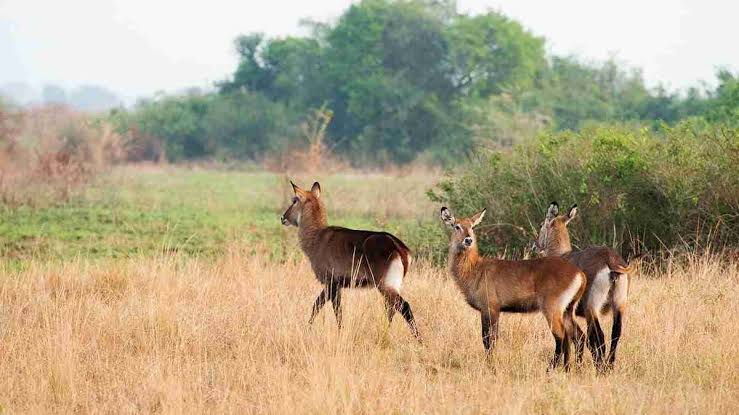
Arusha to Murchison Falls National Park
Arusha is the beating heart of Tanzania’s northern safari circuit, the launch point for the Serengeti and Ngorongoro Crater. Murchison Falls sits some 1,100km away in north-western Uganda, where the Nile is squeezed through a seven-metre gap in the rock. Joining the two into one trip is one of East Africa’s great combinations — but the logistics reward a little planning.
There is no single road that runs neatly between them, and the border geography of Tanzania, Kenya and Uganda shapes every option. This guide sets out the realistic ways to get from Arusha to Murchison — the quick fly-in, the long overland haul, and the multi-week combo itineraries that stitch northern Tanzania to Uganda’s parks.
The Fast Way: Fly Arusha to Entebbe
For most travellers, flying is the sensible choice. Kilimanjaro International Airport (JRO), roughly 50km from Arusha between the town and Moshi, is the regional gateway. Uganda Airlines operates a direct hop from Kilimanjaro to Entebbe (EBB) in about one hour and fifteen minutes, though frequency is limited — often only a couple of days each week — so check the timetable early and build your dates around it.
If the direct flight does not fit, RwandAir connects through Kigali and Kenya Airways through Nairobi, adding a layover but running far more often. Total journey time on a connection is usually four to six hours. From Entebbe you then reach the park either by a scenic five-to-six-hour drive via Masindi, or by charter flight from Entebbe or Kajjansi to Pakuba Airfield, about 19km from north Paraa, in roughly an hour.
Flying spares you two long days on the road and two border crossings, which is why nearly every operator recommends it for anything shorter than a three-week trip.
The Overland Haul via Kenya
Driving the whole way is a serious undertaking — around 1,100–1,150km and 17 to 18 hours of actual driving, realistically spread over two or three days. The classic route heads north from Arusha to the Namanga border, crosses into Kenya, and continues to Nairobi (a stretch that can be slow, though the tarmac has improved greatly since the old gravel days).
From Nairobi you drive west across the Rift Valley to the Uganda frontier at Malaba or Busia, then on to Kampala. Only there do you turn north for Murchison — a further 305km or so via Masindi and Kichumbanyobo Gate. It is a demanding itinerary, but it does let you break the journey with stops in Nairobi or at Lake Nakuru.
The Direct Tanzania–Uganda Border
The alternative overland route avoids Kenya altogether by using the Mutukula border between Tanzania and Uganda. This runs west from Arusha through Singida towards Lake Victoria, up to Mutukula, then north through Masaka to Kampala. It is arguably more scenic and keeps you to two countries rather than three, but sections are remote and distances are long, so it suits self-drive adventurers and expedition-style trips more than first-timers.
Either way, overland travel is best treated as part of the adventure rather than a shortcut. If your priority is maximum time in the parks, fly; if the journey itself is the point, the road delivers a genuine cross-section of East Africa.
Borders, Visas and Vaccinations
This is where many travellers trip up. The popular East Africa Tourist Visa — a single US$100 multiple-entry permit valid for 90 days — covers Kenya, Uganda and Rwanda, but not Tanzania. Coming from Arusha, you will need a separate Tanzania visa plus either the joint visa or individual Kenya and Uganda visas, depending on your route.
Apply for the East Africa Tourist Visa through the portal of the country you enter first, and carry a passport valid for at least six months with two blank pages. A yellow fever vaccination certificate is mandatory throughout the region and is routinely checked at borders, so keep it with your passport. Our Uganda visa guide covers the Ugandan side in detail.
Building an East Africa Combo Itinerary
The real prize is combining the two countries’ signature experiences. A natural flow is to start in northern Tanzania with the Serengeti and Ngorongoro Crater, fly Kilimanjaro–Entebbe, then dedicate Uganda’s leg to primates and the Nile. Bwindi’s mountain gorillas and Kibale’s chimpanzees pair beautifully with a finish at Murchison for classic savannah game and a boat cruise to the base of the falls.
A fortnight is a comfortable minimum for that scope, and building Murchison in near the end works well — after your gorilla trek you can fly from an Entebbe or western airstrip into Pakuba and drive out via Ziwa Rhino Sanctuary, the only place in Uganda to track white rhino on foot. See how the pieces fit in our guides to combining Murchison with gorilla trekking and the best route to Murchison Falls.
Frequently Asked Questions
- How long does it take to get from Arusha to Murchison Falls?
-
By air, allow about half a day: a 1h15m flight to Entebbe plus a charter or a five-to-six-hour road transfer to the park. Overland, budget two to three days for the 1,100km-plus drive through Kenya or via Mutukula.
- Is there a direct flight from Arusha to Uganda?
-
Uganda Airlines flies direct from Kilimanjaro International Airport to Entebbe in around 75 minutes, but only on limited days each week. RwandAir and Kenya Airways offer more frequent connecting flights via Kigali or Nairobi.
- Does the East Africa Tourist Visa cover Tanzania?
-
No. The US$100 joint visa covers Kenya, Uganda and Rwanda only. Travellers from Arusha need a separate Tanzania visa, so factor that into your paperwork and budget.
- Should I drive or fly?
-
Fly unless the overland journey is a deliberate part of your trip. The distance, border formalities and road time make flying far more efficient for combining Tanzanian and Ugandan parks in one holiday.
Plan Your Safari
We arrange the Ugandan leg of Arusha-to-Murchison journeys every season, coordinating Entebbe arrivals, charter flights to Pakuba, and road transfers with a rhino stop at Ziwa. Browse our Murchison Falls safaris or tell us how your Tanzania itinerary ends, and we will build a seamless crossing into Uganda’s wildest corner of the Nile.