



Buligi Game Drive Guide
A Buligi morning is one of the most rewarding few hours in Ugandan safari travel, but only if you drive it well. The wildlife is here in extraordinary numbers — the difficulty is not whether you will see game, but how much of it you catch in the narrow window before the heat empties the plains. Getting the timing, the route and the tactics right is the difference between a pleasant drive and a truly memorable one.
This is a practical, on-the-ground guide to actually driving the Buligi circuit on the northern bank, between the Victoria and Albert Niles. For the wider picture of the sector — its habitats, layout and the story of its wildlife — see our Buligi Area Guide. Here we focus on the doing: which track to take when, where to slow down, and how to squeeze the most out of a single golden window.
Start with the first ferry
Almost every Buligi drive begins at the Paraa ferry. If you are based on the southern bank, your whole morning hinges on catching the first crossing at 07:00. The ferry runs a fixed schedule — 07:00, 09:00, 11:00, 12:00, 14:00, 16:00, 18:00 and 19:00 — and the Nile takes only a few minutes to cross, but the queue can build in peak season and vehicles are loaded on a first-come basis.
Leave your lodge by around 06:30, arrive at the ramp early, and treat the 07:00 sailing as non-negotiable. Miss it and you lose two hours of the best light and the coolest, most active part of the day. If you are staying on the northern bank — near Pakuba, or entering via the Tangi or Chobe gates — you skip the ferry entirely and can be on the tracks before dawn.
The classic morning route
A well-run Buligi drive is a loop, not an out-and-back. From the ferry landing, the main Buligi Track climbs north-west and forms the spine of the circuit, beginning about seven kilometres north of Paraa. A guide typically runs the outer loop clockwise: out along the higher, drier grassland where the light catches early, down toward the delta where the two Niles meet, then back along the water’s edge.
The connectors are what let you tailor the drive. The Queen’s Track — roughly 13 kilometres — is a shortcut linking the Victoria and Albert tracks, invaluable for switching between the open interior and the riverine edge without doubling back. The Victoria Track (around 17 kilometres) leads down toward the delta side, and the Albert Track (about 11 kilometres) hugs the Albert Nile on the western flank. A focused circuit runs three to four hours; adding the Albert or Pakuba tracks turns it into a full morning or a long day.
Where to look for what
Buligi rewards drivers who know its zones rather than those who simply cover distance. Read the ground and you will time your stops to the animals rather than hoping to stumble on them.
Lions concentrate along the mid-Buligi stretch, particularly near the junctions with the Queen’s and Albert tracks. Scan termite mounds, lone fig trees and the shade lines they favour at first light; a ring of alert kob or a knot of stationary vehicles often marks a pride before you see the cats themselves. Rothschild’s giraffe — the sector’s signature animal, with the park holding one of the largest wild populations of this endangered subspecies — gather in the central Buligi section and along the Albert Track, browsing the acacia at eye-catching height.
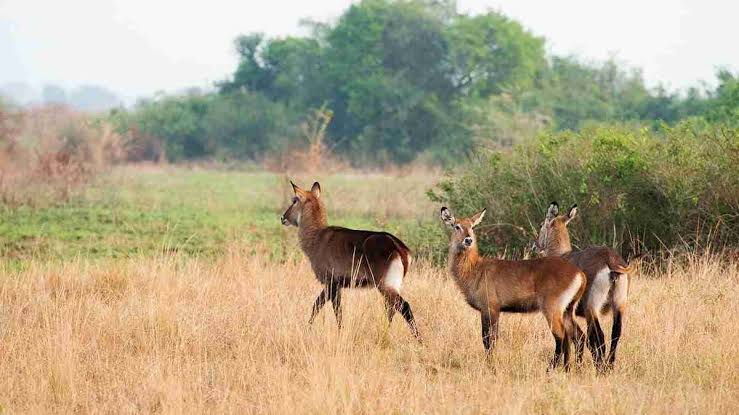
Elephants move in large herds toward the delta and the wetter northern ground, while buffalo stay near water year-round. The open flats are carpeted with antelope: Uganda kob in their thousands, small parties of oribi in the shorter grass, Jackson’s hartebeest on the drier rises, and Defassa waterbuck near the riverine fringe. Leopard are shyest of all — check drainage lines and riverine groves near the delta on an early start, though sightings are never guaranteed.
Dawn versus late-afternoon drives
The dawn drive is the one to prioritise. Big game is most active between roughly 06:00 and 10:00, the air is cool, and the low sun rakes across the grass for the best photography. Sightings fall away sharply between about 12:00 and 15:00 as animals retreat into cover, so the classic rhythm is an early loop followed by a mid-morning return for breakfast.
A late-afternoon drive from around 16:00 has its own appeal — warmer colour, fewer vehicles, and predators beginning to stir — but activity on the open plains can be muted and afternoon winds sometimes push game into shelter. If you have two sessions, spend the productive dawn covering ground on Buligi and the Queen’s Track, and use the afternoon for a slower, more scenic run along the Albert Track and the delta margins.
Driving the murram tracks
Buligi’s tracks are graded murram — packed earth and gravel that behaves very differently wet and dry. In the dry season the graded sections near Paraa are manageable, but the further west you push, the more you meet deep ruts and corrugations. In the wet months a four-wheel-drive is essential: the western tracks turn soft and slippery, and clearance matters more than power.
Drive slowly — 20 to 30 km/h is plenty and lets you spot game you would otherwise blow past. Keep to the existing tracks to protect the grassland and avoid getting bogged, carry water and a full tank, and never drive off-road toward animals. A high-clearance vehicle with a pop-up roof transforms the experience; for more on choosing wheels, see our guide to the best vehicle for a Murchison Falls safari.
Hiring a UWA ranger guide
A Uganda Wildlife Authority ranger guide is the single best-value addition to a Buligi drive. For a modest day fee — currently around US$25 per guide — an armed ranger rides in your vehicle, and the payoff is dramatic: rangers know where prides denned last night, which junction had lion at dawn, and how to read fresh tracks in the murram. They radio sightings between vehicles, so news of a leopard or a hunting pride travels fast.
Pick one up at the UWA office by the Paraa ferry landing before you cross. For anyone self-driving, or on a first visit, a ranger turns hours of hopeful wandering into a targeted search — and their local knowledge of the sector’s rhythms is impossible to replicate from a map.
Frequently Asked Questions
- What time should I start a Buligi game drive?
-
Aim to be on the tracks by 07:00. If you are on the southern bank, that means catching the first Paraa ferry at 07:00 and leaving your lodge by around 06:30. The best game activity runs from roughly 06:00 to 10:00.
- How long does the Buligi circuit take?
-
A focused loop takes three to four hours. Adding the Albert or Pakuba tracks extends it to a full morning or a long day, so plan your ferry return around the length of drive you want.
- Do I need a ranger guide?
-
It is not compulsory for a day drive, but strongly recommended. A UWA ranger costs around US$25 for the day and dramatically improves your odds of finding lions and leopard by knowing where the animals were last seen.
- Is a 4×4 necessary on Buligi?
-
In the dry season a high-clearance vehicle handles the graded sections, but in the wet months a four-wheel-drive is essential — the western tracks turn soft and rutted after rain.
Plan Your Safari
A Buligi drive is the centrepiece of any Murchison itinerary, and it pairs beautifully with a Nile cruise to the base of the falls. Browse our 3-day Murchison Falls safari for a first visit built around an early Buligi morning, or the 4-day Murchison Falls safari to add the delta and extra game drives. Get in touch and we will time the ferry, book your ranger and set the lodges around the wildlife you most want to see.