


Is Murchison Falls Safe for Self-Drive?
Self-driving to Murchison Falls National Park is a question we hear often from independent travellers — and the honest answer is yes, with the right preparation. Uganda’s largest national park is one of the country’s most accessible for private vehicles, thanks to upgraded approach roads, clear Uganda Wildlife Authority (UWA) regulations and a well-established tourism corridor through Masindi and Paraa. Safety depends less on dramatic hazards and more on practical choices: vehicle type, fuel planning, driving hours and respect for wildlife on murram tracks.
This guide addresses what “safe” actually means for a self-drive safari at Murchison Falls — from the sealed Masindi–Kichumbanyobo approach and the Nile crossing at Paraa to 4×4 requirements, gate options and the park rules that protect both you and the animals. If you are weighing independence against a guided trip, it complements our broader comparison of guided versus self-drive safaris.
The short answer: safe, but not casual
Murchison Falls is widely regarded as one of Uganda’s safest national parks for self-drive visitors. The main highway from Kampala through Luweero and Nakasongola to Masindi is tarmac and used daily by tour buses and private cars. Crime against tourists on this corridor is rare when you stick to daylight hours, keep doors locked in towns and avoid night driving on rural sections.
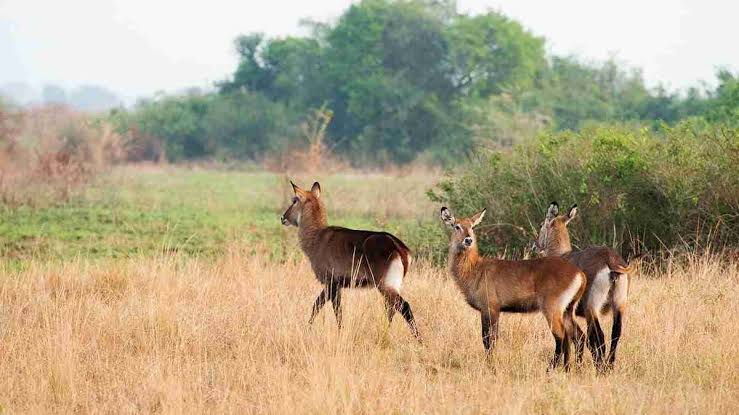
Inside the park, the risks shift from traffic to wildlife. Buffalo, elephant and hippo can appear on tracks without warning. UWA enforces a strict 40 km/h speed limit, daylight-only driving (typically 07:00–19:00) and heavy fines for off-track driving (around US$150 per person) or hitting an animal (around US$500). Self-drive is permitted — you pay park entry, vehicle fees and a self game drive charge — but the park is not a place to improvise routes or push schedules after dark.
Approach roads: Masindi to Kichumbanyobo Gate
The standard southern route covers roughly 305 kilometres from Kampala to Paraa, taking 5–6 hours with stops. From Masindi town it is about 16 kilometres to Kichumbanyobo Gate, then roughly 70–85 kilometres through Budongo Forest to Paraa. The Masindi–Kichumbanyobo–Paraa corridor was upgraded under Uganda’s oil-road programme, with sealed bitumen completed through much of Budongo by 2024 — substantially reducing the wet-season bogging that once caught saloon cars in April and November rains.
Speed humps in Nakasongola and Kigumba appear without much warning, and livestock crowds the final kilometres before the gate. Drive defensively and plan to reach your lodge before 18:30. For gate-by-gate detail, see our guide to driving to Murchison Falls.
Gates, the Nile crossing and 4×4 requirements
Murchison Falls has five main vehicle gates. Kichumbanyobo is the most direct entry from Kampala via Masindi. Bugungu Gate, reached through Buliisa, suits travellers from Hoima. From the north, Chobe Gate sits just beyond Karuma Bridge; Tangi Gate near Pakwach and Wankwar Gate south of Purongo open onto the northern Buligi plains without crossing the Nile at Paraa. Refuel in Pakwach or Gulu on northern routes rather than counting on pumps at Karuma.
The Victoria Nile splits the park at Paraa. Self-drivers once depended on the UWA vehicle ferry on a fixed timetable — scheduled crossings commonly ran at 07:00, 09:00, 11:00, 12:00, 14:00, 16:00, 18:00 and 19:00. The Paraa Bridge is now operational, providing a permanent paved crossing between southern lodges, the Top of the Falls and northern game tracks around Buligi. Confirm current access with UWA or your lodge when you book.
On the sealed approach in dry months, a saloon car can reach Kichumbanyobo and Paraa — but for game drives on Buligi, the Albert Delta and Chobe sector, a high-clearance 4×4 is the sensible minimum. Murram turns greasy within minutes of rain during March–May and October–November. Popular rentals include Toyota Land Cruiser, Prado, Hilux and RAV4. Uganda drives on the left. See our 4×4 car hire guide for rental details.
Fuel planning and wildlife safety
There are no reliable fuel stations inside Murchison Falls National Park. Masindi is the last guaranteed fill-up on the southern route — Shell, TotalEnergies and Stabex operate there. Never enter below half a tank; many self-drivers carry a 5–10 litre jerrycan filled at a registered Masindi pump for multi-day northern game drives. For northern-gate entries, treat Pakwach as your Masindi equivalent. Running dry on a remote track is a genuine safety problem. Read our page on fuel stations near Murchison Falls before you set out.
Self-drive does not mean unguided. UWA rules require you to stay inside your vehicle except at designated areas, never feed animals, never hoot and yield right of way to wildlife. On the northern bank, tracks are largely unsigned. A UWA ranger guide (around US$25 per vehicle) improves both safety and sightings on Buligi. Self-driving the approach while hiring a ranger for game drives is a well-tested hybrid.
Best months and practical tips
The safest self-drive windows align with the dry seasons: June–September and December–February, when murram tracks stay firm and wildlife concentrates near the Nile. Wet months bring lush scenery but some internal routes become impassable without a capable 4×4. Pack insect repellent, drinking water and a charged power bank. Mobile coverage is patchy inside the park but generally available near Paraa and the main gates.
Frequently Asked Questions
- Is it safe to self-drive to Murchison Falls from Kampala?
-
Yes, for experienced drivers who respect daylight travel, refuel in Masindi and avoid night driving on rural roads. Allow 5–6 hours to Paraa with stops.
- Can I use a saloon car for a self-drive safari?
-
A saloon can manage the sealed approach in dry weather, but a 4×4 is strongly advised for game drives and essential in the rains.
- Is the Paraa ferry still required for self-drivers?
-
The Paraa Bridge now provides a permanent vehicle crossing between the southern and northern sectors. Confirm access details with UWA on arrival.
- What happens if I break park rules while self-driving?
-
UWA enforces fines strictly: off-track driving around US$150 per person, speeding UGX 100,000 and animal strikes around US$500. Stay on marked tracks and below 40 km/h.
- Do I need a guide if I self-drive?
-
A guide is not mandatory, but a UWA ranger for northern-bank game drives is strongly recommended. Many self-drivers hire a ranger only for morning game drives.
Plan Your Safari
Self-driving Murchison Falls is a rewarding way to see Uganda’s largest park on your own terms — provided you arrive with a capable 4×4, a full tank from Masindi and realistic respect for wildlife and UWA rules. Browse our Murchison Falls safari packages if you prefer a guided baseline, read the first-time visitors guide, and explore travel tips for Murchison Falls before you collect your rental and head north.