


Murchison Falls vs Mgahinga Gorilla National Park
Murchison Falls and Mgahinga Gorilla National Park sit at opposite ends of Uganda — the country’s largest savannah reserve in the north-west, and its smallest montane park on the Virunga border in the far south-west. One delivers Rothschild’s giraffe, Nile hippos and a thundering waterfall; the other offers a single habituated gorilla family, golden monkeys and volcanic slopes shared with Rwanda and the DRC. They are not rivals. They answer different questions.
This guide compares landscapes, wildlife, activities, access, costs and physical demands so you can decide which park fits your trip — or whether you need both. If you are planning a combined route, see our Murchison and Mgahinga safari guide for realistic day counts and transfer options.
Two Different Worlds of Landscape
Murchison Falls National Park covers roughly 3,893 square kilometres of Borassus-palm savannah, woodland and riverine forest along the Victoria Nile. The river runs east to west for about 115 kilometres before forcing through a seven-metre gorge and dropping 43 metres — the park’s physical centrepiece. North of the Nile, the Buligi Peninsula opens into wide plains where you scan for game from a pop-up-roof 4×4. The Albert Delta, a Ramsar wetland, spreads where the Nile meets Lake Albert.
Mgahinga Gorilla National Park could hardly be more different. At just 33.7 square kilometres, it is Uganda’s smallest national park — gazetted in 1991 to protect mountain gorillas and golden monkeys on the slopes of three Virunga volcanoes: Mount Gahinga (3,474 m), Mount Muhavura (4,127 m) and Mount Sabinyo (3,669 m). There are no roads inside the forest; you explore on foot through bamboo and montane woodland at altitudes between roughly 2,227 and 4,127 metres. The scenery is volcanic ridges and mist, not open plains and a wide river.
Wildlife: Big Game Plains vs Gorillas and Golden Monkeys
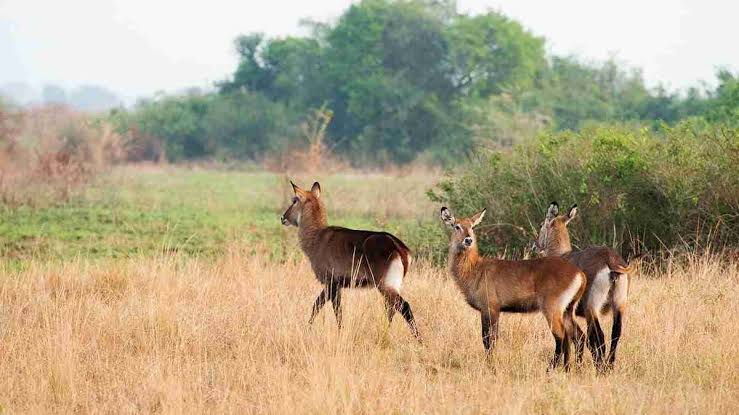
Murchison delivers classic African savannah wildlife. UWA records 76 mammal species and more than 450 bird species across the park and adjacent Budongo Forest. Game drives on the northern bank regularly produce elephant, buffalo, Uganda kob, hartebeest and lion, while the park holds the world’s strongest population of Nubian (Rothschild’s) giraffe — over 1,500 animals in recent Giraffe Conservation Foundation counts. Nile crocodiles and hippos crowd the riverbanks, shoebill stork haunt the delta swamps, and you can tick four of the Big Five inside the park; add Ziwa Rhino Sanctuary, 176 kilometres north of Kampala, for on-foot white rhino tracking en route.
Mgahinga has no lions, no giraffes and no launch cruises. Its headline is the mountain gorilla — specifically the Nyakagezi family, the park’s only habituated group, capped at eight trekkers per day. This transboundary family occasionally crosses into Rwanda or the DRC, so UWA recommends confirming location within 24 hours of trek day; if the gorillas are outside Uganda, UWA issues a full refund. Mgahinga is also the only park in Uganda where mountain gorillas and golden monkeys share the same bamboo forest — a pairing locals describe as “where gold meets silver”. Forest elephants, bushbuck and Albertine Rift birds such as Rwenzori turaco also occur here, but there is no savannah game viewing.
Activities: Game Drives and Cruises vs Trekking and Volcano Hikes
At Murchison, the rhythm is relaxed and largely seated. Morning and afternoon game drives on the Buligi and Queen’s tracks put you among herds without leaving the vehicle. The signature Nile launch cruise from Paraa — UWA boats typically depart at 09:00 and 14:00 — runs upstream for two to three hours to the base of the falls, passing hippos, crocodiles and elephants at the water’s edge. Optional extras include the Top of the Falls hike, a delta shoebill cruise and chimpanzee tracking in Budongo Forest’s Kaniyo Pabidi section.
At Mgahinga, the day centres on foot. Briefing at Ntebeko headquarters starts around 07:30; then you follow UWA rangers through steep montane forest for anywhere from two to six hours before the regulated one-hour gorilla encounter. Porters — around US$15–20 — are strongly recommended on the slopes. UWA sets the minimum trekking age at 15. Beyond gorillas, Mgahinga offers golden monkey tracking (US$60, excluding park entry), a four-hour golden monkey habituation experience (US$100), the Batwa Trail (US$80, including entrance) through Garama Cave with Batwa community guides, and volcano hikes to Gahinga, Muhavura or Sabinyo (around US$80–100). There are no game drives, no boat trips and no Gorilla Habituation Experience — that programme exists only in Bwindi’s Rushaga sector.
Access, Distance and Time
Murchison sits closer to the capital. From Entebbe or Kampala it is roughly 305 kilometres and five to six hours via Masindi and Kichumbanyobo Gate, then the Paraa ferry if your lodge is on the northern bank. Scheduled flights land at Pakuba, Bugungu or Chobe airstrips in about 60 to 90 minutes from Entebbe.
Mgahinga is a longer haul. From Kampala it is roughly 510 kilometres and eight to ten hours via Masaka, Mbarara, Kabale and Kisoro — the final stretch from Kisoro to Ntebeko gate is 14 kilometres on murram that needs a 4×4. Flights to Kisoro Airstrip cut the journey to about an hour in the air plus a short road transfer. Mgahinga also works well from Kigali — three to four hours via the Cyanika border — which suits travellers entering Rwanda first. The two parks are roughly 850 to 900 kilometres apart by road, a 12- to 15-hour transfer that sensible itineraries split with an overnight at Queen Elizabeth or Fort Portal, or replace with domestic flights between Pakuba and Kisoro. Compare options in our fly-in vs road safari guide.
Costs and Permits
Murchison is the cheaper park day to day. Under the UWA tariff valid through June 2026, foreign non-residents pay US$45 per 24 hours for park entry (Category A+), plus activity fees: the Nile launch cruise US$30, day game-drive ranger guide US$25, Top of the Falls hike US$15. No advance permit is required for standard game viewing.
Mgahinga is dominated by the gorilla permit. Foreign non-residents pay US$800 for a standard trek — US$600 in the discounted months of April, May and November — and the permit includes park entry and ranger guide for that day. Only eight permits exist daily for the Nyakagezi family, so peak-season dates often sell out six to ten months ahead. Mgahinga park entry alone is US$40 per 24 hours if you are trekking golden monkeys or hiking volcanoes without gorillas. A focused three-day Murchison safari costs a fraction of a single gorilla day at Mgahinga.
Which Park Should You Choose?
Choose Murchison Falls if you want classic savannah game viewing, Nubian giraffe, a world-class boat cruise and a gentler physical profile — ideal for first safaris, families with younger children, or travellers who prefer seated wildlife encounters. Choose Mgahinga if mountain gorillas are the reason you came to Uganda, you want a quieter trek than Bwindi with volcano scenery, and you value golden monkeys and Batwa culture alongside the primate hour.
Most travellers who can afford the time do both — Murchison first for big game and the falls, then south-west to Mgahinga for gorillas — because the experiences do not overlap. If you must pick one on a five-day trip, Murchison delivers more daily variety; if gorillas are non-negotiable, build around the permit date and treat Murchison as the add-on. Mgahinga suits travellers who find Bwindi’s 20-plus families and four sectors overwhelming; for wider permit choice and the Gorilla Habituation Experience, see our Murchison Falls vs Bwindi comparison.
Best Time to Visit
Both parks work year-round, but the dry seasons from June to September and December to February give the firmest Mgahinga trails and the most reliable Murchison game concentrations along the Nile. April, May and October–November bring heavier rain, greener scenery and fewer vehicles — plus the discounted gorilla permit in April, May and November. Pack a rain jacket for Mgahinga regardless of season; the volcanoes create their own weather above 2,400 metres. At Murchison, shoebill sightings in the Nile Delta are often best from January to March when water levels drop.
Frequently Asked Questions
- Can you see gorillas at Murchison Falls?
-
No. Mountain gorillas live only in Mgahinga and Bwindi in Uganda, plus the Virunga volcanoes in Rwanda and DR Congo. Murchison offers chimps in Budongo Forest, but not gorillas.
- Why choose Mgahinga over Bwindi for gorilla trekking?
-
Mgahinga has one habituated family and eight daily permits — quieter trails, volcano backdrop and golden monkeys in the same park. Bwindi offers more families, four sectors and the Gorilla Habituation Experience. Choose Mgahinga for intimacy; choose Bwindi for variety and permit availability.
- Which park is better for a first safari?
-
Murchison is the gentler introduction — shorter drive from Entebbe, seated game drives and boat cruise, no permit lottery. Choose Mgahinga first only if gorilla trekking is your primary goal and you have confirmed Nyakagezi permits.
- How many days do you need at each park?
-
Two full days at Murchison covers a northern game drive, the Nile launch cruise and either the falls hike or a delta excursion. Allow two nights at Mgahinga — one for the trek and one rest day — plus travel time on either side.
- Can you visit both parks on one trip?
-
Yes — most combined itineraries run eight to ten days, often driving north to Murchison and flying south to Kisoro. See our combining Murchison with gorilla trekking and Murchison and Mgahinga safari guides for realistic routing.
Plan Your Safari
Still weighing Murchison’s Nile thunder against Mgahinga’s volcanic gorillas? Tell us your dates, fitness level and how many days you have — we will match the park to your priorities, or build a combined route that links savannah and montane forest without wasting time on the road. Browse our Murchison Falls safaris and gorilla trekking safaris, or ask for a quotation built around your confirmed gorilla permit.