



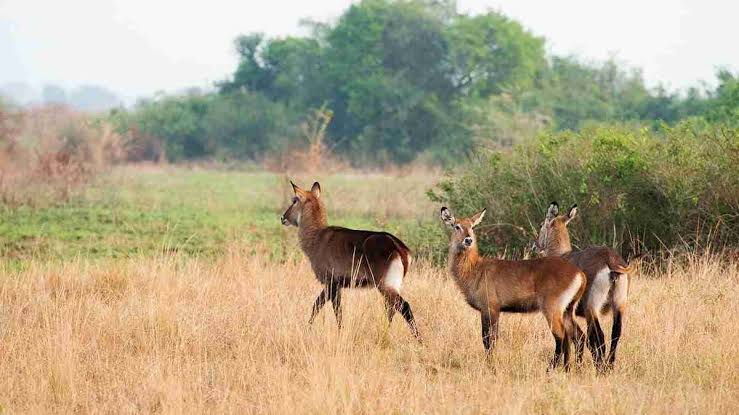
Chobe Sector of Murchison Falls National Park
Most visitors know Murchison Falls through its middle — the ferry at Paraa, the boat cruise to the base of the falls, the game tracks of the northern bank. Far fewer reach the park’s eastern shoulder, where the Victoria Nile arrives in a churn of white water below Karuma and the savannah runs quiet and open toward Gulu. This is the Chobe sector, and it feels like a different, calmer chapter of the same great park.
This guide looks at Chobe as a place and an experience rather than a single landmark: its setting on the rapids of the Nile, the boat trips and sport fishing this stretch is known for, the game drives across the eastern grasslands, the wildlife you meet here, and how the sector’s quieter character makes it a natural pairing with Kidepo and the far north.
Where the Chobe sector sits
The Chobe sector lies at the eastern end of Murchison Falls National Park, in the north-eastern corner of the greater Murchison Falls Conservation Area. It sits along the Victoria Nile near Karuma Falls, on ground that shades into the adjoining Karuma Wildlife Reserve — the buffer zone and wildlife corridor that links this part of the park to the Kampala–Gulu highway.
The sector takes its identity from Chobe Safari Lodge, the large riverside property that anchors this stretch of the Nile, and from the nearby Chobe gate that serves it. Where the park’s core around Paraa is busy with cruise boats and safari vehicles, Chobe is spread thin and unhurried — the same wildlife and river, but with the feeling of having found a corner few others bother to reach.
The setting: the Nile and the Karuma rapids
The defining feature of Chobe is the river itself. Here the Victoria Nile is not the placid, hippo-dotted channel of the delta but a fast, powerful watercourse fresh from the Karuma cataracts. Below the bridge the Nile tumbles over some 23 kilometres of rock ledges and rapids — a long, roaring run of white water that ranks among the most dramatic on the river’s whole course through Uganda.
That energy shapes the mood of the place. Rooms and terraces along this bank look out on a moving, sounding river; at night the rush of the rapids carries across the lawns. The rocks and fast channels also make it prime habitat for crocodile and for the fish that draw anglers, while the wooded islands and margins hold kingfishers, African fish eagles and a steady traffic of water birds.
Boat trips on the eastern Nile
Boat outings from the Chobe stretch have their own flavour. Rather than the long delta run downstream at Paraa, launches here potter along the calmer reaches near the lodge and toward the foot of the rapids, giving close views of crocodile basking on the rocks, hippo pods in the quieter bays and buffalo or elephant coming down to drink at the water’s edge.
It is an intimate, small-boat kind of cruising, well suited to birding and photography in soft morning or late-afternoon light. Because so few vessels work this part of the river, you often have the water to yourselves — a marked contrast to the fleet that gathers below the main falls.
Sport fishing for Nile perch
Chobe is one of Murchison’s two great fishing grounds, the other being the base of the falls near Paraa. The oxygen-rich, fast water below Karuma is famous for Nile perch — the giant of these waters, with the largest specimens weighing well over 100 kilograms — along with vundu catfish and other hard-fighting species.
Fishing is done on a catch-and-release basis and requires a permit from the Uganda Wildlife Authority, usually arranged with an accompanying guide who knows the productive channels and can supply tackle. Shore casting and small-boat angling are both possible, and the sector’s reputation among serious anglers is exactly why some travellers make the eastern end of the park their base.
Game drives in the eastern grasslands
Away from the river, the Chobe sector and the neighbouring Karuma Wildlife Reserve open into rolling savannah, bushland and riverine forest. Game drives here are quieter and more exploratory than on the celebrated Buligi tracks across the Nile, but the cast of characters is much the same.
Expect elephant, buffalo, Uganda kob, waterbuck, oribi and warthog on the grasslands, with olive baboons and vervet monkeys along the wooded edges and black-and-white colobus in the riverine strips. Rothschild’s giraffe range through the wider conservation area, and lion and leopard are present though elusive on this side. Because the reserve is relatively undisturbed, wildlife tends to behave naturally, and a morning drive can feel genuinely off the beaten path. For the park’s headline game viewing, many itineraries still cross to the Buligi circuit in the north, but Chobe rewards those who slow down and look.
Access via Chobe gate and Karuma
Reaching Chobe is refreshingly straightforward. From Kampala you head north on the tarmac Gulu highway and cross the Nile at Karuma Falls; the Chobe gate lies about two kilometres beyond the bridge, and the signposted turn to Chobe Safari Lodge follows an unsurfaced spur of roughly 14 kilometres to the river. The whole drive runs to around 260–280 kilometres and takes in the region of four to five hours — a comfortable single-day transfer on good surfaced road.
Fly-in guests are served by the lodge’s own Chobe airstrip, roughly an hour by light aircraft from Entebbe. Either way, the crossing at Karuma is the pivot point: it is the principal gateway to the whole northern circuit, and Chobe is the first, easternmost stop you reach after it.
Combining Chobe with Kidepo and the north
The sector’s position makes it a clever building block for bigger journeys. Because Karuma sits on the main artery to Uganda’s far north, Chobe falls naturally on the route between Murchison and Kidepo Valley National Park via Gulu and Kitgum, a long but rewarding drive often broken with a night at Gulu or Kitgum.
Travellers heading up to Kidepo, or coming back down, can use Chobe as a wildlife-rich staging point rather than simply passing through Karuma. It also pairs well with a rhino-tracking stop at Ziwa, which lies on the same highway south of the bridge. In short, the eastern end of Murchison is less a detour than a convenient hinge between the park’s core and the wild north.
Frequently Asked Questions
- Where is the Chobe sector of Murchison Falls?
-
It lies at the eastern end of the park along the Victoria Nile near Karuma Falls, in the north-eastern corner of the conservation area. It is reached through the Chobe gate, about two kilometres north of Karuma Bridge, and is anchored by Chobe Safari Lodge.
- What is there to do in the Chobe sector?
-
The main draws are boat trips on the calmer reaches of the Nile, sport fishing for Nile perch below the Karuma rapids, and game drives across the eastern grasslands and Karuma Wildlife Reserve. Birding and simply enjoying the riverside setting are highlights in their own right.
- How do I get to Chobe?
-
By road it is around four to five hours from Kampala on the surfaced Gulu highway, crossing the Nile at Karuma and turning off just beyond the bridge. Fly-in travellers can use the Chobe airstrip, about an hour from Entebbe by light aircraft.
- Is Chobe quieter than the Paraa area?
-
Yes. The Paraa core is the park’s busy hub of ferry crossings and cruise boats, while Chobe sees far fewer visitors. Expect emptier game tracks, uncrowded river outings and a more secluded, exploratory feel.
Plan Your Safari
The Chobe sector suits travellers who want the Nile and the wildlife without the crowds — a base for fishing and quiet river cruising, or a wildlife-rich stop on the way to the far north. Browse our 3-day Murchison Falls safari for a first taste of the park, or our 4-day Murchison Falls safari to combine the eastern end with the classic Paraa circuit. Get in touch and we will shape the gates, activities and lodges around the pace you are after.