Gorilla trekking is the most expensive single hour most travellers will ever spend on safari, and also the one they never regret. In Uganda the headline number is the permit — USD 800 for foreign non-residents in 2026 — but that fee is only the beginning of what a trip actually costs once lodging, transport, tips and the small extras are added in.
This guide breaks the whole thing down honestly, the way we cost it for our own travellers: what the permit buys you, where the money goes beyond it, how the lodge tiers compare, and three worked sample budgets so you can see roughly where you will land before you commit.
The permit: your biggest fixed cost
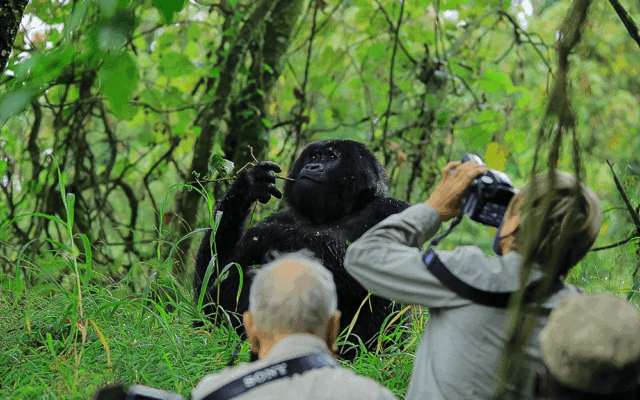
Permits are issued by the Uganda Wildlife Authority (UWA) and are non-negotiable — no permit, no trek. For 2026 the standard permit is USD 800 for foreign non-residents, USD 700 for foreign residents, USD 500 for Rest-of-Africa citizens and UGX 300,000 (about USD 80) for East Africans. Each permit grants one hour with a habituated family, with only eight trekkers allowed per group per day.
There are two ways to pay less. UWA now offers a genuine low-season rate of USD 600 during April, May and November — a USD 200 saving that stacks with cheaper lodge rates in the same months. Usefully, the permit now also includes that day’s park entrance fee, saving roughly USD 40.
At the other end sits the Gorilla Habituation Experience in Bwindi’s Rushaga sector: four hours with a semi-habituated family for USD 1,500, limited to a handful of trekkers a day. Note that this rises to USD 1,800 from 1 January 2027, so booking and paying before the end of 2026 locks in the lower rate even for a 2027 trek.
Where the rest of the money goes
Beyond the permit, four things shape your total: accommodation, transport, meals and the on-the-ground extras. Of these, lodging is the widest variable and the easiest place to control your budget.
Transport is the cost travellers most often underestimate. Bwindi sits roughly 500 km from Entebbe — an 8 to 10-hour drive — so a private 4×4 with a driver-guide runs about USD 180–300 per day including fuel, which becomes very reasonable split across a group. If time matters more than money, a domestic flight from Entebbe to Kihihi or Kisoro airstrip costs around USD 500–600 return and saves the best part of two days on the road.
Lodging tiers near Bwindi
Where you sleep drives your budget more than anything except the permit, and proximity to your trekking sector — Buhoma, Ruhija, Rushaga or Nkuringo — matters just as much as price. A cheap lodge an hour from your trailhead can cost you a punishing pre-dawn transfer.
Budget guesthouses such as Buhoma Community Rest Camp run roughly USD 50–120 per person per night, often near the park gate. Mid-range lodges like Silverback or Ichumbi sit around USD 150–360 with full board and forest views. Luxury properties — Clouds Mountain Gorilla Lodge, Bwindi Lodge, Mahogany Springs — range from USD 400 to well over USD 1,000, all-inclusive with the misty-canopy setting that makes the splurge feel earned.
Porters, tips and the small extras
Two costs are optional on paper but ones we recommend to every client. A porter costs about USD 15–20 per trek to carry your daypack and steady you on slick, root-tangled slopes — money that goes straight to a local community member, often a reformed poacher or a woman supporting a family.
Tipping is customary and separate from your permit. Budget roughly USD 20–30 per day for your ranger guide, USD 10–15 for the trackers who find the gorillas each morning, USD 5–10 for porters, and USD 10–15 a day for your driver-guide. Meals not included by your lodge run USD 15–35 a day, and you should also allow for a Uganda visa (USD 50), travel insurance and any vaccinations before you fly.
Three sample budgets
These are per-person estimates for a typical 3-day trip from Entebbe, permit included, excluding international flights. Group size and season move the numbers considerably.
Budget (road, shared 4×4, guesthouse): permit USD 800 + two nights lodging and meals around USD 250 + shared transport around USD 250. Expect roughly USD 1,500–1,900 per person, or nearer USD 1,300 in low season with the USD 600 permit.
Mid-range (private 4×4, comfortable lodge): a comfortable full-board lodge, private vehicle and a porter push a three-day trip to around USD 2,200–3,000 per person — the sweet spot most of our travellers choose.
Luxury (fly-in, premium lodge): add a domestic flight and a top-tier lodge and you are looking at USD 3,500–5,000+ per person, before the habituation permit tips it higher still.
How to keep the cost sensible
A few decisions make a real difference. Travel in a group to split the private 4×4 and save USD 100–150 a head per day. Trek in April, May or November to combine the USD 600 permit with lower lodge rates. Choose a lodge near your sector to avoid paying for long daily transfers, and book a single package rather than piecing everything together — bundled permits, lodging and transport almost always beat separate bookings.
Finally, book early. Peak-season permits sell out four to six months ahead, and since March 2026 UWA only secures a slot once it is paid in full, so there is no longer any holding a date on spec.
Frequently Asked Questions
- How much does gorilla trekking in Uganda cost in total?
-
Realistically USD 1,500–1,900 per person for a budget 3-day trip, USD 2,200–3,000 mid-range, and USD 3,500–5,000+ for luxury or fly-in options — all including the USD 800 permit but excluding international flights.
- Why is Uganda cheaper than Rwanda?
-
Rwanda charges a flat USD 1,500 per permit as part of a high-end, low-volume model. Uganda’s USD 800 permit — and USD 600 in low season — makes it the better-value choice, with the saving often funding extra nights or chimpanzee tracking.
- Is the porter fee included in the permit?
-
No. Porters cost around USD 15–20 per trek and are paid separately. We strongly recommend hiring one for both the physical help and the direct community benefit.
- Can I pay in cash at the park?
-
Permits are booked and paid in advance through a licensed operator, and UWA gate payments are now cashless. Carry some US dollars and Ugandan shillings for tips, porters and incidentals.
- Does the low-season rate mean a lesser experience?
-
Not at all — the gorillas are there year-round. April, May and November are simply wetter and muddier underfoot, which is why permits and lodges cost less and crowds thin out.
Plan Your Safari
We cost every gorilla trip transparently, matching your permit to a sector-appropriate lodge and building the transport around your budget and dates. Explore our gorilla trekking safaris, read our ultimate guide to gorilla trekking, or add the Nile on a Murchison Falls safari. Tell us your travel window and we will secure permits early and price the whole trip up front.