Planning a Uganda safari is different from booking a beach holiday. The country packs mountain gorillas, tree-climbing lions, chimpanzees, the source of the Nile and classic savannah game viewing into an area roughly the size of Great Britain, and the best experiences hinge on permits and lodges that sell out months ahead. Get the sequence right and the whole trip falls into place.
This guide walks you through the decisions in the order you should actually make them — when to travel, which parks to link, how to secure permits, what to budget, and the practical paperwork of visas, flights and vaccinations. It finishes with a sample 7–10 day flow built around Murchison Falls, Uganda’s largest and oldest national park.
Step 1: Decide When to Travel
Uganda sits on the equator and has two dry seasons and two wet ones. The long dry season runs June to September and the short dry season December to February. These months give firmer forest trails for gorilla and chimpanzee trekking, better road access, and stronger wildlife concentrations around water in the savannah parks. July and August are the busiest.
The wet seasons — March to May and October to November — bring lush scenery, superb birding and quieter parks. They also bring real savings: for April, May and November, the Uganda Wildlife Authority (UWA) now offers discounted low-season gorilla permits at US$600 instead of US$800, and chimpanzee permits at US$200 instead of US$250. Trails are muddier, but if budget and solitude matter more than guaranteed sunshine, the green season rewards you.
Step 2: Choose and Link Your Parks
Uganda’s parks are spread out and connected by long drives, so most people pick two or three rather than trying to see everything. A well-balanced first safari usually combines a savannah park, a primate forest and, for many, the gorillas in the far south-west.
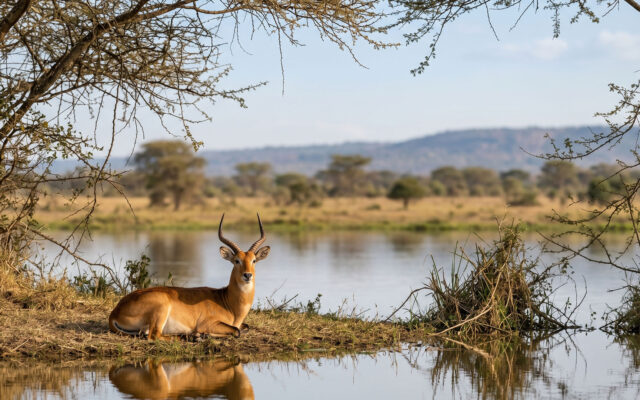
Murchison Falls National Park makes an ideal anchor. It is Uganda’s largest park, split by the Victoria Nile as it squeezes through a 7-metre gap and thunders 43 metres down — the falls that give the park its name. You can watch elephants, buffalo, lions and Uganda’s healthy population of endangered Rothschild’s giraffes on the northern plains, then take a boat up to the base of the falls in the afternoon. It also anchors well because it lies within reach of Kibale (chimpanzees) and can be combined with a southern loop toward Queen Elizabeth and Bwindi.
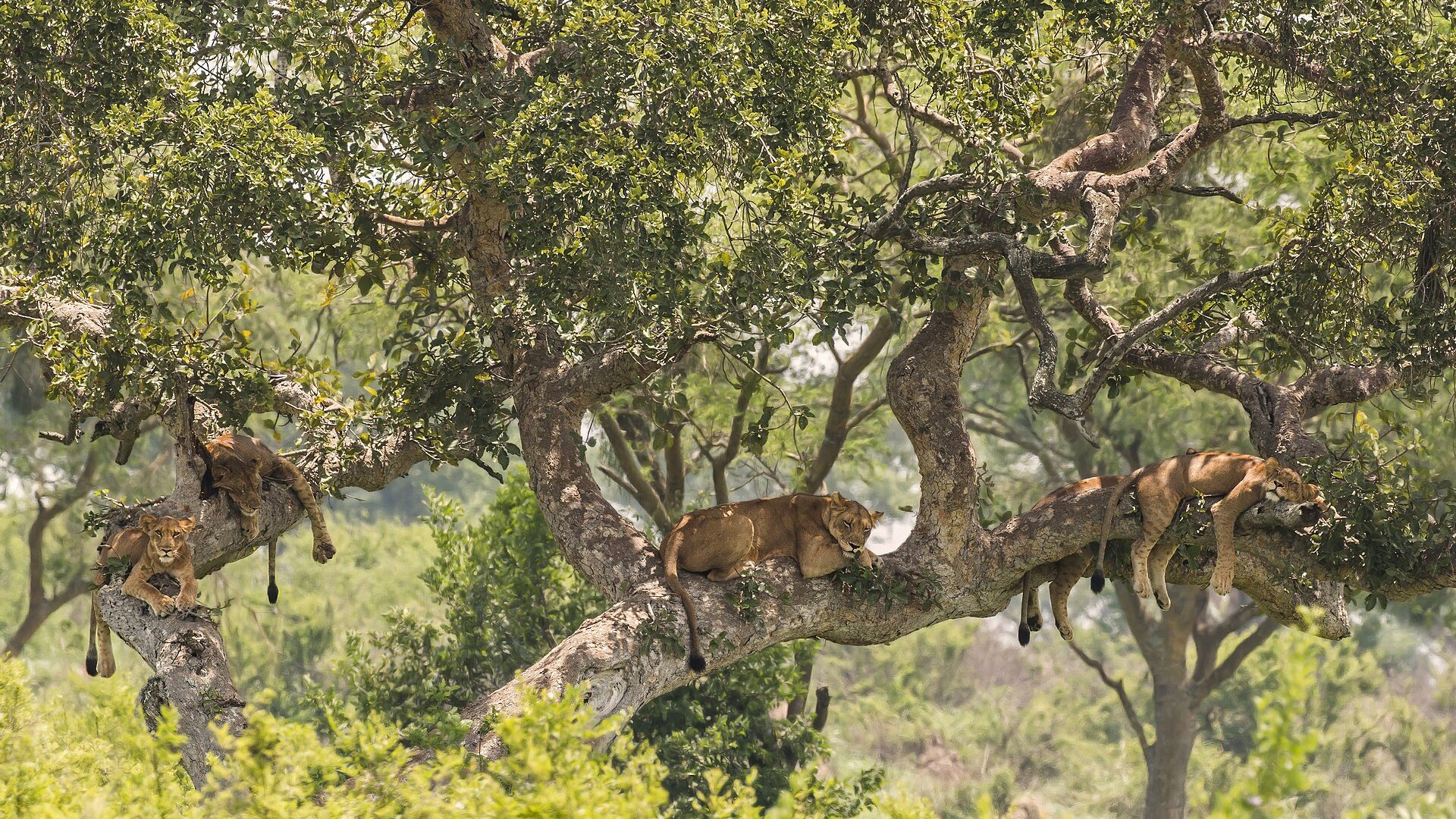
For gorillas, head to Bwindi Impenetrable or Mgahinga in the south-west. For chimpanzees, Kibale Forest offers Uganda’s best tracking. Queen Elizabeth adds the Kazinga Channel boat cruise and the Ishasha tree-climbing lions.
Step 3: Secure Permits First
Permits, not lodges, are the real bottleneck. A standard gorilla trekking permit is US$800 per person for foreign non-residents, and Kibale chimpanzee permits are US$250. Foreign visitors must book these through a licensed tour operator — you cannot buy them directly at the gate — and UWA now requires full payment at the time of booking, with holds no longer permitted.
In the dry-season peaks, secure gorilla permits 6 to 12 months ahead; each gorilla family takes only eight trekkers per day, so availability is genuinely limited. Once the permit date is fixed, everything else — lodges, transfers, flights — is built around it.
Step 4: Set Your Budget Tier
Beyond permits, cost is driven by accommodation and whether you drive or fly. As a rough guide per person for a week-long trip: budget safaris using camps and shared 4x4s start around US$150–200 a day; mid-range lodges and a private guide run roughly US$250–400 a day; and luxury fly-in trips climb to US$600 and well beyond.
Fixed costs shrink per head when you travel as a small group, since the vehicle and guide are shared. Remember to budget separately for park entrance fees — Murchison sits in UWA’s top “A+” category at US$45 per 24 hours for foreign non-residents — plus boat cruises, game drives and tips.
Step 5: Sort Flights, Visas and Vaccinations
International flights land at Entebbe International Airport, about 40 km south-west of Kampala on Lake Victoria. From there you either drive or fly to the parks. Murchison is roughly a 5–6 hour drive (around 305 km from Kampala), or a scenic one-hour light-aircraft hop to Pakuba, Bugungu or Chobe airstrips with operators such as Aerolink and Bar Aviation.
Apply for your visa online in advance at visas.immigration.go.ug — there are no visas on arrival. A single-entry tourist visa costs US$50; if you plan to combine Kenya and Rwanda, the East African Tourist Visa at US$100 covers all three. Your passport needs at least six months’ validity. A yellow fever vaccination certificate is mandatory and must be administered at least 10 days before arrival. Talk to a travel clinic about malaria prophylaxis and routine boosters, and take out insurance that covers air evacuation, as clinics near remote parks are limited.
A Sample 7–10 Day Flow
A comfortable itinerary might run: Day 1 arrive at Entebbe and overnight nearby. Days 2–4 drive north to Murchison Falls — an afternoon at the top of the falls, a morning game drive on the Buligi plains for giraffe and lion, and a Nile boat cruise to the falls’ base, crossing on the Paraa ferry (which runs across the river through the day).
Days 5–6 transfer south to Kibale Forest for chimpanzee tracking and a wetland walk. Days 7–8 continue to Queen Elizabeth for the Kazinga Channel cruise and Ishasha’s tree-climbing lions. Days 9–10 finish in Bwindi with a gorilla trek before returning to Entebbe. Short on time? Fly between segments to trade long drives for extra park time.
Frequently Asked Questions
- How far in advance should I book?
-
Reserve gorilla permits and top lodges 6 to 12 months ahead for the June–September and December–February peaks. Green-season trips (March–May, October–November) can often be arranged with a few months’ notice.
- Can I self-drive a Uganda safari?
-
Yes, and 4×4 rentals are available, but roads to and inside the parks are far easier in the dry season. First-time visitors usually prefer a guided trip, since a local guide handles permits, gate fees and wildlife spotting.
- Is Murchison Falls worth including?
-
Absolutely. It combines big-game plains, the dramatic falls, a Nile boat cruise and the rare Rothschild’s giraffe, and it pairs naturally with Kibale’s chimpanzees to the south.
- How fit do I need to be for gorilla trekking?
-
Reasonably fit. Treks can last from one to six hours over steep, muddy forest terrain, so porters are available to help carry daypacks and lend a hand on tough sections.
Plan Your Safari
With the sequence clear — timing, parks, permits, budget and paperwork — the next step is matching it to real dates and lodges. Explore our Murchison Falls safaris and gorilla trekking tours, or get in touch and we’ll build a tailor-made Uganda itinerary around the wildlife you most want to see.