



Murchison Falls & Kidepo Safari
A Murchison Falls & Kidepo Safari pairs Uganda’s two finest northern savannah parks in one itinerary — the Nile forced through a seven-metre gorge at Murchison, and the semi-arid plains of Kidepo at the South Sudan border where cheetah still hunt open grassland. Few routes in East Africa deliver this much contrast within a single country: river cruises past hippo pods one week, wild ostrich on a sand river the next.
This guide explains what the combination delivers, how the routing works in practice, a realistic day-by-day shape and the fees you should budget for. It is written for travellers who want both parks properly — not a rushed photo stop at either end of a long drive.
Why combine Murchison Falls and Kidepo
Murchison Falls National Park spans roughly 3,840 square kilometres along the Victoria Nile — Uganda’s largest protected area and home to one of the continent’s strongest Rothschild’s giraffe populations, now numbering well over 1,500 animals on the northern Buligi Peninsula. The signature activity is the UWA launch cruise from Paraa upstream to the foot of the falls, where crocodiles bask on sandbanks and elephants drink at the water’s edge.
Kidepo Valley National Park covers 1,442 square kilometres of Karamoja, roughly 700 kilometres from Kampala and widely regarded as Uganda’s most remote park. UWA records 86 mammal species and 476 bird species here. It is the country’s only reliable refuge for cheetah, bat-eared fox, striped hyena and caracal; the Narus Valley concentrates buffalo herds into the thousands during the dry months, and wild ostrich stride the Kidepo sand river — a sight you will not find elsewhere in Uganda.
The wildlife overlap is real — lion, elephant, buffalo and hartebeest appear in both — but the landscapes, birdlife and the Nile itself give Murchison a character Kidepo cannot replicate. Together they form the strongest pure-savannah week in the country without adding gorillas or chimpanzees to the schedule.
Routing and drive times
Most itineraries run Murchison first, then Kidepo — entering Murchison from Kampala via Kichumbanyobo Gate near Masindi (about 305 kilometres and five hours from the capital) or the northern corridor through Karuma Bridge and Chobe Gate if your lodge sits on the north bank. After two or three nights at Murchison, the transfer to Kidepo runs via Gulu and Kitgum: roughly 400 to 450 kilometres and seven to nine hours from Apoka to the northern Murchison gates, or the reverse if you start in Karamoja.
Break the long leg at Gulu City — Acholi lodges, fuel and a sensible overnight if you prefer not to drive gate-to-gate in one day. Enter Murchison from the north via Tangi Gate, Wankwar Gate or Chobe when arriving from Kidepo; routing south through Masindi adds a full day and is rarely worth it. Inside both parks, gates open at 07:00 and close at 19:00; a high-clearance 4×4 is essential on the Kitgum–Kidepo murram as well as on park tracks. See our detailed Kidepo to Murchison Falls route guide for gate-by-gate notes.
Fly-in is an option for either park. Aerolink Uganda operates scheduled services from Entebbe to Apoka Airstrip and to Murchison’s Pakuba, Bugungu and Chobe airstrips on separate days — there is no direct scheduled flight between the two parks, so most travellers drive the Gulu corridor or charter if time is tight.
Suggested itinerary: seven to nine days
Days 1–2: Murchison Falls National Park
Transfer from Entebbe or Kampala, with an optional stop at Ziwa Rhino Sanctuary — 176 kilometres north of Kampala and the only place in Uganda to track white rhino on foot. Check in on the north or south bank depending on your lodge. Day two: a morning game drive on the Buligi Peninsula for Rothschild’s giraffe, lion, buffalo and Uganda kob, then the afternoon Nile launch cruise — UWA boats depart Paraa at 09:00 and 14:00, covering about 17 kilometres upstream over two to three hours.
Day 3: Top of the Falls and transfer north
Visit the Top of the Falls viewpoint or hike down with a UWA ranger (US$15 hiking fee under the current tariff), then drive toward Gulu. An overnight in Gulu breaks the journey cleanly before the Karamoja leg.
Days 4–6: Kidepo Valley National Park
Continue via Kitgum to Apoka, Kidepo’s main tourism hub. Allow two full nights: morning and afternoon game drives in the Narus Valley, an excursion to the Kidepo sand river for ostrich and dry-country specials, and optionally a Karamojong manyatta visit outside the park boundary. Night drives are available here — one of the few parks in Uganda where they are permitted.
Days 7–8: Return or extend
Drive back to Entebbe via Gulu and Karuma, or reverse the sequence if you flew into Apoka and prefer to finish at Murchison. Add a ninth day if you want a second full game-drive morning at either park without sacrificing the transfer day.
Wildlife highlights at each park
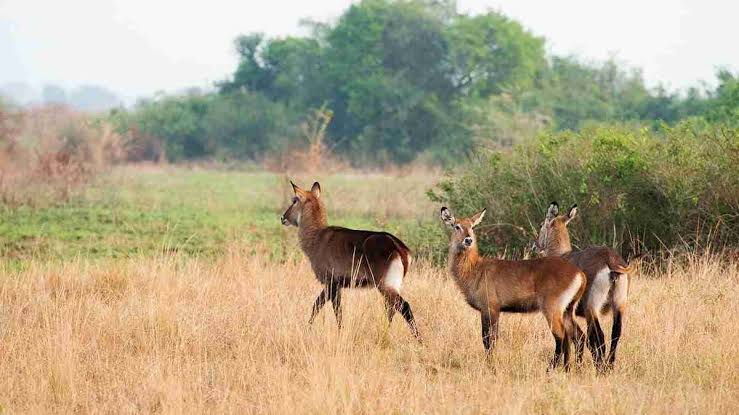
At Murchison, expect elephant, buffalo, lion, leopard, hippo, Nile crocodile, Jackson’s hartebeest, oribi and waterbuck on the northern plains. Shoebill stork haunt the Nile Delta swamps — a separate delta cruise from Paraa is worth booking if birding is a priority. The park holds Uganda’s largest crocodile population and strong herds along the riverbanks in the dry season.
At Kidepo, the Narus Valley is the reliable core — lion on rocky kopjes, elephant numbers that have recovered from roughly 200 in the 1990s to an estimated 650–1,000 today, and zebra, greater kudu and eland on the open savannah. The drier Kidepo Valley itself is quieter for mammals but delivers ostrich, secretary birds and a genuine sense of remoteness framed by Mount Morungole to the south-east.
Park fees and activity costs
Under the UWA conservation tariff valid July 2024–June 2026, foreign non-resident adults pay US$45 per 24 hours at Murchison Falls (children aged five to fifteen US$25; under-fives free) and US$40 per 24 hours at Kidepo (children US$20). Activity fees are charged separately: Murchison day game drives are US$25 per guide, the launch trip to the bottom of the falls US$30, and Kidepo day game drives US$20 per guide. Budget both parks plus transfers when comparing package quotes.
Best time to travel
Both parks reward travel year-round, but the dry seasons from June to September and December to February concentrate wildlife at water sources — Narus pools in Kidepo, the Nile banks at Murchison — and keep murram roads firmer on the Kitgum–Kidepo stretch. April–May and October–November bring green scenery, excellent birding and fewer vehicles; allow extra time on the Kidepo road after heavy rain.
Accommodation options
At Murchison, lodges range from budget bandas near Paraa to mid-range options on the north bank and luxury camps such as Nile Safari Lodge or Baker’s Lodge on the south bank — the latter requires a Paraa ferry crossing (07:00–19:00; allow queue time in peak season). At Kidepo, Apoka Safari Lodge sets the luxury benchmark; Apoka Rest Camp and several mid-range options suit travellers who prioritise wildlife over frills. We match lodge choice to your gate entry and ferry timing so you are not crossing the Nile at dusk after a long drive.
Frequently Asked Questions
- How many days do I need for Murchison and Kidepo together?
-
Plan at least seven days — two to three nights at Murchison, one transfer or overnight in Gulu, and two full nights at Kidepo. Eight or nine days allows a second game-drive morning at either park without rushing the road legs.
- Which park should I visit first?
-
Most travellers start at Murchison because it sits closer to Entebbe and Kampala. Starting at Kidepo suits fly-in arrivals at Apoka who then drive south to the Nile. Either order works; the Gulu overnight matters more than the sequence.
- Can this itinerary be customised?
-
Yes. Add Ziwa rhino tracking, a delta shoebill cruise, Karamojong cultural visits, fly-in legs or extra nights at either park. Pace, lodge tier and vehicle type can all be adjusted.
- Is the safari suitable for families?
-
Yes, with realistic expectations. The Kidepo transfer is long — breaking it in Gulu helps — and children under five enter both parks free. Choose lodges with family rooms and plan shorter game-drive sessions where possible.
- Do I need a 4×4 for this safari?
-
Yes. The Kitgum–Kidepo murram is the bottleneck, and Murchison’s internal tracks are unsurfaced year-round. A pop-up-roof safari vehicle with an experienced driver-guide is the standard arrangement.
Plan Your Safari
A well-paced Murchison Falls & Kidepo Safari is one of Uganda’s most rewarding northern loops — two distinct savannah worlds linked by the Acholi countryside and the Albert Nile corridor. We arrange northern-gate entry, Paraa ferry timing, Gulu stopovers and lodge choices matched to your dates and budget.
Browse our Murchison Falls Safaris, the Kidepo Valley safari guide and Uganda Safaris collection, or contact us for a personalised quotation built around your preferred pace and accommodation level.