



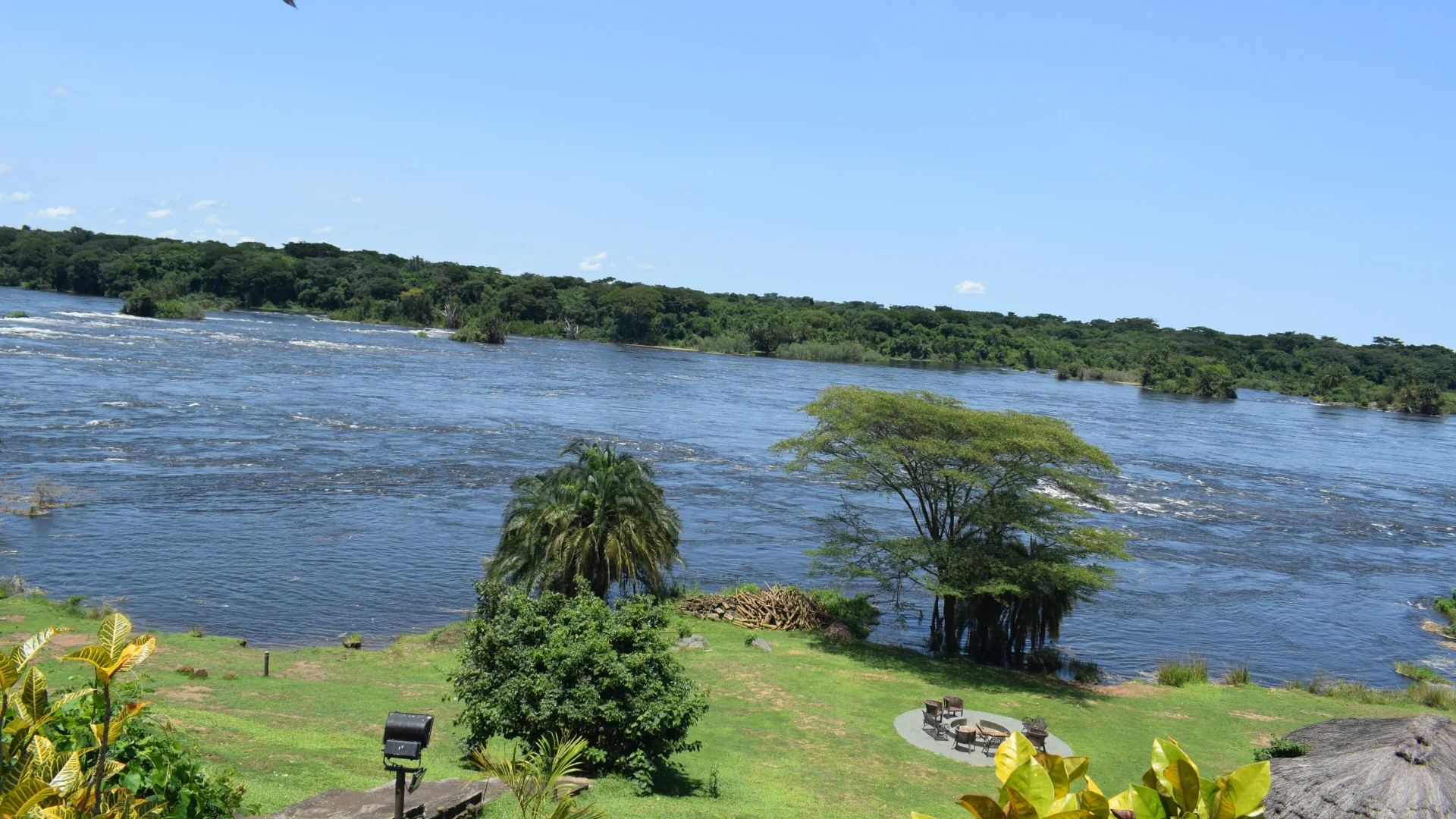
Murchison Falls National Park Travel Guide
There is a moment on the Paraa boat cruise when the guide cuts the engine and you simply listen: the entire Victoria Nile, having travelled thousands of kilometres from Lake Victoria, is funnelling through a seven-metre gap in the rock and dropping 43 metres into a churning pool. That single, thunderous squeeze gives Murchison Falls National Park its name — and it is only the beginning of what this vast wilderness offers.
At around 3,840 square kilometres, Murchison is Uganda’s largest and oldest national park, gazetted in 1952 from an area George V once set aside for game. This guide covers how the park is laid out, its gates and wildlife, the activities worth your time, where to stay, when to come, what it costs, and a sample three-to-four-day itinerary to tie it all together.
How the Park Is Laid Out
The Victoria Nile splits Murchison into two very different halves. The northern sector is classic African savannah — open grassland, borassus palms and the wildlife-rich Buligi Peninsula, where most of the big game lives. The southern sector is greener and more wooded, home to Rabongo Forest and, on the park’s southern fringe, the ancient Budongo Forest where chimpanzees are tracked.
Everything revolves around Paraa, the tourism hub on the Nile whose name means “home of the hippo” in Luo. This is where the vehicle ferry crosses, where boat trips depart, and where most lodges cluster along the riverbank.
Gates and Getting In
Paraa sits roughly 305km from Kampala, a four-to-five-hour drive via Masindi. Most first-timers enter through Kichumbanyobo Gate north of Masindi, which threads through the Kaniyo Pabidi stretch of Budongo Forest — good for colobus monkeys and forest birds. The scenic Bugungu Gate descends the Rift Valley escarpment with views over Lake Albert, while the northern Tangi, Wankwar and Chobe gates off the Pakwach road drop you straight into the game area without a ferry crossing.
The Paraa ferry links the two banks, running daily from around 07:00 to 19:00. Time-pressed travellers can fly instead: light aircraft from Entebbe reach Pakuba airstrip inside the park in about an hour, roughly 19km from Paraa. For a fuller comparison, see our guide to the best route to Murchison Falls.
The Wildlife
Murchison protects around 76 mammal species and more than 450 birds. The savannah stars are lion, elephant, buffalo, leopard and enormous herds of Uganda kob and Jackson’s hartebeest. The park is also one of the last strongholds of the endangered Rothschild’s giraffe, whose population on the northern plains has recovered strongly and now numbers well over a thousand — among the largest anywhere.
The Nile itself teems with hippo pods and some of Africa’s largest Nile crocodiles. For birders, the prize is the prehistoric-looking shoebill, most reliably found in the papyrus channels of the Nile Delta where the river empties into Lake Albert.
Activities
The boat cruise to the base of the falls is the signature experience — a roughly three-hour return trip upstream from Paraa past hippos, crocodiles and bank-grazing elephants, ending in the spray below the cascade. Many visitors combine it with the short but steep hike to the top of the falls, where you stand beside the gap as the Nile explodes through it.
Game drives across the Buligi Peninsula on the northern bank are best at dawn, when lions are still active and the light is kind. A separate delta cruise downstream is the specialist’s choice for shoebill and waterbirds. South of the park, chimpanzee trekking in Budongo Forest adds a rainforest dimension — read our dedicated guide to chimp trekking in Budongo. If you can only pick between water and land, our boat cruise vs game drive comparison will help.
Where to Stay
Accommodation spans every budget, most of it near Paraa. At the top end, riverside lodges such as Paraa Safari Lodge and the intimate Baker’s Lodge offer Nile views and easy access to cruises and drives. On the northern bank, Pakuba Safari Lodge sits right in the game area, while Chobe Safari Lodge overlooks the river in the park’s east.
Mid-range and budget travellers are well served by lodges and tented camps on the riverbank strip just outside the western boundary, plus UWA bandas and campsites. Booking early is wise in the peak dry months.
When to Visit and What It Costs
The two dry seasons — roughly December to February and June to September — are prime, as wildlife concentrates near water and tracks stay firm. The wetter months (March–May, October–November) bring lush scenery, superb birding and fewer visitors, though some roads turn muddy.
Park entrance under the current UWA tariff (valid to June 2026) is US$45 per foreign non-resident adult per 24 hours, US$35 for foreign residents and UGX 25,000 for East African citizens, with children paying less. The Nile boat cruise costs from around US$30 per person, and chimpanzee trekking in Budongo is about US$90. Fees change, so confirm current rates before you travel; on our packages they are built in.
Sample 3–4 Day Itinerary
Day 1 — Drive from Kampala or Entebbe, breaking the journey with a rhino trek at Ziwa Rhino Sanctuary, and reach your Paraa lodge by late afternoon. Day 2 — Early game drive on the Buligi tracks, then the afternoon boat cruise to the base of the falls and the hike to the top.
Day 3 — A dawn drive followed by a delta cruise in search of the shoebill, or a relaxed morning and transfer south. Day 4 (optional) — Chimpanzee trekking in Budongo Forest before the drive back to Kampala. This pace balances the park’s headline sights with time to simply absorb it.
Frequently Asked Questions
- How many days do you need in Murchison Falls?
-
Two full days cover the falls, a boat cruise and a good game drive. Three to four days let you add a delta cruise for shoebill and chimpanzee trekking in Budongo without rushing.
- What is the best time to visit Murchison Falls?
-
The dry seasons of December to February and June to September offer the easiest game viewing and boat conditions. January to March is especially rewarding for birders, with the lowest visitor numbers.
- How much is park entry to Murchison Falls?
-
Foreign non-resident adults pay US$45 per 24 hours under the tariff valid to June 2026, with lower rates for residents, East Africans and children. Boat cruises and chimp trekking are charged separately.
- Can you see the Big Five in Murchison Falls?
-
Not quite — there are no wild rhino inside the park, though you can track them at nearby Ziwa. You have a strong chance of lion, elephant, buffalo and leopard across the northern savannah.
Plan Your Safari
Murchison rewards travellers who give it time — the falls, the Buligi plains and the delta each show a different face of the Nile. Browse our Murchison Falls safaris or talk to our team about a tailor-made trip, and we will match the sectors, activities and lodges to your dates, pace and budget.