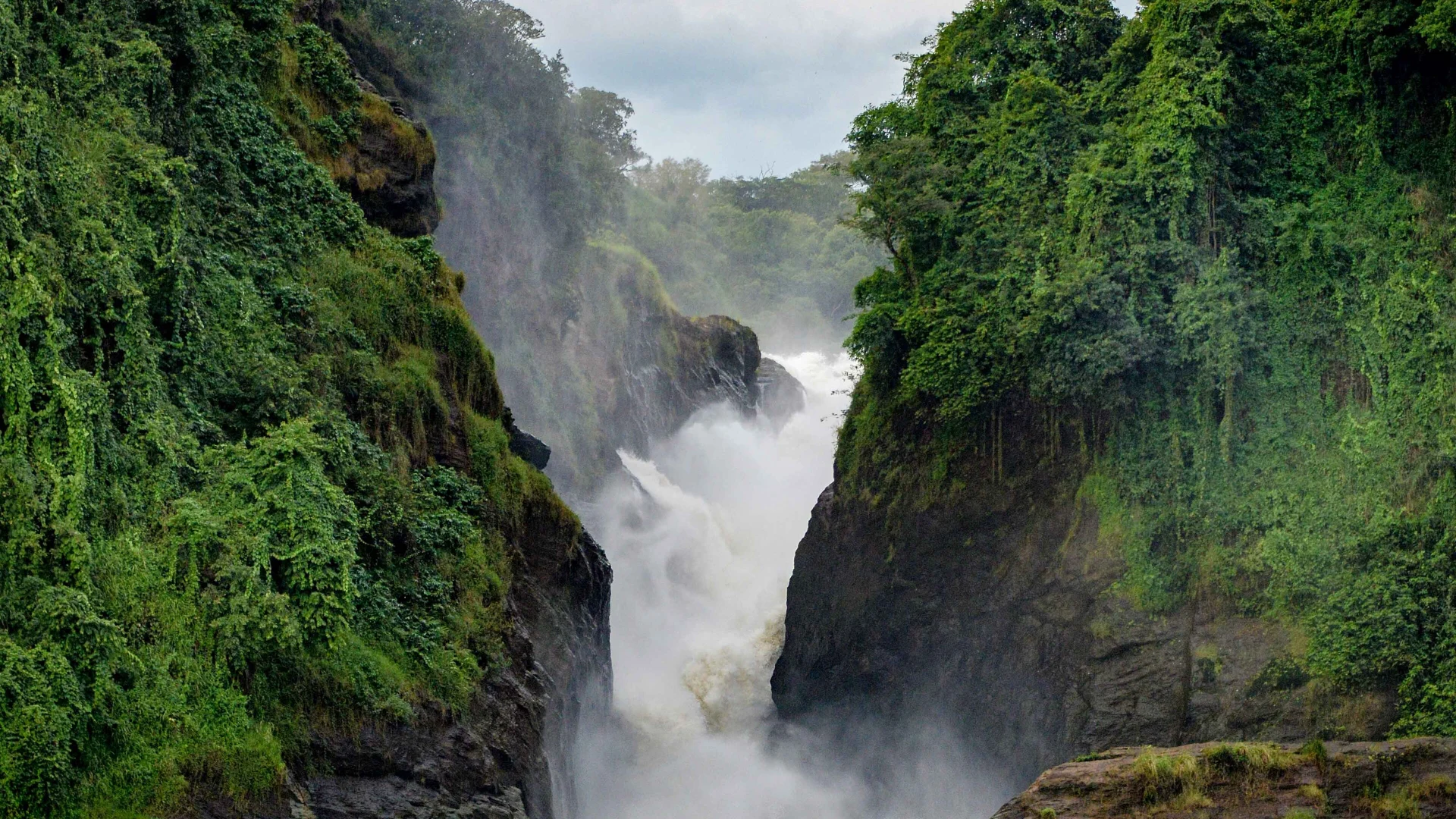
There is a moment on the Paraa launch cruise when the Nile turns from wide brown river to thundering white — 300 cubic metres per second forced through a gap barely seven metres wide — and the spray catches morning light like something staged. It is not staged. Murchison Falls has impressed travellers since Samuel Baker named it in 1864, and it still outperforms every photograph you have seen.
If you are searching for reasons to build a safari around Uganda’s largest national park, start here — nine experiences that define Murchison Falls and the wider Nile corridor.
The Falls From Below and Above
The boat cruise from Paraa to the base of the falls is the park’s signature hour. Hippos surface beside the hull; crocodiles bask on sandbanks; elephant drink at the shoreline. The cliff face grows until the roar drowns conversation. For a different angle, the top-of-the-falls viewpoint and hike to Devil’s Cauldron put you at the precipice where the Nile begins its dramatic descent.
Shoebill in the Delta
The Victoria Nile delta — where river meets Lake Albert — is one of Africa’s most reliable shoebill sites. Dawn boat cruises through papyrus channels bring you face to face with Balaeniceps rex, a bird that looks prehistoric because it largely is. Rangers know individual territories. Patience is rewarded.
Rothschild’s Giraffe on the Buligi Peninsula
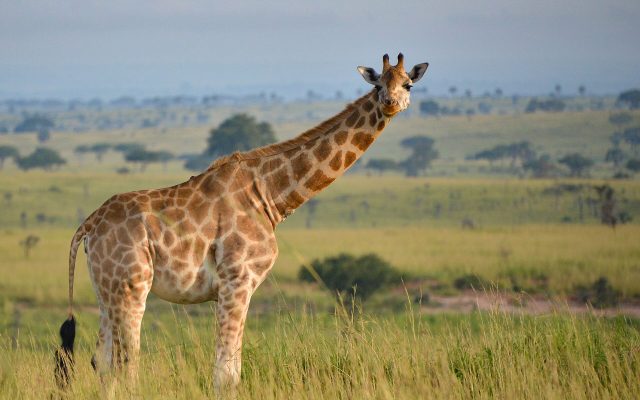
Murchison holds one of East Africa’s healthiest populations of Rothschild’s giraffe — the tallest subspecies, distinguishable by cream-coloured socks and five ossicones. Buligi game tracks at dawn deliver herds against acacia woodland and Nile mist. Giraffe silhouettes at sunrise are the image many visitors did not know they needed.
Lion and Leopard on the Northern Bank
The northern bank’s savannah supports strong predator populations. Lion prides rest in euphorbia shade; leopards occasionally appear on Buligi’s sausage trees. Game drives here feel unhurried — vehicle density is a fraction of Kenya’s busiest reserves. See our leopard sightings guide for timing tips.
Rhino Tracking En Route
Wild rhino no longer roam Murchison itself, but Ziwa Rhino Sanctuary on the Kampala–Masindi road protects a breeding herd you approach on foot. Two hours south of the Kichumbanyobo gate, it transforms a Murchison safari into a genuine Big Five circuit without leaving northern Uganda.
Chimps in Budongo Forest
Kaniyo Pabidi in Budongo Forest offers chimpanzee trekking without diverting south to Kibale. Mahogany cathedral forest, US$130 permits, and a natural pairing with three nights at Murchison. Savannah in the morning, forest primates the next — variety few parks match.
Sundowners on the Nile
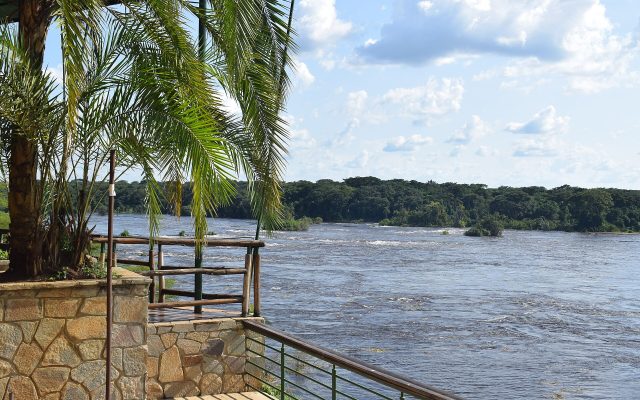
Lodges like Baker’s Lodge and Nile Safari Lodge position decks metres from the water. Elephant cross at dusk; hippos grunt below your feet; the river turns gold. A cold drink here is not tourism filler — it is the rhythm Murchison is built around.
Community Encounters
Boomu Women’s Group village walks, Mubako Cultural Campfire performances and Acholi community visits near the park boundary connect safari to living culture. Conservation here includes people — community tourism revenue funds schools and reduces park-edge pressure.
Fly-In Access
Pakuba and Bugungu airstrips accept daily charters from Entebbe — roughly 90 minutes versus 5–6 hours by road. A long weekend at Murchison becomes realistic for time-poor travellers. The falls do not require a fortnight to justify the journey.
When to Visit for Each Experience
Shoebill and delta cruises: year-round, dawn preferred, dry months slightly better for channel navigation. Falls launch: afternoon light on cliff face; morning calmer water for photography. Buligi game drives: first ferry crossing to northern bank — check Paraa ferry schedule night before. Budongo chimps: book morning trek before afternoon drive south or return to Nile lodge.
Peak season (June–September, December–February) fills lodges — book four to six months ahead for preferred Nile-front rooms. Low season (April–May) offers emptier boats and lower rates with rain acceptance. Each experience has an optimal time-of-day; sequencing within your stay matters as much as season choice.
Frequently Asked Questions
- How many days do I need at Murchison Falls?
-
Three nights minimum for game drives, falls cruise and delta shoebill. Four nights allows Budongo chimps and a relaxed pace.
- Is Murchison Falls worth it without gorillas?
-
Absolutely. Many repeat visitors come to Murchison alone — the Nile, savannah and shoebill combination stands independently of southwestern primate circuits.
- What is the best season?
-
December–February and June–September for dry tracks and wildlife near water. Wet months bring lush scenery and fewer visitors.
- Can I combine Murchison with Bwindi gorillas?
-
Yes — 8–10 days via road, or charter from Pakuba to Kihihi to save time. A classic Uganda safari arc.
Night drives in designated Murchison sectors (where UWA permits them) reveal bushbabies, genets and occasional leopard — a fourth-day addition for repeat visitors who have covered falls, delta and Buligi in standard daylight activities.
- Is the Devil’s Cauldron hike essential?
-
Not essential but highly recommended — the cliff-edge perspective complements the boat view. Allow 45–60 minutes; wear grippy shoes near spray-wet rock.
Building Your Murchison Stay
Three nights allows falls cruise, delta shoebill and two Buligi drives. Four nights adds Budongo chimps or a relaxed recovery afternoon at your lodge. Fly-in visitors on two-night stays should pre-book dawn delta and afternoon falls cruises on arrival day — time is compressed and sequencing matters. Ask your operator to align lodge choice with planned activities — southern bank for Budongo, Paraa area for ferry access to northern game tracks.
Plan Your Safari
Murchison Falls is where most Uganda safaris should start — or finish. Browse Murchison Falls safaris and let these nine experiences shape your dates and lodge choices.