


Ziwa Rhino Sanctuary
There is a particular kind of stillness that settles over you when you are standing on foot, in open grassland, watching a two-tonne white rhino graze quietly a few metres away. No engine, no metal door between you and the animal — just soft ground underfoot and a ranger’s calm hand signals. Ziwa Rhino and Wildlife Ranch is the only place in Uganda where you can have that encounter, and it sits directly on the road most travellers take to Murchison Falls.
This guide covers what a visit to Ziwa actually involves — where it is, how the trek works, what it costs in 2026, the best time to go, and the remarkable conservation story that brought rhinos back to Uganda after they had vanished entirely. It is written for travellers building a Murchison Falls itinerary who want to know whether the stop is worth it. Almost everyone finds that it is.
Where Ziwa is and how to get there
The ranch lies in Nakasongola District in central Uganda, roughly 176 kilometres north of Kampala along the Kampala–Gulu Highway. The drive takes around two and a half to three hours on good tarmac. The turn-off is at Nakitoma Trading Centre — you leave the highway here and follow signposts a few kilometres to the ranch gate.
Its position is what makes Ziwa so easy to fold into a wider trip. It falls almost exactly on the route between Entebbe or Kampala and the Kichumbanyobo (Masindi) gate of Murchison Falls National Park, so a morning rhino trek turns dead driving time into one of the highlights of the safari. Most operators build it in as a first-day stop en route north.
Tracking rhinos on foot
The rhino trek is the reason to come. Ziwa’s southern white rhinos roam freely across a fenced sanctuary of about 70 square kilometres of savannah and acacia woodland, so rangers first establish where the animals are using radio monitoring and the reports of the round-the-clock guarding teams. You usually drive across the ranch to the general area, then continue the final approach quietly on foot.
Because the rhinos are habituated to people, they stay calm, which allows for long, unhurried observation at close range — often close enough to hear them breathe and tear at the grass. Rangers walk you in in small groups, brief you on where to stand and how to retreat, and share a running commentary on the animals’ behaviour and history. Despite weighing up to around 2,300 kilograms, white rhinos can move surprisingly fast, so the safety guidance matters.
Treks run daily between roughly 07:00 and 17:00 and typically last one and a half to two and a half hours, depending on how far the rhinos have wandered. If you do not have your own vehicle for the drive-in portion, the ranch can usually arrange one with a driver — confirm availability and cost when you book. Wear closed walking shoes, bring sun protection and water, and note that pets are not permitted.
Costs and booking
Ziwa charges a single park-entry fee that already includes the rhino trek — there is no separate activity charge for the walk. For 2026 the foreign non-resident rate is USD 60 per adult and USD 30 per child under 12. Foreign residents of East Africa (with a valid work permit) pay USD 50 and USD 25, and East African citizens pay UGX 50,000 and UGX 15,000.
The ranch operates as a cashless business: payment is by credit or debit card only, so do not arrive expecting to pay in cash. Booking ahead is sensible, especially in the busy dry-season months, and lets the team have rangers ready when you arrive.
Best time to visit
Rhino tracking is possible year-round, but the two dry seasons — roughly December to February and June to August — make for easier walking on firmer trails and generally quicker sightings. The wetter months of March to May and September to November bring lush vegetation, fewer visitors and greener photographs, at the cost of muddier, more challenging walks.
Whatever the season, aim for early morning or late afternoon. The rhinos are most active and comfortable in the cooler hours, the light is far kinder for photography, and you avoid the midday heat on foot. An early arrival also pairs neatly with continuing north to Murchison the same day.
The comeback story — and Ziwa’s growing wildlife
Rhinos were wiped out across Uganda by the early 1980s, poached to local extinction during years of political upheaval; the country’s native northern white and eastern black rhinos were gone by around 1983. The land at Ziwa began life as a private cattle ranch owned by Captain Joseph Charles Roy. In partnership with the charity Rhino Fund Uganda and the Uganda Wildlife Authority, the cattle were moved out and the property was fenced and re-purposed as a rhino sanctuary, formally established in 2005.
The founding population was just six southern white rhinos — four brought overland from Kenya and two flown in from Disney’s Animal Kingdom in Florida in 2005 and 2006. (The critically endangered northern white subspecies, now down to two females worldwide, could not be used, so the closely related southern white was chosen.) The first calf born on the ranch was named Obama, a nod to his Kenyan father and American mother. Breeding has since been a genuine success story, with the herd growing to more than 40 rhinos — the seed stock intended for eventual reintroduction to protected areas such as Ajai Wildlife Reserve.
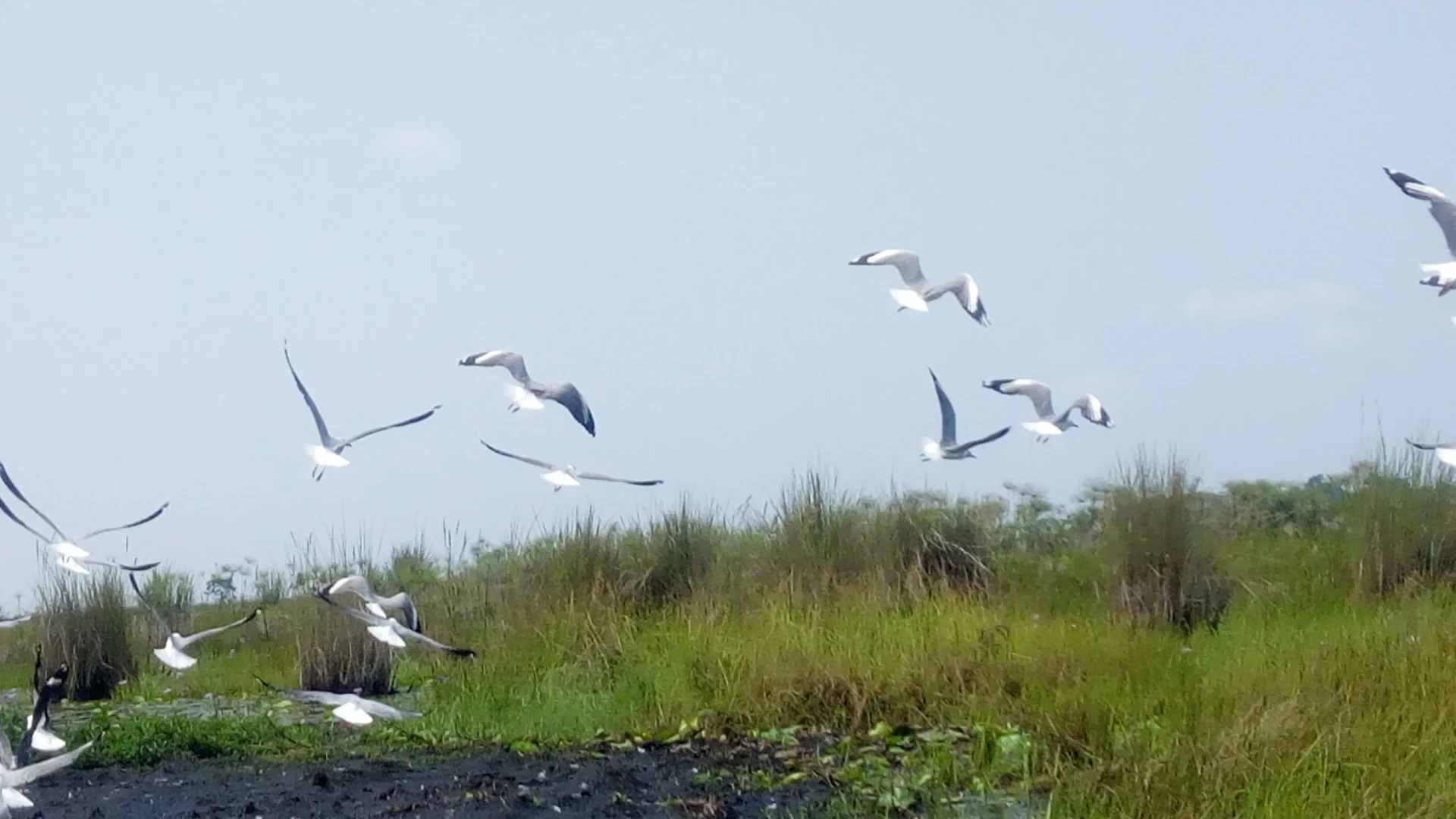
Ziwa is no longer only about rhinos. Recent additions include Rothschild’s giraffe, Jackson’s hartebeest and plains zebra, and the wider ranch supports Uganda kob, waterbuck, bushbuck, hippos in its marshes and a rich birdlife. Beyond the rhino trek, the sanctuary offers guided birding, nature walks, night walks and a shoebill trek with a canoe ride through the swamps — one of the more reliable places in the country to look for that prehistoric-looking stork.
Frequently Asked Questions
- Is it safe to walk near the rhinos?
-
Yes, when you follow the rangers. The animals are habituated to people and the guides keep groups at a safe, controlled distance, briefing you on how to stand and retreat before you approach.
- How long does the rhino trek take?
-
Usually one and a half to two and a half hours, depending on where the rhinos are within the sanctuary on the day. Some driving across the ranch may precede the walk itself.
- Can I combine Ziwa with Murchison Falls?
-
Easily. Ziwa sits on the main route north, so a morning trek and then continuing to the Masindi/Kichumbanyobo gate is one of the most popular ways to start a Murchison safari.
- Do I need my own vehicle?
-
A vehicle is helpful for the drive-in to reach the rhinos. If you do not have one, the ranch can usually arrange a vehicle and driver — arrange this in advance.
Plan Your Safari
A rhino trek at Ziwa is the perfect opening act for a journey to the falls, adding the one member of the Big Five you cannot otherwise see in Uganda. We can build the stop seamlessly into a wider itinerary — see our Murchison Falls National Park guide and browse our safari packages to start planning a trip that begins on foot, beside a rhino.