


Educational Tours in Murchison Falls National Park
Murchison Falls National Park is not only Uganda’s largest protected area — it is one of the most teachable landscapes on the continent. Within a single trip you can move from open savannah where Rothschild’s giraffe browse beside elephant herds, through riverine forest on the Victoria Nile, to papyrus channels where shoebills hunt in the Albert Delta. For school groups, university field courses and wildlife clubs, that variety is the curriculum: real habitats, real species and real conservation dilemmas playing out in front of the class.
This guide covers how educational visits to Murchison actually work — UWA programmes and the Paraa centre, guided learning activities, permit fees for student groups, curriculum themes you can build around, and the best seasons for fieldwork. Pair it with our park overview and ecosystem guide for background on the habitats your group will study.
Why Murchison Suits School and University Groups
At roughly 3,840 square kilometres, Murchison is Uganda’s oldest and largest conservation area. UWA records 76 mammal species and more than 450 bird species here — enough diversity to support biology, geography, environmental science and social studies without leaving the park boundary.
The Victoria Nile bisects the park, creating contrasts between the open northern savannah — where most game drives unfold on the Buligi Peninsula — and the wooded southern bank near Budongo Forest. International universities run field courses here because the park combines savannah ecology, watershed management and human-wildlife conflict in one setting. Domestically, UWA and partners have brought hundreds of students from schools near the park on day trips to see conservation outcomes first hand.
UWA Education Programmes and the Paraa Centre
The Uganda Wildlife Authority runs education and awareness work through its community conservation staff. Schools, wildlife clubs and community groups visit for guided learning, and some stay for residential training at the Paraa Educational Centre at park headquarters — more than 2,000 people pass through these programmes annually.
Paraa — “home of the hippo” in Luo — is the park’s hub on the Nile, where the vehicle ferry links the Masindi road to game tracks on the north. UWA also operates a 60-bed dormitory-style students’ centre at North Paraa, making multi-night field trips affordable for Ugandan institutions. Domestic school groups should contact UWA in advance; international groups typically coordinate through a licensed operator who liaises with UWA on permits and vehicle registration.
Guided Learning Activities in the Park
Educational visits draw on the same core activities as leisure safaris, with interpretation tailored to learning objectives. A guided game drive on the northern tracks — ideally at dawn or dusk — covers species identification, predator–prey relationships and savannah ecology. The Nile boat cruise from Paraa upstream to the falls is a three-hour return trip through hippo pods, crocodile banks and riverside elephant. Downstream delta cruises explore papyrus wetland ecology and shoebill habitat.
On foot, the Top of the Falls trail and guided nature walks examine rift-valley geology, where the Nile forces through a gap barely six metres wide before plunging 45 metres. See our boat cruise vs top of the falls hike comparison when allocating time. Kaniyo Pabidi in Budongo Forest, reached through Kichumbanyobo Gate, adds chimpanzee trekking and forest birding; community visits such as the Boomu Women’s Group near the southern gate cover how tourism income reaches village households.
Ecology and Curriculum Themes
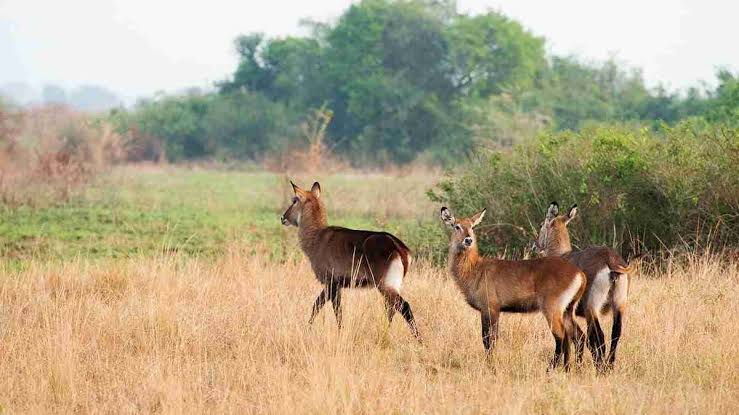
Field courses typically organise around themes the landscape delivers without staging. Savannah biodiversity covers ungulate herds alongside lions and one of Africa’s largest Rothschild’s giraffe populations. River and delta ecology examines the Nile as a dry-season lifeline and the Ramsar-listed Albert Delta. Conservation management brings in UWA wardens on poaching, revenue sharing — 20% of gate fees returned to bordering districts — and human-wildlife conflict, as detailed in our community conservation guide.
Advanced groups can engage with oil exploration in the northern sector and the Karuma hydroelectric dam downstream. Birding modules alone can fill a week, from ground hornbills on the Buligi plains to swamp specialists in the delta.
Permits, Fees and How to Book
All educational groups need valid park entry and activity permits before arrival. UWA publishes discounted tariffs for Ugandan pupils, students and wildlife clubs. Under the tariff to 30 June 2026, pupils and secondary students in organised groups pay UGX 3,000 park entry, tertiary institutions pay UGX 5,000, and Uganda Wildlife Club members pay UGX 2,000. Secondary students viewing the Top of the Falls pay UGX 2,000, tertiary students UGX 5,000, and wildlife-club pupils enter free for that activity.
Book early through UWA for domestic schools or a licensed operator for international groups. Verify against the latest UWA fee schedule before quoting costs.
Best Seasons and Practical Logistics
For wildlife-centred fieldwork, the dry seasons — roughly December to February and June to September — concentrate animals near the Nile and make game drives most productive. See our best time to visit guide for month-by-month conditions.
Most road groups reach Paraa from Kampala via Masindi — about 305 kilometres and four hours to Masindi town, then roughly 85 kilometres through Kichumbanyobo Gate. The hourly vehicle ferry at Paraa must be factored into every northern-bank game drive. Allow at least two full days for a meaningful programme. Groups with younger pupils should read our guide on visiting Murchison with children for pacing and safety notes.
Frequently Asked Questions
- Do Ugandan schools get discounted entry to Murchison Falls?
-
Yes. UWA offers reduced park entry for pupils and secondary students in organised groups (UGX 3,000), tertiary institutions (UGX 5,000) and Uganda Wildlife Club members (UGX 2,000). Contact UWA in advance to arrange permits.
- Where can student groups stay inside the park?
-
UWA operates a 60-bed dormitory-style students’ centre at North Paraa, plus camping at Paraa and the Top of the Falls. Private lodges near Paraa can block rooms for larger international groups.
- What activities work best for a one-day school trip?
-
A focused day might combine a guided game drive on the northern bank, the Nile boat cruise to the falls and a short talk with community conservation staff. Two or three days allow delta cruises, forest walks in Budongo and community visits.
- When is the best season for educational safaris?
-
Wildlife viewing is strongest in the dry seasons from December to February and June to September, when animals gather near the Nile. Wetter months are greener but tracks can be challenging for large school buses.
Plan Your Safari
Whether you are organising a wildlife-club weekend, a secondary-school geography trip or a university field course, Murchison delivers living textbooks at scale — savannah, river, delta and forest within a single protected area. We help schools and institutions build structured itineraries with the right permits, guides and pacing. Browse our things to do guide and Murchison Falls safaris, or speak to our team about a tailor-made educational programme matched to your syllabus and group size.