Standing a few metres from a silverback mountain gorilla as he tears bamboo, glances at you with unhurried calm, and lets his family tumble around him is the kind of hour that reorders your sense of the wild. Uganda protects roughly half of the world’s remaining mountain gorillas, and it lets you meet them for a permit price that is little more than half of what neighbouring Rwanda charges.
This guide covers everything we tell our own travellers before they trek: where to go, what a permit costs and how to book it, the fitness and rules involved, what to pack, when to travel, how Uganda compares with Rwanda, and how to fold a gorilla trek into a wider Ugandan safari.
Where you trek: Bwindi’s four sectors and Mgahinga
Almost all of Uganda’s gorilla trekking happens in Bwindi Impenetrable National Park, a UNESCO World Heritage Site of dense, high-altitude rainforest in the country’s south-west. Around 20 habituated families live here, spread across four trekking sectors, and your permit is now tied to a sector rather than a named family — so where you stay matters.
Buhoma in the north is the original trailhead, with the most established lodges and relatively gentle trails, making it a sensible choice for first-timers and older trekkers. Ruhija in the east sits higher and cooler, and rewards keen birders. Rushaga in the south holds the greatest number of families and, with Nkuringo, is the only place offering the habituation experience. Nkuringo, also in the south, delivers dramatic highland scenery and the most demanding climbs.
Uganda’s second option is little Mgahinga Gorilla National Park in the volcanic Virunga range, home to a single habituated group, the Nyakagezi family, which roams freely across the Uganda–Rwanda–DRC borders. When they are settled on the Ugandan side, Mgahinga offers a quieter, less-crowded alternative.
Permits: cost and how to book
Gorilla permits are issued by the Uganda Wildlife Authority (UWA) and are mandatory. For 2026 the standard permit costs USD 800 for foreign non-residents, USD 700 for foreign residents and UGX 300,000 for East African citizens. Each permit grants one hour with a habituated family, and only eight trekkers are allowed per family per day.
Those wanting more time can book the Gorilla Habituation Experience in Rushaga or Nkuringo — four hours with a semi-habituated group for USD 1,500. It is exclusive to Uganda and superb for photographers, though physically taxing.
Permits are limited and dry-season dates sell out, so we recommend booking through a registered operator three to six months ahead. We handle permit procurement, matching your sector to a lodge nearby so you avoid punishing pre-dawn transfers. A short domestic flight from Entebbe to Kihihi or Kisoro can replace the long drive south if time is tight.
Fitness and the rules on the ground
You do not need mountaineering fitness, but you do need moderate stamina. Treks run from under an hour to seven hours or more on steep, muddy, root-tangled ground at 1,200–2,600 metres. We suggest brisk 45–60 minute walks, with hills or stairs, two or three times a week for six to eight weeks beforehand. Hiring a local porter (around USD 15–20) is worth every shilling for the help on slippery slopes and the direct support it gives the community.
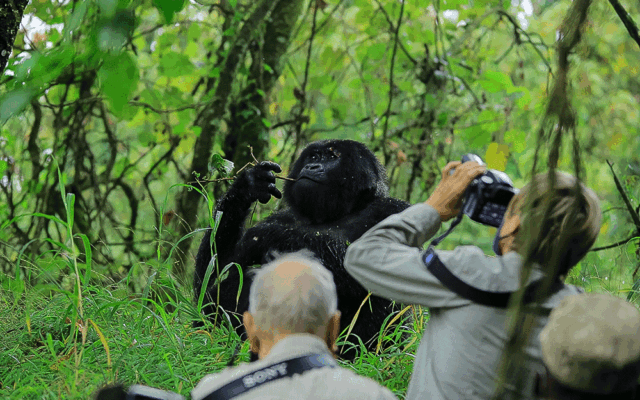
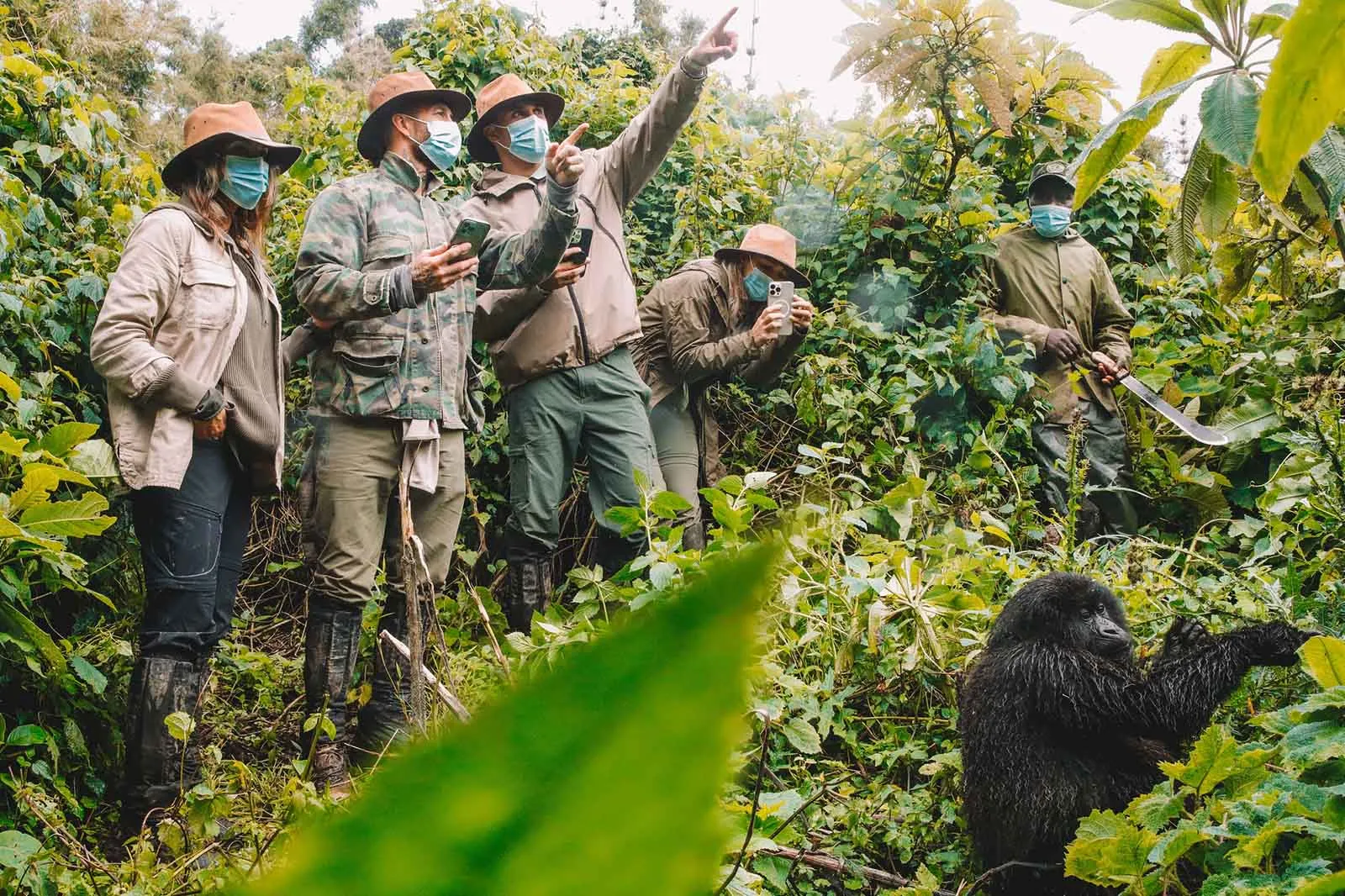
The rules exist to protect the gorillas, whose immune systems are close enough to ours to make our coughs dangerous. Keep at least 7 metres away, use no flash photography, keep your voice low, and never trek with a cold or flu. The minimum age is 15. If a gorilla approaches, crouch slowly, avoid direct eye contact and let it pass. Your day begins with a briefing at the sector headquarters before around 8am, and ends with a certificate once you return.
What to pack
The forest is wet, steep and thorny, so pack for it. The single most important item is a pair of sturdy, waterproof hiking boots with ankle support. Add long trousers tucked into socks, a long-sleeved shirt in neutral colours, a waterproof jacket or poncho, and gaiters for the mud.
Thick gardening gloves save your hands on branches and stinging nettles, and gaiters keep safari ants at bay. Carry a small daypack (your porter takes the main load) with 1.5–3 litres of water, high-energy snacks, insect repellent, sunscreen and any personal medication. Bring a camera with a fully charged battery and a zip-lock bag to shield it from rain — and remember, no flash.
Best time to go
Trekking runs year-round, but the two dry seasons — June to September and December to February — bring firmer trails and easier hiking, along with the highest demand. The wetter months of March to May and October to November mean muddier climbs and heavier gear, but fewer crowds, better lodge availability and, in April, May and November, a lower permit price of USD 600. Spending a night near your sector before trek day helps you settle and guarantees an unhurried start.
Uganda or Rwanda?
Both countries offer world-class encounters. Rwanda’s Volcanoes National Park delivers polished, easily accessed treks on volcanic slopes for a flat USD 1,500 permit. Uganda offers a wilder, deeper-jungle experience, more habituated families, the exclusive habituation experience, and that USD 800 permit.
The USD 700 saving per person is significant — enough to add chimpanzee tracking, extra nights or a Nile cruise. Uganda also combines gorillas with far more: chimps, big game and boat safaris that Rwanda cannot match. Many travellers do both, flying into Kigali and crossing the land border into Bwindi. If your priority is variety and value, Uganda wins; for a short, luxurious gorilla-only trip, Rwanda has the edge.
Combining gorillas with the rest of Uganda
Gorillas are the highlight, but they are best enjoyed as part of a broader journey. Chimpanzee tracking in Kibale Forest (permit around USD 250) or Budongo Forest pairs naturally with a gorilla trek, and Queen Elizabeth National Park’s tree-climbing lions sit conveniently between them.
Further north, Murchison Falls rewards you with the Nile squeezing through a seven-metre gorge, boat cruises beneath the falls, and game drives for elephant, giraffe and lion. A classic loop threads gorillas, chimps and the Nile into one unforgettable fortnight.
Frequently Asked Questions
How much is a Uganda gorilla permit in 2026?
USD 800 for foreign non-residents, USD 700 for foreign residents and UGX 300,000 for East African citizens. The four-hour habituation experience costs USD 1,500.
How far in advance should I book?
Three to six months ahead for the dry season, and as early as possible for the habituation experience, as permits are strictly limited.
Is gorilla trekking safe?
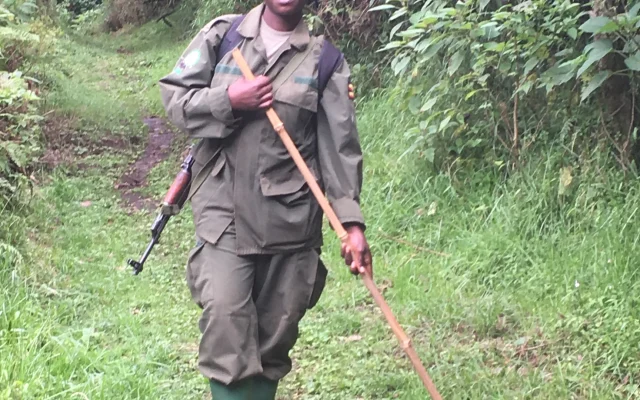
Yes. You are accompanied by trained UWA guides and armed rangers, and the gorillas are habituated. Following the distance and behaviour rules keeps both you and them safe.
Can children go gorilla trekking?
The minimum age is 15, with no exceptions.
How long does the trek take?
Anywhere from under an hour to seven hours of hiking, plus your one hour with the family. Trackers locate the gorillas ahead of you each morning.
Plan Your Safari
We arrange gorilla permits, sector-matched lodges and the transfers that tie it all together, whether you want gorillas alone or a full Ugandan circuit. Explore our gorilla trekking safaris, add chimpanzees on a chimpanzee trekking safari, or combine the gorillas with the Nile on a Murchison Falls safari. Get in touch and we will build the itinerary around you.