Packing well is one of the few things fully within your control before a Uganda safari, and it makes a genuine difference to how much you enjoy the days ahead. Get it right and you move easily between a warm equatorial afternoon on the Nile, a cold pre-dawn game drive, and a steep, muddy forest climb without a second thought. Get it wrong and you spend the trip cold, sunburnt, bitten, or hauling a suitcase you never open.
Uganda sits on the equator but ranges from around 600 metres in the savannah to over 2,600 metres in Bwindi’s gorilla forests, so the golden rule is neutral colours, layers, and waterproof everything. This guide covers what we tell our own travellers to bring, from clothing and insect protection to the extras that matter for gorilla and chimpanzee trekking.
Clothing: neutral colours and light layers
Stick to earth tones — khaki, olive, tan, brown and dark green. These blend into the bush and, crucially, do not attract biting insects. Avoid black and dark blue, which draw tsetse flies in savannah parks such as Murchison Falls and Queen Elizabeth, and skip bright reds, yellows and whites, which unsettle wildlife and show every speck of the orange dust that coats everything within an hour. Camouflage patterns are best left at home entirely — they are reserved for the military in Uganda and can cause problems for civilians.
Build your wardrobe around three or four long-sleeved shirts and the same number of lightweight, quick-drying trousers. Long sleeves and full-length trousers protect you from sun, thorns, stinging nettles and insects, and trousers can be tucked into socks against safari ants. Choose synthetic or merino fabrics rather than cotton, which stays damp and cold in humid forest. Add a couple of short-sleeved shirts and a pair of shorts for relaxing at the lodge, plenty of moisture-wicking underwear and socks, and a swimsuit for lodge pools.
Layering handles Uganda’s surprising temperature swings. A fleece or light jacket takes the edge off cold early-morning drives and chilly evenings at altitude, while a wide-brimmed hat, sunglasses and a buff or scarf shield you from equatorial sun and dust. For Bwindi and Mgahinga, pack a warm beanie for genuinely cold mornings above 2,000 metres.
Footwear
Your boots are the single most important item for any trip involving forest. Bring sturdy, waterproof hiking boots with good ankle support and deep-grip soles — gorilla and chimp trails turn steep, slippery and root-tangled fast, and lightweight trainers simply will not cope. Wear them in well before you travel to avoid blisters on the trail. Pack a comfortable second pair of shoes or sandals for evenings at camp, and gaiters if you are trekking in the wet months.
Insect protection and health kit
Malaria is present throughout Uganda, so mosquito-bite prevention and prophylaxis both matter. Bring a good insect repellent — one containing DEET is the most effective — and apply it to exposed skin, especially your face, neck and hands, during daylight for tsetse flies and at dusk for mosquitoes. Store the bottle in a sealed zip-lock bag, as high-strength DEET can damage plastics, camera bodies and lens coatings if it leaks.
Speak to a travel clinic well before departure about antimalarial tablets. The commonly recommended options for Uganda are atovaquone/proguanil, doxycycline or mefloquine; each has a different dosing schedule — some start a day or two before you arrive, others up to three weeks ahead — so book that appointment early. No tablet is completely effective, which is why bite avoidance and treated bed nets remain part of the routine.
A yellow fever vaccination certificate (the “yellow card”) is legally required to enter Uganda for all travellers aged one and over, and it must be issued at an approved centre at least ten days before travel. Ask your clinic about hepatitis A and B, typhoid and rabies too. Pack a small personal first-aid kit with any prescription medication, painkillers, rehydration salts, plasters, blister care and hand sanitiser.
Camera, binoculars and electronics
Wildlife rarely poses close, so a good pair of binoculars is essential — 8×42 or 10×42 is the sweet spot for spotting distant game and picking shoebills or Rothschild’s giraffe out of the scenery. For photography, a zoom lens of 200mm or more lets you fill the frame from an open vehicle or a boat on the Nile.
Bring spare batteries and memory cards, a power bank, and a universal adapter — Uganda uses the British-style Type G three-pin plug at 240V, and lodge power can be limited or solar-run. A dry bag or zip-lock bags protect gear from rain and river spray, and a head-torch is invaluable at unlit bush camps. Note that drones are banned in national parks without special permits.
Extras for gorilla and chimpanzee trekking
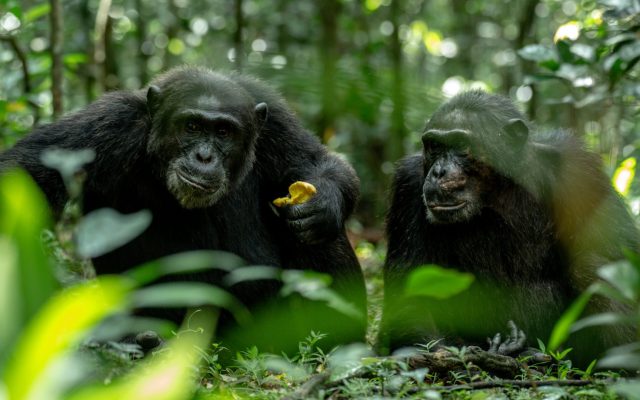
Forest treks call for a few specifics. Pack thick gardening gloves to protect your hands as you grab branches, vines and nettles on steep climbs, and a compact daypack for water (carry 1.5–3 litres), high-energy snacks and a rain layer. A lightweight face mask is required for your hour with the gorillas to protect them from human illness, so bring your own.
Consider hiring a local porter at the trailhead for around USD 15–20 — they carry your pack, steady you on slick slopes, and put money directly into the community. Leave strong perfumes and aftershaves behind, as scents attract insects and disturb primates.
Rainy-season gear
Uganda’s wetter months — roughly March to May and October to November — demand a bit more. A packable waterproof jacket or poncho is non-negotiable year-round, as forest downpours arrive in minutes, but in the rains add waterproof over-trousers, gaiters and a rain cover for your daypack. Quick-drying fabrics come into their own here, and a couple of extra pairs of socks mean you always start the day dry. Pack everything in dry bags inside a soft duffel rather than a hard case, which is easier for light aircraft and 4×4 boots.
Frequently Asked Questions
- What colours should I avoid on a Uganda safari?
-
Avoid black and dark blue, which attract tsetse flies, plus bright red, yellow, orange and white. Stick to khaki, olive, tan and brown.
- Do I need a yellow fever certificate for Uganda?
-
Yes. Proof of yellow fever vaccination is required for entry for everyone aged one and over, issued at an approved centre at least ten days before you travel.
- Do I need malaria tablets?
-
Yes — malaria is present throughout Uganda. See a travel clinic before departure to choose between atovaquone/proguanil, doxycycline or mefloquine, and combine tablets with repellent and covered skin.
- How much luggage can I bring?
-
Pack light in a soft duffel. Domestic light aircraft to airstrips such as Pakuba typically limit you to around 15kg including hand luggage, so check your specific flights.
- Are binoculars really necessary?
-
Absolutely. Much of Uganda’s wildlife is seen at a distance, and a decent pair transforms game drives, boat cruises and birding.
Plan Your Safari
Pack once for the whole circuit and let us handle the rest. Explore our Murchison Falls safaris, add primates on a gorilla trekking safari or a chimpanzee trekking safari, and we will advise on exactly what to bring for your season and route. Get in touch and we will build the itinerary around you.