



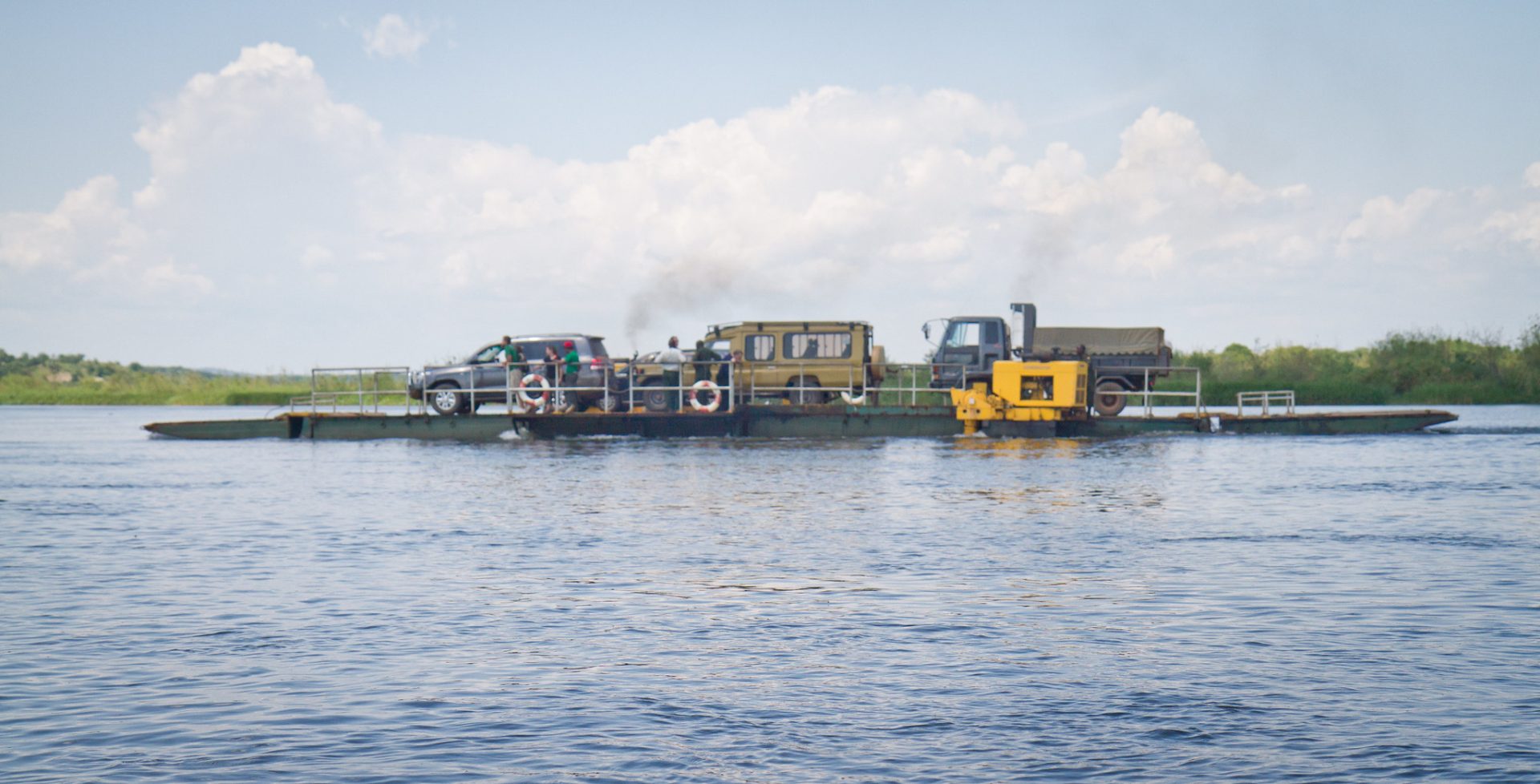
Murchison falls national park ferry
The Victoria Nile cuts Murchison Falls National Park in half at Paraa — Luo for “home of the hippo” — and for most of the park’s history that meant a timetable. Southern lodges, the launch-cruise jetty and the Top of the Falls sat on one bank; Buligi’s lion and Rothschild’s giraffe country sat on the other. Unless you entered via northern gates or flew to Pakuba airstrip, you crossed by UWA’s vehicle pontoon and planned your safari around its sailings.
That logistics puzzle still matters even though a permanent bridge now spans the river. This guide covers the Paraa ferry schedule, the long story of Nile crossings at Murchison, official vehicle fees when the pontoon is active, and timing habits that keep a Buligi game drive sharp. For tariff tables, see our Paraa ferry fees guide.
Why the Paraa Crossing Matters
Murchison covers roughly 3,840 square kilometres in northwestern Uganda. The Masindi–Paraa–Pakwach road runs 87 kilometres through the park; the Nile crosses it at Paraa. On the northern bank, tracks explore Buligi and Chobe — open savannah where buffalo, elephant and Rothschild’s giraffe concentrate. On the southern bank sit most lodges, Budongo chimp access and the falls trailhead. Anyone staying south who wants a proper northern game drive must cross at Paraa — by bridge or, when UWA reactivates it, by ferry.
Bridge History — From Churchill to the Paraa Bridge
Crossing the Nile at Murchison has frustrated travellers for more than a century. When Winston Churchill passed through in 1907, he remarked that “ten pounds would throw a bridge across the Nile at this point” — wildly optimistic, but it captured the obvious need.
The first attempt came in 1960, when a footbridge was built across the gorge near the falls. It lasted barely two years. Floods in 1962 washed it into the gorge; concrete abutments on the clifftop still mark where it stood. No replacement followed, and for six decades the park relied on a motorised vehicle ferry at Paraa, downstream where the river widens.
By the late 2010s, Uganda National Roads Authority was upgrading the Masindi–Paraa–Pakwach corridor. The centrepiece was a new Paraa Bridge — roughly 520 metres long, engineered for a 120-year lifespan. UWA declared it open for public use in February 2021, confirming it had replaced the scheduled ferry for routine crossings. Two pontoon ferries remain moored nearby as backup. Do not confuse this with the separate Karuma Bridge on the Gulu–Pakwach highway — that corridor does not replace Buligi access from Paraa.
Paraa Bridge Today — and When the Ferry Returns
For most safaris today, the Paraa Bridge is the normal crossing — no timetable, no queue, no UGX ferry toll when the bridge is active. UWA may revert to the pontoon during bridge maintenance or exceptional water levels. Confirm with your lodge or the Paraa tourism desk on arrival; older guidebooks still describe the ferry as the only option.
Paraa Ferry Schedule
When UWA operates the vehicle ferry, it runs daily between 07:00 and 19:00 East Africa Time. Scheduled crossings commonly depart at 07:00, 09:00, 11:00, 12:00, 14:00, 16:00, 18:00 and 19:00, south to north and north to south. Verify times at the Paraa tourism desk — some UWA notes omit individual slots.
The pontoon carries roughly eight vehicles; peak-season queues at 07:00 and 16:00 can add 20–30 minutes. No reservations — first to queue, first aboard. Arrive 15–20 minutes early, especially June–September and December–February.
The 07:00 southern-bank sailing was the one operators treated as fixed: Buligi drives work best at dawn, and missing that slot typically cost the best predator and giraffe hours. The 19:00 run was the hard cutoff — miss it and you stayed put until morning. UWA could arrange special crossings for an extra fee; that was emergency-only, not itinerary planning.
Vehicle Fees and Ferry Rules
Ferry fees are separate from the US$45 park entry ticket and gate fees. UWA charges in UGX by weight, per one-way crossing: light vehicles (2 tonnes and below) UGX 20,000; medium (2–5 tonnes) UGX 40,000; heavy (5–10 tonnes) UGX 80,000; very heavy (10–20 tonnes) UGX 150,000; motorcycles UGX 5,000; passengers UGX 5,000 each. Drivers and school buses with students cross free. Vehicles above 20 tonnes need prior UWA approval.
Most safari 4x4s fall into the light band. Each crossing counts one way. Park residents’ first payment is valid until 19:00 that day. Passengers exit vehicles and board on foot; pay in UGX cash at the jetty before boarding.
Timing Tips — Bridge or Ferry
Park gates run 07:00 to 19:00; best game viewing sits in the first two hours after dawn and the last hour before dusk.
Southern lodge, northern drives: leave by 06:15–06:30 if the ferry is running, or drive early across the bridge. Aim for Buligi tracks by 07:30 — see our Buligi game drive guide.
Bridge-era note: cross when your ranger recommends, but do not sleep in — mid-morning heat still suppresses predator movement on open Buligi.
Skip the crossing: enter via Tangi, Wankwar or Chobe and stay north-bank, or fly to Pakuba airstrip about 19 kilometres from Paraa. Southern-only days — launch cruise, Top of the Falls, Budongo chimps — need no crossing, though you miss Buligi’s savannah game viewing.
Frequently Asked Questions
- Is the Murchison Falls ferry still running?
-
The Paraa ferry was replaced by the Paraa Bridge for routine traffic in 2021. UWA may reactivate the pontoon during maintenance, but most visitors cross by road.
- What time did the Paraa ferry operate?
-
When in service: 07:00 to 19:00 daily, with sailings at 07:00, 09:00, 11:00, 12:00, 14:00, 16:00, 18:00 and 19:00. Confirm at Paraa if the pontoon is active.
- How much does the Paraa ferry cost?
-
Light vehicles pay UGX 20,000 one way; passengers UGX 5,000 each; drivers free. Fees apply only when the pontoon is active, not via the bridge.
- What is the bridge history at Murchison?
-
Churchill suggested a cheap bridge in 1907. A 1960 footbridge near the falls was destroyed by 1962 floods. The 520-metre Paraa Bridge opened in 2021, ending six decades of scheduled ferry reliance.
- Can I avoid the Paraa crossing?
-
Yes — northern-gate entry, north-bank lodges, or fly-ins to Pakuba. Southern itineraries skipping Buligi also avoid crossing.
Plan Your Safari
The Paraa crossing — bridge or ferry — is the hinge between Murchison’s two halves. Tell us your lodge and gate entry and we will confirm which crossing applies and whether ferry fees sit in your quote. Browse our Murchison Falls safari packages or explore all Murchison safaris — we match crossing times to your game drives so the Nile works for you, not against you.