



Birding the Nile Delta
West of Paraa, the Victoria Nile loosens its grip. The river that thunders through the falls slows, spreads and breaks into a maze of papyrus channels and glassy lagoons before it slips into Lake Albert. This is the Nile Delta — and a morning drifting through it on a boat is one of the great birding experiences in Uganda, built around the quest for a single, prehistoric-looking bird: the shoebill.
This guide is about the trip itself — how the delta cruise works, when to go, how to choose your boat, what a morning on the water actually feels like, and how a good guide coaxes a shoebill out of the reeds. For the full roll-call of species you might tick, see our companion piece on the birds of the Paraa and delta area.
Why the delta cruise is its own trip
Most visitors know the classic launch cruise that runs upstream from Paraa to the foot of the falls — a roughly 17km round trip of about three hours, best for bee-eaters, fish eagles and the dramatic base of the cataract. The delta cruise heads the opposite way, downstream, and it is a longer, quieter and altogether different animal.
The delta run covers around a 20km voyage from the Paraa jetty on the south bank, threading past the edge of the Buligi peninsula towards the Lake Albert delta point. It typically takes four to five hours there and back, and it is a slower, more contemplative journey — less about big waterfalls and more about patient scanning of the papyrus. If your heart is set on a shoebill, this is the boat to be on.
Timing: why you leave at first light
The scheduled delta cruise departs the Paraa jetty at 7:00am, often with a “breakfast on board” option, and there is a very good reason for that early start. The first hours after dawn are cool and still, the light is soft and low across the water, and birds are at their most active before the heat builds.
Shoebills, in particular, tend to hunt in the calm of early morning, standing statue-still at the papyrus edge before striking. By late morning the wind picks up and the reeds shiver, making both the birds and the boat harder work, so book the earliest slot you can.
Private versus shared boats
You have two broad options. The scheduled, shared delta cruise runs subject to a minimum number of passengers and is the budget-friendly choice — indicative pricing sits around USD 55 per person with the delta specialist operators, against roughly USD 30 for the standard UWA launch to the falls.
A private boat costs more — often a few hundred dollars for the vessel — but it buys the two things birders value most: control of the timing and the pace. You can leave before the scheduled boats, linger at a promising channel for as long as a shoebill demands, and ask the skipper to cut the engine and drift. Either way, the delta boats are small, shallow-draught, open-sided aluminium launches that nose into channels the larger falls boats cannot reach — sit on the side facing the reeds and keep your kit in a waterproof bag against the spray.
How guides find the shoebill
Finding a shoebill in a wall of papyrus is a genuine skill, and it is why a knowledgeable skipper or UWA ranger-guide makes or breaks the trip. The delta is not a zoo; the bird is a Vulnerable species that can be maddeningly hard to pin down, and success rests on local knowledge.
Good guides work the delta by reading it. They know which lagoons and channel mouths the resident birds favour, they watch water levels and fish movement, and they scan the reed line for the tell-tale grey silhouette and huge, clog-shaped bill. Radio chatter between boats helps too — a sighting reported by one skipper is quickly shared — and once a bird is located the engine drops to a crawl and the boat eases in slowly so as not to flush it.
A morning on the water
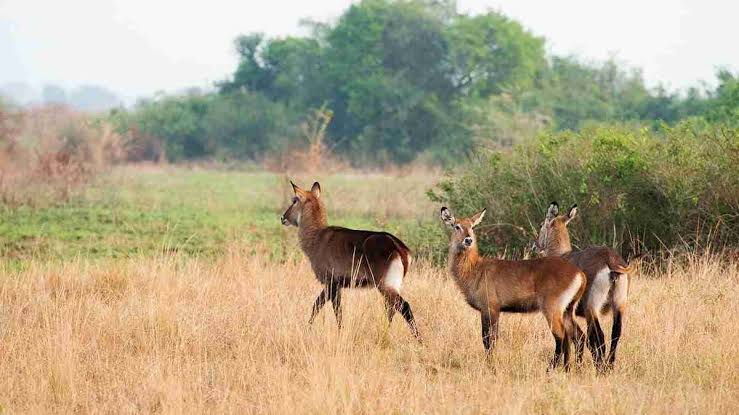
The cruise begins in the wide, open river below Paraa, hippos grunting in the shallows and crocodiles hauled out on the sandbars. As you move downstream the banks close in and the world turns green and papyrus-walled. Even before the shoebill, the supporting cast is superb: African fish eagles ring out their yelping call from bankside trees, Goliath and purple herons stalk the margins, and pied, malachite and giant kingfishers work the channels. Where the dry season exposes sandbars, elegant African skimmers loaf in flocks, African jacanas trot across the lily pads, and grey crowned cranes pick through the fringes. Elephants, buffalo and the occasional giraffe come down to drink along the Buligi bank, adding big game to the birding.
Then, if the delta is kind, the boat slows and there it is — a shoebill, motionless at the reed edge, watching the water. It is a hushed, held-breath moment, and it is what draws birders back to this stretch of the Nile again and again.
Best months and how to book
The delta rewards visitors year-round, but the dry seasons — roughly December to February and June to September — are best. Falling water levels concentrate fish, expose the sandbars that skimmers and waders love, and make the shallow channels far easier to navigate, all of which lifts your odds of a shoebill.
Book through your lodge, the UWA office at Paraa, or a licensed operator; no special bird permit is needed beyond general park entry, though the boat fee is separate. Confirm your departure the evening before, arrive at the jetty in good time, and if you are chasing a specific bird, tell your guide in advance so they can plan the route around it. For a fuller species list and access notes, our guide to the best places to see shoebills in Uganda is a useful companion.
Patience and etiquette on the water
The delta asks for patience. A shoebill is never guaranteed, and the birds that make this place special are sensitive to disturbance, so keep your voice low, avoid sudden movement, and let the guide decide how close is close enough — a flushed shoebill helps no one and stresses a threatened bird. Bring binoculars and a long lens, dress in neutral colours, pack sun protection and water for the long morning, and resist the urge to rush; the delta gives up its best sightings to those content to sit quietly and let the river come to them.
Frequently Asked Questions
- How long is the Nile Delta cruise?
-
The delta cruise typically runs four to five hours there and back, covering around 20km downstream from Paraa. That is notably longer than the roughly three-hour launch to the base of the falls.
- What time does the delta cruise leave?
-
The scheduled cruise departs the Paraa jetty on the south bank at 7:00am, often with breakfast on board and subject to minimum passenger numbers. Private boats can leave earlier by arrangement.
- Am I guaranteed to see a shoebill?
-
No — the shoebill is a Vulnerable, elusive species and sightings are never guaranteed. Your best chances come with an early departure, a knowledgeable guide and a dry-season trip when water levels are low.
- Should I choose a private or shared boat?
-
A shared cruise (around USD 55 per person) is the value option. A private boat costs more but lets you set the timing and pace, which serious birders and photographers usually find worthwhile.
- When is the best time of year for the delta?
-
The dry seasons — December to February and June to September — are ideal, as low water concentrates birds and eases navigation. See our best time to visit guide for detail.
Plan Your Safari
An early delta cruise is the highlight of any birding trip to Murchison — a slow, papyrus-lined morning with a fair shot at the extraordinary shoebill. Talk to us about a Murchison safari built around a dawn delta shoebill cruise, an upstream launch to the foot of the falls and unhurried game drives across the Buligi plains — and browse our wider Uganda birdwatching guide to shape the perfect itinerary on the Nile.