



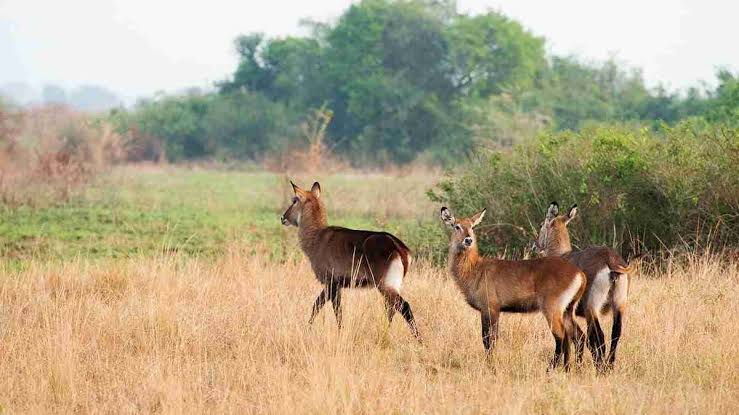
Morning vs Afternoon Game Drive
At Murchison Falls, the difference between a morning and an afternoon game drive is not just the clock — it is temperature, animal behaviour, ferry queues and the quality of light on the northern savannah. Choose the wrong slot and you can spend three hours on the Buligi tracks watching buffalo sleep in shade; choose well and a lion pride may still be walking the Queen’s Track before breakfast.
This guide compares morning and afternoon game drives as we run them in Uganda’s largest national park — roughly 3,840 square kilometres split by the Victoria Nile, with almost all serious wildlife viewing on the northern bank. We cover what each session actually delivers, the logistics that decide whether you can make dawn, and how to build a day that uses both windows without wasting the slow hours in between.
How game drives are timed at Murchison
UWA park gates operate from 07:00 to 19:00, and most lodges schedule drives in two blocks: an early outing leaving between 06:00 and 06:30, and a late-afternoon run from about 16:00 to 16:30. A typical northern-bank loop on the Buligi circuit takes three to four hours, so a morning drive usually ends near 10:00 and an afternoon session runs until dusk.
That rhythm mirrors how the animals use the plains. Large grazers and predators are most active in the cool hours around dawn and again before sunset — behaviour ecologists call crepuscular activity. Between roughly 11:00 and 15:00, heat pushes wildlife into riverine shade and sightings drop sharply on open ground. Rangers and experienced guides treat that midday lull as fixed, not bad luck.
Permits follow the same structure. Under the UWA tariff valid through June 2026, park entry for foreign non-residents is US$45 per adult per 24 hours, a day game drive with a UWA ranger guide costs about US$25 per guide, and self-driving without a ranger adds roughly US$10 per vehicle. Neither morning nor afternoon carries a separate fee — you pay once and choose when to go out. See our Murchison guide fees page for the full tariff.
Morning game drives: the stronger window
If you can manage only one drive, make it the morning. Big game on the northern savannah — roughly 2,000 square kilometres of Borassus palm grassland and acacia woodland — is most visible between about 06:00 and 10:00, when lions are still moving after the night, Rothschild’s giraffe browse in open light, and Uganda kob herds graze before retreating to cover.
The Buligi tracks reward an early start in specific ways. Lion prides concentrate along the mid-Buligi stretch near the junctions with the Queen’s Track (about 13 kilometres) and the Albert Track (around 11 kilometres), and guides who know where cats rested overnight have their best success in the first hour. Leopards, too, are still active at dawn before they climb into fig and sausage trees for the day — see our leopard sightings guide for how crepuscular cats use these hours.
Logistics favour the north bank. Guests staying near Pakuba Airstrip or entering via the Tangi or Chobe gates can be on the tracks before the ferry even opens. If you sleep south of the Nile at Paraa or Sambiya, the Paraa ferry is the bottleneck: sailings run at 07:00, 09:00, 11:00, 12:00, 14:00, 16:00, 18:00 and 19:00, and the first crossing is the one serious dawn drivers target. Leave your lodge by around 06:30, queue early, and treat the 07:00 sailing as non-negotiable — miss it and you lose the best two hours of the day. Our Buligi game drive guide walks through the classic morning loop in detail.
Afternoon game drives: the second shift
Afternoon drives are not a consolation prize — they show you a different park. Departing around 16:00 to 16:30 catches the golden hour as the sun drops toward the Albert Nile, warms the grass to amber and draws elephants and buffalo toward the water’s edge. Herds that spent the heat of the day in woodland often cross open ground in the last hour of light, and the lower angle of sun makes for striking photographs of giraffe against acacia silhouettes.
Afternoon sessions also suit a slower pace. Fewer vehicles are on the tracks after 16:00, wind often drops, and a relaxed run along the Albert Track or the delta margins can feel more scenic than productive — which is exactly the point if you spent the morning covering ground. Predators begin stirring again from about 17:00, and while afternoon lion sightings are less consistent than at dawn, a patient scan of termite mounds and fig-tree shade lines still pays off.
The afternoon window has practical advantages too. Fly-in guests landing at Pakuba around 14:00 can reach camp, settle in and still join a drive the same day. Travellers who arrived via Kichumbanyobo Gate and spent the morning on a Nile launch cruise — the standard 09:00 or 14:00 departures from Paraa — can use the late session for their first taste of Buligi without sacrificing an early start they could not have made anyway. For how the cruise fits around drives, see our boat cruise versus game drive comparison.
The midday gap: what to do instead
Between roughly 11:00 and 15:00, game viewing on the open northern plains slows to a crawl. Buffalo lie in wallows, lions sleep under thorn trees, and kob herds scatter into shade where binoculars struggle to pick them out. Driving hard through that window rarely improves your species list — it mostly burns fuel and patience.
Experienced itineraries treat midday as transition time. The upstream launch cruise to the base of the falls — about 17 kilometres each way, costing roughly US$30 per person — works well in late morning when the boat is cooler than the vehicle. The Top of the Falls hike, chimpanzee trekking at Kaniyo Pabidi in Budongo, or a rest back at lodge all fit naturally between an early drive and an afternoon return to the tracks. On the southern bank, the Heart of Murchison loops near Rabongo hold lighter traffic than Buligi and can work as a half-day alternative if you have already done the classic northern circuit.
Where you sleep shapes the choice
Lodge placement matters as much as the clock. North-bank camps near Pakuba or Chobe put you on the Buligi tracks within minutes of dawn — no ferry, no queue, no lost light. That is the setup we recommend for guests who want two full drives in two days without fighting the schedule.
South-bank lodges at Paraa, Red Chilli or Sambiya River Lodge suit travellers who prioritise the launch cruise and Budongo chimps. You can still do excellent dawn drives, but every northern outing starts with the ferry calculation. One compromise we use often: a morning Buligi drive on day one, then move to a north-bank lodge for day two so the second dawn is unhurried. If you are comparing bases, our Murchison Falls game drive guide covers the full northern track network.
Seasons and weather
Both morning and afternoon drives improve in the dry months — roughly June to September and December to February — when grass is short, wildlife concentrates near shrinking water along the Nile and delta, and murram tracks stay firm. In the wet seasons, afternoon thunderstorms can cut a drive short and black-cotton soils turn greasy; morning outings after overnight rain sometimes offer the day’s only firm window before clouds build.
Heat is the other seasonal variable. From March through May and again in October and November, midday temperatures on the northern plains can exceed 35°C, making the dawn advantage sharper. Afternoon drives in those months remain worthwhile for elephants at the river, but expect shorter sessions and carry more water than you think you need.
Photography: dawn light versus golden hour
For photographers the choice is less about species and more about light. Morning drives deliver cool, even tones — ideal for detail in fur and feather, and for catching predators before they disappear into shade. Afternoon drives offer warm, directional light that models giraffe necks, elephant silhouettes and dust raised by moving herds. Harsh overhead sun between 11:00 and 14:00 flattens both, which is another reason to be off the tracks then.
Either session rewards a long lens and a beanbag on the window sill. A vehicle lets you reposition for the sun in ways a fixed boat deck cannot, so plan your shooting angle around the track direction — clockwise Buligi loops in the morning catch light on the open grassland first, while an Albert Track run in late afternoon puts the Nile behind your subject.
Building a day with both drives
With two nights in the park, the format we recommend most is straightforward: dawn Buligi on day one, launch cruise and Top of the Falls at midday, then a late-afternoon drive along the Albert Track or delta edge. Day two repeats dawn on a different loop — Victoria Track toward the papyrus, or Pakuba sector for quieter country — and leaves the afternoon free for the downstream delta cruise if you have not yet looked for shoebill in the Ramsar wetland.
Guests sleeping inside the park can add a third window: night game drives on the northern bank between roughly 18:30 and 22:00, with an armed UWA ranger and spotlight, for around US$30 to US$40 per person. That outing is neither morning nor afternoon — it is the crepuscular hours extended into darkness, and it belongs in any itinerary that already covers both daylight sessions.
Frequently Asked Questions
- Is a morning or afternoon game drive better at Murchison Falls?
-
Morning drives are stronger for overall wildlife activity, predator sightings and cooler conditions. Afternoon drives excel for golden-hour photography, elephants moving to the Nile and a slower, quieter experience. If you can only choose one, pick the morning.
- What time should a morning game drive start?
-
Aim to be on the northern tracks by 06:30, or on the 07:00 Paraa ferry if you are based south of the Nile. The most productive window runs until about 10:00.
- What time should an afternoon game drive start?
-
Most lodges depart between 16:00 and 16:30. Allow three to four hours so you are still on the tracks as the light softens toward 18:30, then exit before the 19:00 gate closing.
- Can I do both a morning and afternoon drive in one day?
-
Yes, and that is how we structure many two-night itineraries — early Buligi, midday boat or rest, then a late-afternoon run on a different track. Use the slow midday hours for the launch cruise rather than driving the open plains.
- Do morning and afternoon drives cost different amounts?
-
No. UWA charges the same ranger guide fee (about US$25) and self-drive fee (about US$10 per vehicle) regardless of time of day. Park entry at US$45 per person covers a 24-hour period for either session.
- What about night drives — are they better than afternoon?
-
Night drives show a different set of species — leopard, genet, civet, bush baby — and require staying inside the park. They complement rather than replace daylight drives; book through your lodge by mid-afternoon.
Plan Your Safari
The best Murchison itinerary uses the morning for predators and the afternoon for river-edge elephants — not because one is always superior, but because each hour on the savannah has a job to do. Tell us your lodge preference and how many nights you have, and we will sequence the ferry, ranger and tracks so you are on Buligi when the plains are alive. Start with our best time to visit Murchison Falls guide, explore Murchison Falls safari packages, or see how a 3-day Murchison Falls safari fits both drives into a single visit.