



Murchison Falls Safari
A Murchison Falls safari is Uganda’s most accessible big-game circuit — savannah, river and waterfall within a single park, roughly 305 kilometres north of Kampala. The Victoria Nile cuts through 3,840 square kilometres of protected land before the entire river is forced through a gorge barely six metres wide and drops 45 metres into the Devil’s Cauldron. That spectacle alone draws travellers, but what keeps them booking return trips is the combination: dawn game drives across open plains where Nubian giraffe outnumber almost anywhere else on the continent, hippo and Nile crocodile on a launch cruise upstream, and lion, elephant and buffalo within the same two- or three-day window.
This guide explains what a Murchison Falls safari actually involves on the ground — the core activities, typical trip lengths, how you get there, what wildlife to expect, and the UWA fees and ferry timings that shape every itinerary. For park history and habitat detail, see our Murchison Falls National Park guide; for step-by-step planning, pair this with the planning guide.
What Makes a Murchison Falls Safari Different
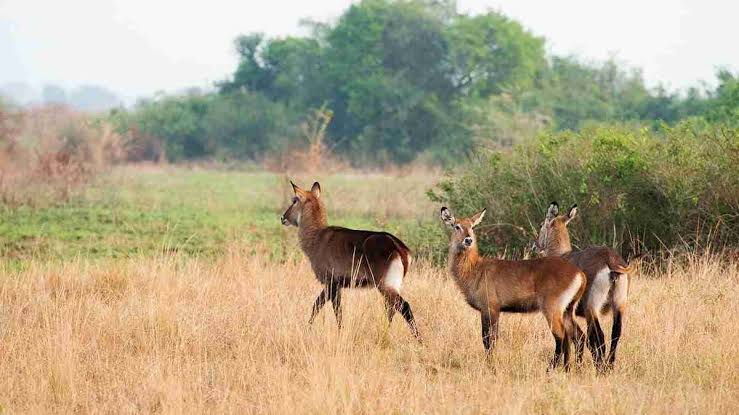
Most Uganda safaris ask you to choose between savannah or forest, river or rift escarpment. Murchison delivers all three without changing parks. UWA records 76 mammal species and more than 451 bird species across the conservation area — lions on the Buligi Peninsula, leopards on night drives where lodges offer them, buffalo herds in the tens of thousands, and a rebuilt population of Nubian giraffe that Giraffe Conservation Foundation surveys put at roughly 1,770 individuals across monitoring rounds in 2024–2025.
The Nile is the organising principle. At Paraa — Luo for “home of the hippo” — the river divides the park into a northern savannah where most game drives happen and a southern bank of woodland, Budongo Forest and lodge access. Unless you enter via northern gates at Tangi, Wankwar or Chobe, or fly to Pakuba airstrip about 19 kilometres from Paraa, your daily rhythm includes the vehicle ferry. That single detail — cross at 07:00 or miss the best light on Buligi — is what separates a well-run safari from a frustrating one.
The Core Safari Experiences
Game drives on the northern bank are the savannah centrepiece. Roughly 170 kilometres of murram tracks loop across the Buligi Peninsula between the Victoria and Albert Niles. A dawn departure routinely produces elephant, giraffe, Uganda kob, hartebeest and, with a UWA ranger guide on board — around US$25 per day — lion and leopard sightings that the radio network often coordinates. Our Buligi game drive guide covers track names and timing.
The launch cruise to the base of the falls is the second pillar. Shared boats depart from Paraa Jetty — typically around 09:00 and 14:00 — for a two-to-three-hour return trip upstream past hippo pods and large Nile crocodiles. Foreign non-residents pay around US$30 under the current UWA tariff. Many guests disembark below the falls and hike 45 to 60 minutes to the clifftop viewpoint; the separate Top of the Falls trail costs around US$15. The Albert Delta cruise downstream toward Lake Albert is specialist birding — shoebill stork, pelicans and African skimmers — and deserves its own morning, most reliably from roughly January to March.
Forest add-ons round out longer safaris. Chimpanzee trekking at Kaniyo Pabidi in Budongo Forest runs on a separate permit of around US$130, with limited daily slots. A stop at Ziwa Rhino Sanctuary on the Kampala–Masindi road completes the Big Five with a guided on-foot rhino walk — Murchison holds four of the five internally, but rhinos were extirpated from the park decades ago.
Typical Safari Lengths and Itineraries
The 3-day Murchison Falls safari is the default format: drive north on day one, enter via Kichumbanyobo Gate roughly 16 kilometres north of Masindi, reach your lodge by mid-afternoon. Day two crosses the Paraa ferry at first light for a dawn game drive, then the afternoon launch cruise. Day three allows a short sunrise drive or leisurely breakfast before the return south. Two nights inside the park is the minimum that avoids racing back to Entebbe before you have seen the Nile at both dawn and afternoon light.
A 4-day safari adds a delta shoebill cruise, a second Buligi drive, Budongo chimps or a night drive — restricted to lodge guests at around US$40 per person. The compressed 2-day format suits weekend travellers from Kampala who accept missing either the dawn drive or the boat cruise. See our how many days you need page for comparisons.
Murchison also works as the opening act on longer Uganda circuits — the Murchison and Queen Elizabeth safari, routes combining Bwindi gorillas, or fly-in connections from Entebbe that land at Pakuba, Bugungu or Chobe in about 60 to 90 minutes. Compare road and air access in our fly-in vs road safari guide.
Getting There: Road, Gates and the Paraa Ferry
From Entebbe International Airport, allow six to seven hours to reach Paraa — about 345 kilometres via Kampala and Masindi. The standard southern route enters at Kichumbanyobo, then runs roughly 85 kilometres through Budongo Forest to the Nile. From Kampala alone, Paraa is about five to six hours. Read our Kichumbanyobo Gate guide for the full approach.
Northern gates at Chobe near Karuma Falls, Tangi near Pakwach and Wankwar near Purongo suit routes from Gulu or Kidepo Valley National Park, dropping you straight into the northern game zone if your lodge sits on the north bank. The scenic western approach descends the rift escarpment through Bugungu or Mubako Gate — convenient for delta birding and lodges on the south-western boundary.
The Paraa ferry operates daily at 07:00, 09:00, 11:00, 12:00, 14:00, 16:00, 18:00 and 19:00. Park gates open from 07:00 to 19:00. Treat the 07:00 sailing as fixed if Buligi is on your morning plan and your lodge is south of the Nile — northern-bank lodges and fly-in guests to Pakuba avoid this entirely.
When to Go and What It Costs
Murchison works year-round, but dry windows of December to February and June to September concentrate game at remaining water, firm up murram tracks and fill lodges first — book three to six months ahead for peak dates. Wet seasons from March to May and October to November bring lush scenery, breeding birds and lighter vehicle pressure, though western Buligi tracks can turn slick after heavy rain.
Under the UWA Conservation Tariff valid through June 2026, Murchison sits in the Category A+ tier: US$45 per foreign non-resident adult per 24 hours, children aged 5–15 at US$25, plus activity fees listed separately. Launch cruises cost around US$30, ranger guides US$25, Top of the Falls hike US$15. Mid-range guided packages for a three-day safari typically run US$850–1,200 per person for groups of two to four, with UWA fees, vehicle, guide and lodge included. Full tables sit in our cost of visiting Murchison Falls guide.
Frequently Asked Questions
- What is included in a typical Murchison Falls safari?
-
Most operator packages cover transport in a 4×4, lodge accommodation, park entry, a UWA ranger guide for game drives, the launch cruise and driver-guide fees. Chimp permits, delta cruises, night drives, Top of the Falls hikes and tips are often extra — confirm before you book.
- Is a Murchison Falls safari suitable for first-time visitors to Africa?
-
Yes. The park combines classic savannah game viewing with a river cruise and a dramatic waterfall in one compact itinerary, with good lodge infrastructure at Paraa and reasonable driving distance from Entebbe. Our first-time visitors guide covers layout and expectations.
- How many days do I need for a Murchison Falls safari?
-
Two full days inside the park covers the core triangle — one northern game drive, one launch cruise and a Top of the Falls visit. Three days with two nights at Paraa suits most first-timers; four opens the delta shoebill cruise, Budongo chimps or a second dawn drive without stacking everything into a single morning.
- Can I see the Big Five on a Murchison Falls safari?
-
Murchison holds lion, leopard, elephant and buffalo. Rhinos require a stop at Ziwa Rhino Sanctuary on the transfer day — roughly 176 kilometres north of Kampala — for a guided on-foot walk among the reintroduced southern white rhino population.
- Should I drive or fly to Murchison Falls?
-
Road access via Masindi and Kichumbanyobo is the standard choice and keeps costs down. Scheduled light aircraft from Entebbe to Pakuba, Bugungu or Chobe replace a full driving day with time on the Buligi plains — worthwhile on longer Uganda circuits or when time is tight.
Plan Your Safari
A Murchison Falls safari rewards travellers who understand the river, the ferry and the seasons before they arrive — dawn on Buligi, hippo pods on the Nile and the roar of the falls each ask for a different kind of patience. Browse our Murchison Falls safari packages, compare the 3-day safari and 4-day safari, or tell us your dates and group size — we will map gates, lodge side, ranger bookings and daily timings so your days follow the wildlife rather than fight the schedule.