



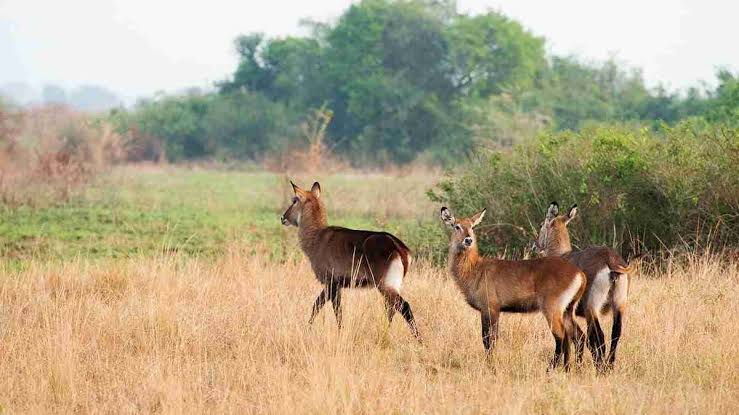
Off-the-Beaten-Path Experiences in Murchison Falls
Most Murchison Falls itineraries repeat the same rhythm: a Buligi game drive, the launch to the base of the falls, a night at Paraa. All worthwhile — yet Uganda’s largest national park holds quieter corners where forest hornbills replace engine noise, papyrus channels hide shoebill storks, and village weavers welcome travellers beside the park boundary. Those experiences reward people who build an extra day into their plan.
This guide covers the lesser-known routes we send guests on when they ask for something beyond the brochure circuit: quiet game tracks, delta walks, community visits and Rabongo Forest. Pair it with our complete activities guide and guided nature walks page for current UWA fees.
Lesser-Known Game Drive Tracks
The Buligi circuit — roughly 170 kilometres of northern tracks — draws most convoys because wildlife density peaks there. Quieter alternatives suit repeat visitors and anyone who prefers an empty horizon.
On the southern bank, the Tebito Track (often called the Honeymoon Track) runs about 22 kilometres as a semi-loop east from Sambiya toward Rabongo. Ferry access limits traffic, so you may drive an hour without seeing another vehicle. Lions, elephant and the translocated southern giraffe herd appear here in mixed woodland rather than open Buligi savannah.
North of the Nile, the Albert Track (11 to 14 kilometres along Lake Albert) and Victoria Track (roughly 17 kilometres toward delta woodland) see fewer vehicles than the central Buligi loop. The Pakuba Track past the ruins of Idi Amin’s former lodge, and the Chobe grasslands near Chobe Gate, suit fly-in guests at Pakuba Airstrip or travellers entering via Wankwar Gate near Purongo — about 324 kilometres from Kampala. See our Buligi game drive guide for the flagship circuit.
Delta Walks and Downstream Cruises
Where the Victoria Nile fans into Lake Albert — roughly 20 kilometres downstream from Paraa Jetty — savannah gives way to papyrus swamp. This Albert Delta, part of a Ramsar wetland of 17,293 hectares, is among Africa’s most reliable shoebill habitats. January to March, when water levels drop, consistently outperforms other months.
A morning boat cruise — typically departing around 07:00 — takes two and a half to four hours through channels shared by Goliath herons, hippos and basking crocodiles; shared cruises run roughly US$30–50 per person. Alternatively, UWA offers two- to four-hour guided swamp walks along the delta fringe with an armed ranger — a ground-level perspective most day-trippers skip. Walk fees run about US$25 for foreign non-residents, plus park entry. See our Nile delta cruise guide for booking detail.
Community Visits Near the Park
The Boomu Women’s Group, formed in 1999 by farmers from Kihaguzi and Kigaragara, sits between Budongo Forest and Kichumbanyobo Gate — about 13 miles from Masindi. Guided village walks, basket-weaving demonstrations and cooking sessions fund a nursery and local clinics. It pairs well the night before chimp tracking at Kaniyo Pabidi. Read our Boomu Women’s Group tour page.
On the western fringe, the Mubako Cultural Experience — run by the Mubaku Community Conservation Organization since 2014 — offers village walks and dusk adungu harp performances drawing on Alur, Bagungu, Banyoro and Acholi traditions. Mubako lies near Nile Safari Lodge and Bugungu Gate, roughly 13 kilometres from Paraa. Tourism income funds school fees, boreholes and a nursery for roughly 90 children. See our Mubako cultural experience and community tours near Murchison Falls guides.
Rabongo Forest: A Remote Riverine Island
Southeast of Paraa, Rabongo Forest rises from grassland like a green island — about four square kilometres of riverine woodland bounded by the Wairingo River, reached by roughly 90 minutes on murram tracks from the lodge hub. UWA ranger-guided walks thread through mahogany and fig where colobus, red-tailed monkeys and olive baboons forage at close range. Chimpanzees appear occasionally, though Rabongo lacks Kaniyo Pabidi’s organised trekking structure.
Lions and leopards pass through the fringe, so walks always run with an armed escort. Sessions last two to three hours; white-thighed hornbill and crested guineafowl reward patient birders. Some visitors combine a Rabongo morning with the Tebito Track drive back toward Paraa. Dry seasons from December to February and June to September offer firmer trails.
Frequently Asked Questions
- Do I need a ranger for off-the-beaten-path walks?
-
Yes. UWA requires an armed ranger on every nature walk — Rabongo, delta swamp routes and south-bank circuits. Walk fees run about US$25 for foreign non-residents, plus the US$45 daily park entry fee.
- When is the best time for delta shoebill outings?
-
January to March offers the lowest water and strongest shoebill odds. Book the earliest departure — around 07:00 — for calm channels and active fishing birds.
- Can I reach Rabongo Forest in a day from Paraa?
-
Yes, with an early start. Allow 90 minutes each way by road, plus two to three hours on the trail. Most visitors stay at Paraa rather than ferry-crossing from the northern bank the same day.
- How do Boomu and Mubako differ?
-
Boomu suits the Masindi–Kichumbanyobo approach — village walks and crafts near Budongo. Mubako suits the western lodge cluster — village walks plus evening adungu performances at Nile-side camps.
- Which quiet game track should I try first?
-
South of the Nile, start with the Tebito Track. On the northern bank, try the Albert or Victoria tracks, or enter via Wankwar Gate if staying at Chobe or Pakuba.
Plan Your Safari
Off-the-beaten-path Murchison rewards an itinerary with breathing room: a delta morning for shoebill, a forest walk at Rabongo, a Tebito or Albert track drive without convoys, and an afternoon at Boomu or a Mubako performance at dusk. Browse our Murchison Falls safari packages, read the low-impact safari guide, and explore the Murchison Falls National Park overview to build a route beyond the brochure circuit.