The Victoria Nile is not merely a scenic backdrop at Murchison Falls — it is the engine that shapes every ecosystem in the park. From the thundering gorge where the river squeezes through a seven-metre gap to the papyrus swamps where it dissolves into Lake Albert, water dictates where animals feed, breed and migrate. Understanding the Nile helps you plan better game drives, choose the right boat cruise, and appreciate why Murchison feels so different from Uganda’s inland savannah parks.
This article traces the Nile’s journey through Murchison Falls National Park, explains how seasonal floods and droughts redistribute wildlife, and shows why conservation of the river corridor matters as much as protecting the grasslands on the northern bank.
The Nile’s Route Through Murchison
The Victoria Nile enters Murchison from the east, having left Lake Kyoga upstream. It flows west for roughly 115 kilometres through the park before emptying into Lake Albert at the Nile Delta. Along the way it passes through riverine forest, open woodland, savannah and vast papyrus beds — a sequence of habitats packed into a single watershed.
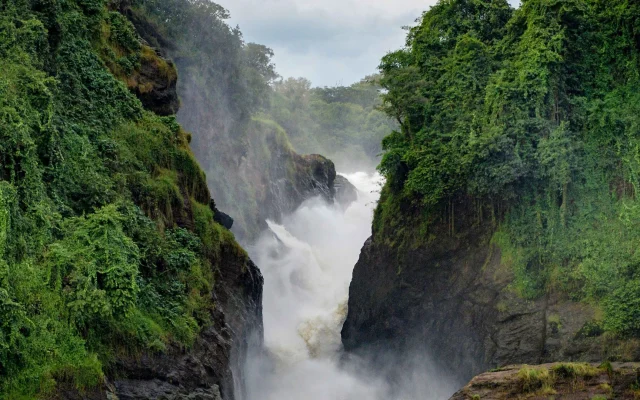
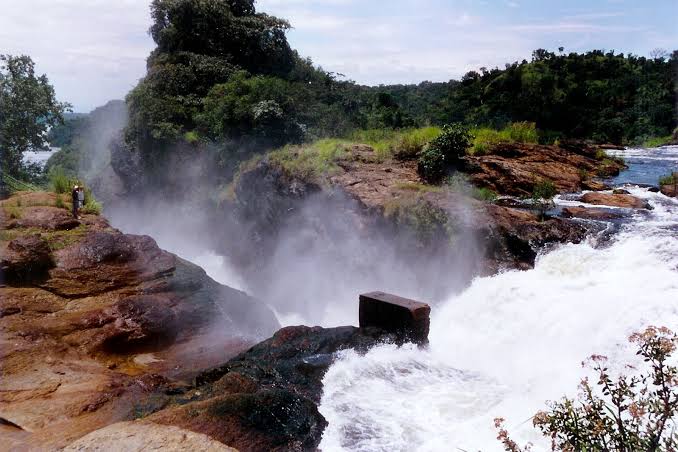
The dramatic centrepiece is Murchison Falls itself, where an estimated 300 cubic metres of water per second drops 43 metres through a quartzite gorge. Below the falls the river calms into a broad channel favoured by hippos and crocodiles; further downstream it braids into channels that hold the park’s best shoebill habitat.
Riverine Forest and the Southern Bank
South of the Nile, Rabongo and Kaniyo Pabidi forests cling to the river’s edge. These remnants of a once-vast Central African forest block shelter chimpanzees, colobus monkeys and forest birds that never venture onto the open northern plains. Budongo Forest Reserve, adjoining the park boundary, extends the same ecosystem and offers chimp trekking on well-maintained trails.
Riverine woodland also buffers the water: roots stabilise banks, canopy shade reduces evaporation, and fallen fruit feeds bushbuck and warthog. When forest is cleared for agriculture outside the park, sediment runs into the Nile and smothers fish spawning grounds — one reason buffer-zone community projects matter for the whole park.
Hippos, Crocodiles and the Mid-River Channel
Murchison’s mid-river section supports one of Africa’s densest hippo concentrations. Uganda Wildlife Authority estimates more than 5,000 hippos in the park’s Nile stretch. By day they lounge in pods that define territories along the banks; by night they graze up to five kilometres inland on grasslands, fertilising the soil with their dung and creating trails other herbivores follow.
Nile crocodiles here grow to exceptional size — five metres is not unusual — because the river delivers a constant supply of fish and occasional carrion. The boat cruise from Paraa puts you at eye level with both species, which is why many visitors rank it above a standard game drive for raw wildlife density.
The Northern Savanna and the Ferry Divide
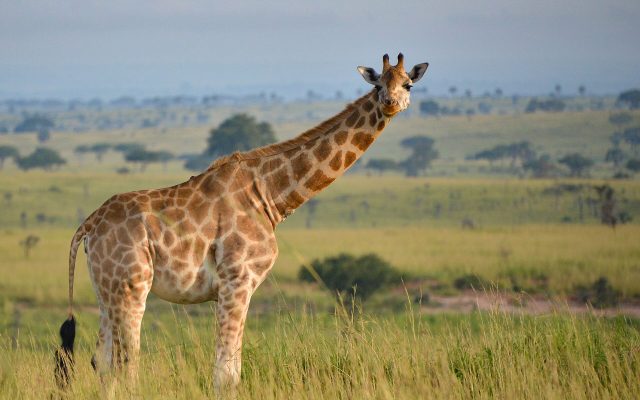
The Paraa ferry crosses the Victoria Nile and links the riverine south bank to the open savannah north of the water. That crossing is more than logistics — it is an ecological boundary. North of the river, rainfall is slightly lower and fires and herbivory maintain grassland where Rothschild’s giraffe, Uganda kob, buffalo and lion dominate.
Elephants move between banks seasonally. In the dry months they concentrate along the river and delta where water and browse remain; in wetter periods they disperse onto the plains. Lions follow the prey, which is why Buligi — the triangle of land between the Victoria and Albert Niles — produces such reliable predator sightings.
The Nile Delta and Lake Albert
Where the Victoria Nile meets Lake Albert, the current slows and deposits silt across a maze of papyrus channels. This delta is among the best places in Uganda to search for the shoebill stork, a reclusive bird that fishes in stagnant pools among the reeds. The downstream boat cruise — longer and pricier than the upstream falls trip — exists largely because of this habitat.
Lake Albert itself holds Nile perch and tilapia fisheries that support communities at Pakwach and along the shoreline. Fish eagles, pelicans and cormorants work the inshore waters, while buffalo and elephant occasionally appear at the lake edge. The delta is the soft, productive end of the Nile’s violent journey through the park.
Seasonal Rhythms: Wet and Dry
During the dry seasons (December–February and June–September), the Nile’s volume drops and animals crowd the remaining water. Game drives along the Buligi circuit and boat cruises both improve because wildlife must visit the river daily. The falls themselves are clearer — you see the geometry of the gorge rather than a wall of spray.
In the wet months (March–May and October–November), the river swells. Tracks on the northern bank turn muddy and 4×4 access becomes essential, but the boat cruise runs year-round and the landscape greens dramatically. Migratory birds arrive, frogs breed in temporary pools, and the park feels lush rather than stark. Neither season is wrong; they simply emphasise different parts of the Nile system.
Conservation and the Nile Corridor
Oil exploration in the Albertine Rift has put pressure on Murchison’s ecosystems, and the Nile corridor is the most sensitive zone. Spills, noise and habitat fragmentation affect hippos, shoebills and fish stocks directly. UWA and partner NGOs monitor water quality and wildlife corridors to keep the river functioning as a single connected habitat rather than isolated fragments.
Tourism revenue from boat cruises, park fees and lodge employment gives local communities a stake in keeping the Nile healthy. When you pay for a launch ticket or a ranger-guided drive, part of that fee funds anti-poaching patrols along the riverbanks where snares target hippos and antelope coming to drink.
Frequently Asked Questions
Why is the Nile so important for Murchison Falls wildlife?
Water attracts herbivores year-round, which in turn supports predators. The river also creates distinct habitats — forest, savannah, papyrus swamp — in a compact area, boosting biodiversity beyond what rainfall alone would produce.
Which activity best shows the Nile ecosystem?
The upstream boat cruise from Paraa to the falls base is the quickest introduction. For the full delta and shoebill habitat, book the longer downstream cruise toward Lake Albert.
Does the river flow change with the seasons?
Yes. Volume is lower in the dry seasons and much higher during the rains. The falls remain impressive year-round, but spray and visibility at the gorge vary with flow.
Plan Your Safari
The Nile is the thread that ties every Murchison experience together. Our itineraries pair launch cruises, northern game drives and optional delta trips so you see the river at every stage. Browse Murchison Falls safaris or contact us to build a route around the water.