



Uganda Safari vs Kenya Safari
Uganda and Kenya share a border and a chunk of Lake Victoria, yet they offer two genuinely different safaris. Kenya is the birthplace of the word itself — open plains, the Great Migration, the classic Out of Africa image. Uganda is greener, hillier and built around primates, with mountain gorillas as its headline act.
We run trips across Uganda and send plenty of travellers on to Kenya, so this is an honest comparison rather than a sales pitch. Below we weigh up wildlife, gorillas, cost and crowds to help you work out which country fits the trip you have in mind.
Wildlife: Big Cats vs Biodiversity
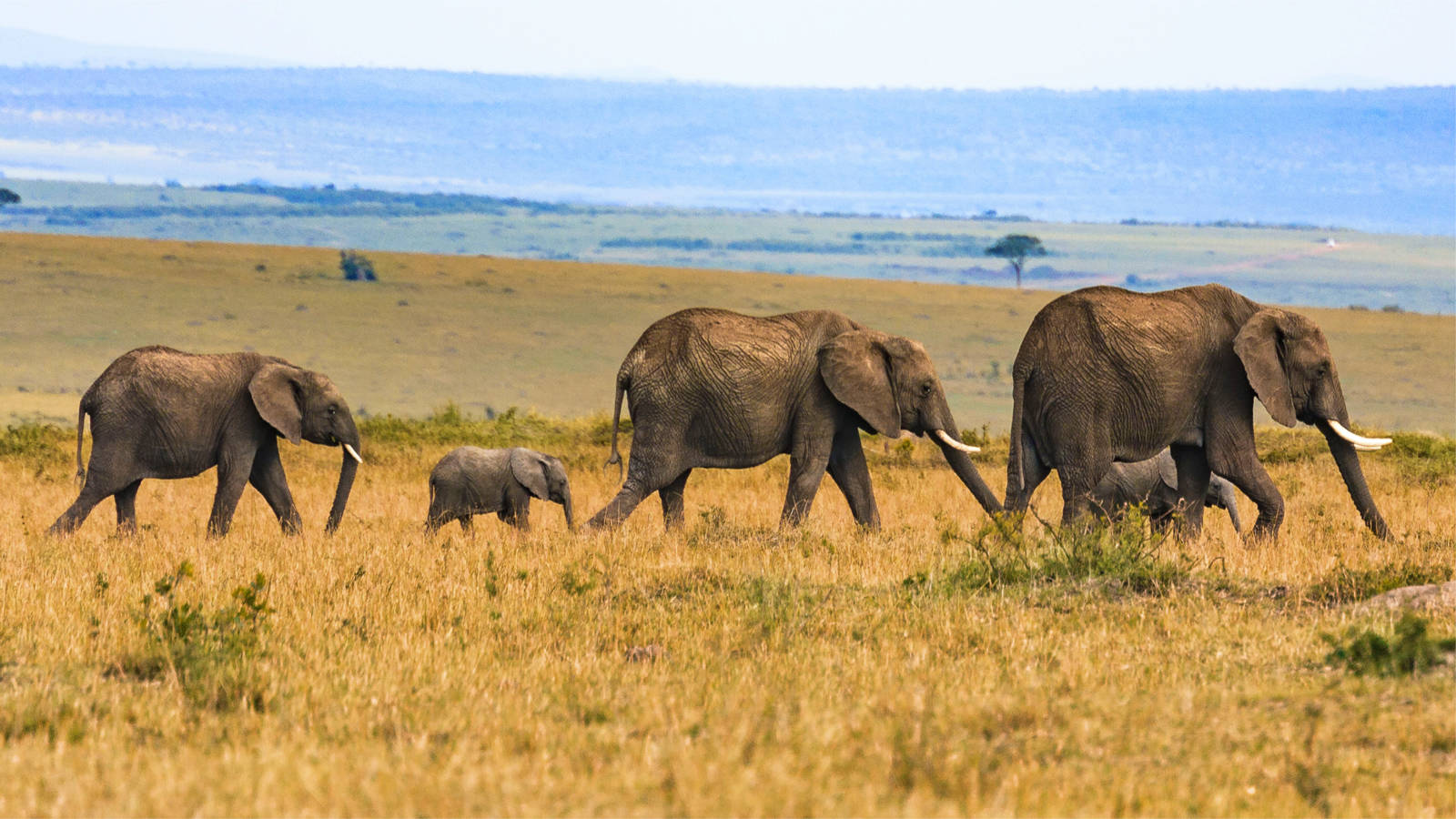
For sheer volume of classic savannah game in one place, Kenya is hard to beat. The Masai Mara holds huge lion prides, cheetah on the open plains, and easy sightings of elephant, buffalo, giraffe, zebra and gazelle. If your mental picture of safari is a big cat on golden grassland, Kenya delivers it more reliably and more often.
Uganda plays a different game. It is one of Africa’s most biodiverse countries — over 1,000 bird species, tree-climbing lions in Ishasha and the world’s largest population of the Nubian (Rothschild’s) giraffe in Murchison Falls. The plains game density is lower than the Mara, but the variety across forest, savannah, wetland and lake is exceptional.
One honest caveat: Uganda is not a wild-rhino destination. The only place to see them is Ziwa Rhino Sanctuary on the road to Murchison, whereas Kenya has strong wild populations of both black and white rhino — so it edges the traditional Big Five tally.
Gorillas: Uganda’s Trump Card
This is the clearest dividing line between the two countries. Kenya has no mountain gorillas at all. Uganda is one of only three nations on earth where you can trek them, holding roughly half of the world’s remaining population of around 1,000 individuals, mostly in Bwindi Impenetrable National Park.
A gorilla permit in Uganda costs $800 for foreign non-residents under the current UWA tariff, and now includes that day’s park entrance fee; in 2026 UWA introduced discounted low-season permits of $600 for April, May and November. Neighbouring Rwanda charges $1,500 for the same experience, which is why many gorilla travellers choose Uganda on value alone. If tracking a habituated gorilla family is on your list, the decision is effectively made: it is a Uganda safari, with Kenya as a possible add-on.
Cost: Where Your Money Goes
Neither country is a true budget destination, but the money behaves differently. In Kenya, park fees are the sting: Masai Mara entry runs from roughly $100 per person per day in low season up to $200 in the July–October peak, and premium migration lodges push rates very high. The wildlife is largely “free” once inside, but access is expensive at the busiest time.
In Uganda, the savannah parks are comparatively cheap — Murchison Falls sits at $45 per foreign non-resident per day, and Queen Elizabeth, Kidepo and Lake Mburo at $40. The big line item is the gorilla or chimp permit rather than daily entry. A gorilla safari typically ranges from around $1,100 per person on a budget road trip up to $6,000 or more for a luxury fly-in.
As a rough rule, a pure savannah safari in Uganda undercuts the equivalent Kenyan trip, while a gorilla-focused trip carries that one large permit cost. To cover both countries, the $100 East Africa Tourist Visa spans Uganda, Kenya and Rwanda.
Crowds and the Great Migration
Kenya’s greatest spectacle is also its greatest crowd problem. The Great Migration reaches the Masai Mara from roughly late July, with peak Mara River crossings in August and September as wildebeest and zebra pour across in their millions. It is one of the finest wildlife events on the planet — but popular crossing points can attract well over a hundred vehicles at once in August, and it takes planning (or a private conservancy) to keep it feeling wild.
Uganda is the quieter country by a wide margin. Even in high season, a morning on Murchison’s northern Buligi plains or a launch up the Victoria Nile can feel like you have the park to yourself. There is no event to rival the migration, but no jostling for position at a sighting either — a trade worth a great deal for travellers who value solitude over spectacle.
Scenery and the Feel of the Trip
Kenya is the archetype: vast, open, dusty-gold horizons, easy driving and short distances between sightings, all polished by decades of tourism infrastructure. Uganda feels lusher and more intimate — the “Pearl of Africa” tag is earned in its green hills, forests, crater lakes and the thundering falls where the Nile squeezes through a seven-metre gap.
Uganda’s roads are slower and its parks more spread out, so itineraries lean on longer drives or short charter flights. The pay-off is activities a plains-only safari cannot offer — boat cruises, forest walks and primate tracking.
Which Is Best for Whom?
Choose Kenya if the Great Migration, big-cat action and open-plains photography are your priority, and you are comfortable with peak-season crowds and higher park fees. It is also the smoother first-ever safari, with minimal driving.
Choose Uganda if you want gorillas and chimps, richer biodiversity, far fewer vehicles and better value on savannah parks — and if a greener, more adventurous trip appeals more than the postcard plains. Many travellers eventually do both, and they pair beautifully: gorillas and the Nile in Uganda, then the migration in the Mara.
Frequently Asked Questions
Can you see gorillas in Kenya?
No. Kenya has no mountain gorillas. They live only in Uganda, Rwanda and the Democratic Republic of Congo. Uganda holds around half of the world’s roughly 1,000 remaining mountain gorillas, mostly in Bwindi Impenetrable National Park.
Is a Uganda safari cheaper than Kenya?
For pure savannah game viewing, usually yes — Uganda’s park fees ($40–$45 per day) are much lower than the Masai Mara’s peak-season $200. The exception is a gorilla trip, where the $800 permit becomes the largest single cost.
When is the best time to see the Great Migration in Kenya?
The herds reach the Masai Mara from late July, with peak Mara River crossings typically in August and September. Crossings follow the rain, not a calendar, so exact dates can never be guaranteed — a stay of several nights improves your odds.
Plan Your Safari
Torn between the two? Tell us your dates, interests and budget and we will build the route around them — a gorilla-and-Nile Murchison Falls safari, a western circuit taking in gorilla trekking and chimps, or a combined Uganda–Kenya trip that pairs the gorillas with the Great Migration. Get in touch and we will help you choose the safari that fits.