



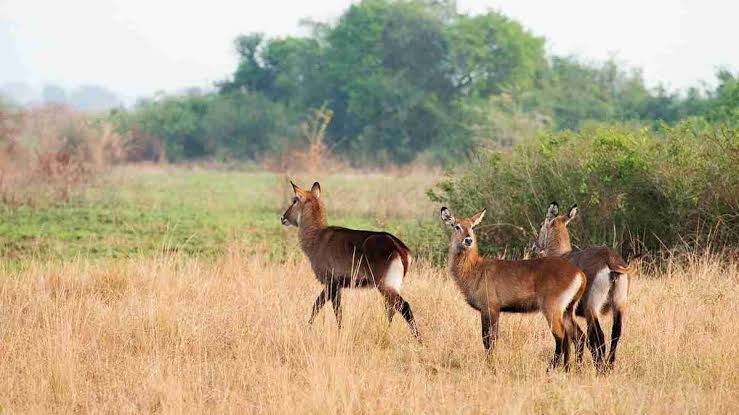
Kichumbanyobo Gate Guide
Most safaris to Murchison Falls National Park pass through a single boom on the southern edge of Budongo Forest — Kichumbanyobo Gate. It is the park’s main southern entrance, the one UWA staff at Paraa expect when you say you are driving from Kampala or Masindi. Get the gate right and you slip straight into mahogany forest, then the Nile at Paraa; get the timing wrong and you queue at the boom with daylight running out before the ferry.
This guide covers Kichumbanyobo as a practical entry point: where it sits, how to reach it, what you pay at the boom, what lies along the road beyond it, and how it compares with the park’s other gates. For the full Kampala-to-Paraa drive broken into legs, see our Kampala to Murchison Falls guide.
Where Kichumbanyobo Gate sits
Kichumbanyobo Gate lies on the eastern boundary of Murchison Falls National Park, reached via the Masindi–Paraa road through Kanyo–Pakanyi and the Budongo Forest Reserve. From Masindi town centre it is about 16 kilometres east to the boom; the full run from Masindi to Paraa — the park’s main tourism hub on the Victoria Nile — covers roughly 86 kilometres via this gate.
Paraa is where the Nile divides the park. Most lodges, the launch-cruise jetty, UWA headquarters and the vehicle ferry all cluster here or within a short drive. Entering at Kichumbanyobo puts you on the shortest sealed approach to that hub from Kampala, Entebbe and Masindi — which is why the majority of road safaris use it.
The route: Masindi to the boom and beyond
From Kampala, the standard approach follows the Gulu Highway through Luweero and Nakasongola, turns north-west at the Kafu junction onto the sealed Kafu–Masindi road, and reaches Masindi after roughly 305 kilometres and five to six hours with stops. From Entebbe add another 40 kilometres — plan on a similar total time once you clear the airport road.
Masindi is the last substantial town before the park: banks, supermarkets and several petrol stations. Fill your tank completely here; there is no reliable fuel inside the park. From town, drive east through trading centres toward the boom. The approach road and much of the corridor through Budongo were upgraded under Uganda’s National Oil Roads Programme, with sealed bitumen completed through the forest by August 2024 — removing the seasonal bogging that once stranded saloon cars in April and November rains.
Beyond the gate the road enters Budongo Forest Reserve and passes Kaniyo Pabidi, one of East Africa’s largest remaining tracts of mahogany forest. Olive baboons, hornbills and colobus monkeys line the verge; keep windows closed and food out of sight. Allow 1.5 to 2.5 hours from Masindi to Paraa in dry weather. Inside the park the speed limit is 40 km/h. Game tracks beyond Paraa remain murram and strongly favour a high-clearance 4×4, especially during the rains of March–May and October–November.
Why choose Kichumbanyobo Gate
The clearest reason is geography. If your lodge sits on the southern bank — Red Chilli Rest Camp, Sambiya River Lodge, Budongo Eco Lodge at Kaniyo Pabidi — or you are heading for the Top of the Falls viewpoint, Kichumbanyobo is the direct line. Travellers coming from Kampala, Entebbe, Ziwa Rhino Sanctuary or Hoima via Masindi all converge here rather than looping west to Bugungu or north to Karuma.
The gate also opens the southern circuit’s quieter game viewing. The Heart of Murchison — a tract of savanna rolling toward the Nile from the Rabongo road — sits about 20 kilometres east of the Masindi–Paraa road. Uganda kob herds attract lions here, and giraffes translocated from the northern bank in 2016 now browse the Kob and Hartebeest loops. Wildlife is sparser and more skittish than on the Buligi Peninsula north of the ferry, but traffic is lighter — worth a half-day if you have already done the classic northern drives.
Forest activities sit on the same approach. Chimpanzee trekking at Kaniyo Pabidi runs morning and afternoon sessions; under National Forestry Authority tariffs effective from 2024, foreign non-residents pay roughly US$130 for a standard trek and US$230 for the habituation experience. Budongo holds more than 600 chimpanzees — the largest population in Uganda outside Kibale. See our Budongo chimp trekking guide for booking detail.
Entry fees and gate procedures
Whichever gate you use, Uganda Wildlife Authority charges the same conservation entry fee, valid for 24 hours from the moment you enter. Under the tariff running July 2024 to June 2026, a foreign non-resident adult pays US$45 and a child aged five to fifteen pays US$25, with under-fives free. Foreign residents pay US$35; East African citizens pay UGX 25,000. Murchison sits in UWA’s top bracket, so its rate is slightly higher than most savannah parks.
Rangers at the boom verify permits and vehicle paperwork. Gates operate 07:00 to 19:00; night driving inside the park is prohibited. Payment can be made by card or mobile money as well as cash, though carrying some shillings is sensible this far from a bank. Park entry is separate from activities — launch cruises, guided walks and chimp permits are booked and paid on top. If your lodge sits on the northern bank, add the Paraa ferry crossing; it runs at scheduled intervals between roughly 07:00 and 19:00, with peak-season queues sometimes adding 30 to 60 minutes.
Where to stay near Kichumbanyobo
Accommodation clusters at three distances from the gate. Inside or just beyond Budongo, Budongo Eco Lodge sits at Kaniyo Pabidi — the natural base for chimp treks and forest walks. At Paraa, Red Chilli Rest Camp and Paraa Safari Lodge (north bank, reached by ferry) serve the main tourism hub. Sambiya River Lodge, in wooded country south of the Nile, suits guests using the Kob and Hartebeest loops in the Heart of Murchison.
Outside the park, Murchison Backpackers sits about 12 kilometres from the gate with dormitory bandas and a tour desk for shared drives. The Boomu Women’s Group community lodge near the southern entrance offers simple bandas with breakfast — a low-cost overnight before an early gate entry. Masindi town itself has mid-range hotels for travellers who prefer to enter the park fresh in the morning rather than driving after dark.
How Kichumbanyobo compares to other gates
Murchison has five main vehicle gates, each tied to a direction of travel. Kichumbanyobo is the standard choice from Kampala and Masindi for Paraa, the Top of the Falls and south-bank lodges. A longer but scenic alternative from Masindi runs 136 kilometres via Buliisa, entering through Bugungu Gate or Mubako Gate on the Rift Valley escarpment above Lake Albert — better for travellers coming from Hoima. From the north, Chobe Gate near Karuma Bridge, Tangi Gate near Pakwach and Wankwar Gate south of Purongo open onto the Buligi plains without crossing the Nile at Paraa — ideal for north-bank lodges and onward travel to Gulu. Read our Chobe Gate guide and best route comparison if your itinerary runs through northern Uganda.
Choosing the right gate is really about matching the boom to your lodge and your previous night’s location. A Paraa lodge booked on the north bank entered via Kichumbanyobo still requires a ferry crossing; a lodge near Chobe entered via Masindi adds hours of unnecessary driving. Plan the gate first, then the lodge.
Practical tips for gate day
A realistic transfer from Kampala: depart by 07:00, optional stop at Ziwa Rhino Sanctuary near Nakitoma (roughly 176 km from the capital), lunch in Masindi around midday, enter Kichumbanyobo by 14:00–15:00 and cross the Paraa ferry before 16:00 if your lodge sits on the northern bank. That leaves scope for a late launch cruise or a sunset viewpoint at the falls.
Self-drivers should confirm permit payment before arrival — UWA accepts online booking, but many travellers still pay at the gate. Carry your passport; rangers record nationality for tariff purposes. For fuel stops, road conditions and 4×4 requirements beyond the boom, see our fuel stations guide and guided vs self-drive comparison.
Frequently Asked Questions
- How far is Kichumbanyobo Gate from Masindi?
-
About 16 kilometres east of Masindi town centre to the boom, and roughly 86 kilometres from Masindi to Paraa through the gate — allow 1.5 to 2.5 hours depending on stops in Budongo Forest and road conditions beyond Paraa.
- How far is Kichumbanyobo Gate from Kampala?
-
From central Kampala to Paraa via Kichumbanyobo is roughly 305 kilometres and five to six hours with normal stops. From Entebbe International Airport, add about 40 kilometres for a similar total time.
- What are the Kichumbanyobo Gate opening hours?
-
UWA gates at Murchison Falls operate from 07:00 to 19:00. Plan to reach your lodge before dusk; night driving inside the park is not permitted.
- Do I need a 4×4 to enter through Kichumbanyobo?
-
The sealed Masindi–Paraa corridor is manageable in a saloon car since the 2024 bitumen upgrade. Game tracks beyond Paraa — Buligi, the delta, Heart of Murchison — strongly favour a high-clearance 4×4, especially in wet months.
- Is Kichumbanyobo the best gate for chimpanzee trekking?
-
Yes. Kaniyo Pabidi in Budongo Forest sits on the road between the gate and Paraa. Chimp permits are issued separately by the National Forestry Authority — currently around US$130 for foreign non-residents on a standard trek.
- When should I use a northern gate instead?
-
If your lodge sits on the northern bank — Pakuba, Chobe Safari Lodge, Nile Safari Lodge — and you are coming from Gulu, Arua or Kidepo, enter via Chobe, Tangi or Wankwar to avoid the Paraa ferry. From Kampala, Kichumbanyobo plus a ferry crossing is usually faster.
Plan Your Safari
Kichumbanyobo Gate is the front door most road safaris use — mahogany forest at Kaniyo Pabidi, the Nile at Paraa, and the roar of Murchison Falls an hour beyond. We arrange early pick-ups from Kampala and Entebbe, fuel stops in Masindi, permit checks at the boom and ferry timing matched to your lodge. Browse our Murchison Falls safari packages, read the first-time visitors guide and full Murchison Falls travel guide, and tell us where you are starting from — we will route you through Kichumbanyobo with daylight to spare.