



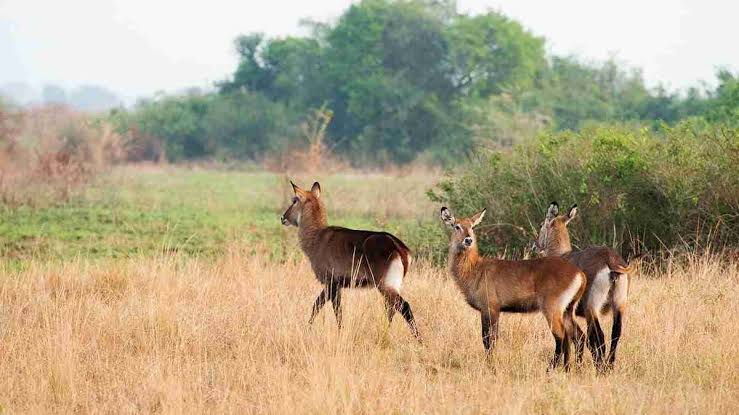
Low-Impact Uganda Safari
Low-impact safari travel is not about skipping wildlife encounters — it is about choosing how you move, where you stay, and which activities you book so that your visit supports conservation rather than adding pressure to fragile habitats. Uganda makes that choice easier than many destinations: park fees fund patrols and community grants, trekking rules are strict, and a well-planned Murchison Falls itinerary can deliver elephants, lions, shoebills and chimpanzees without the convoy-style game drives common elsewhere in East Africa.
This guide explains what low-impact travel means in Uganda’s context, how to design a lighter-footprint route through the Greater Murchison Conservation Area, and where your money actually goes. It is written for travellers who want a full safari experience — boat cruises, savannah drives, forest walks — while keeping waste, mileage and disturbance to a minimum.
What Low-Impact Means in Uganda
The Uganda Wildlife Authority (UWA) manages 10 national parks, 12 wildlife reserves and 13 wildlife sanctuaries across roughly 26,600 square kilometres. Every foreign non-resident pays US$45 per 24 hours for park entry under the tariff valid July 2024 to June 2026 — money that feeds anti-poaching patrols, habitat restoration and the revenue-sharing scheme mandated by the Uganda Wildlife Act 2019.
Under that scheme, UWA returns 20% of annual gate collections to districts bordering protected areas. In April 2024, communities around the Murchison Falls Conservation Area received Shs 2.9 billion for schools, health centres and crop-protection measures. At Bwindi, an additional US$10 per gorilla permit goes directly to frontline villages.
Designing a Lighter Itinerary
The single biggest footprint on most Uganda safaris is road time. Entebbe to Paraa via Masindi and Kichumbanyobo Gate covers roughly 320 to 360 kilometres and takes six to seven hours with stops. A scheduled domestic flight to Pakuba, Bugungu or Chobe airstrip replaces that with about 60 to 90 minutes in the air — useful if you have only two or three park nights and want wildlife time instead of transfer time. See our fly-in vs road safari comparison for costs and trade-offs.
Slow travel helps too. Three nights at Murchison lets you combine a Buligi game drive, a Nile launch cruise and a forest morning without daily transfers. Our how many days for Murchison Falls guide suggests two full days inside the park as a sensible minimum.
If you drive, refuel in Masindi before the gate and plan around the Paraa ferry, which runs daily from 07:00 to 19:00. One vehicle shared among four travellers carries a lower per-person footprint than four separate transfers.
Low-Impact Activities at Murchison Falls
Game drives remain essential for lion, buffalo and the park’s Nubian (Rothschild’s) giraffe — Giraffe Conservation Foundation surveys estimate roughly 2,258 individuals here, more than 60% of the global wild population. Pair one or two drives with activities that use less fuel and spread visitors across habitats.
Guided nature walks cost USD 25 for foreign non-residents plus park entry, with an armed ranger required on every route — the Top of the Falls hike is USD 15 with a ranger. Walking the Rabongo Forest circuit, south-bank trails near Paraa or delta swamp routes puts you at ground level without engine noise. Our guided nature walks page maps each trail.
The launch cruise to the falls and the Albert Delta boat trip move groups efficiently along the Victoria Nile — past hippo pods, crocodiles and, on delta mornings, grey crowned cranes and occasionally a shoebill in the Ramsar-listed Albert Delta wetland. One shared boat replaces several private game-drive loops for Nile wildlife.
At Kaniyo Pabidi, eight kilometres inside Kichumbanyobo Gate, chimpanzee tracking groups are capped at six visitors with a strict one-hour viewing limit. Budongo Forest holds an estimated 600 eastern chimpanzees across 825 square kilometres, with snare-removal patrols run by the Budongo Conservation Field Station since 1990.
Community Stays and Practical Choices
Low-impact lodging is not only about solar panels. It is about where revenue lands. The Boomu Women’s Group near Kichumbanyobo Gate has operated community tourism since 1999 — village walks, craft sales and simple bandas where payment stays with the farmers and weavers living on the park boundary. An afternoon or overnight there pairs naturally with a Kaniyo Pabidi chimp trek. See our Boomu community guide for how visits are arranged.
Buy crafts directly from artisans, eat locally in Masindi when passing through, and carry a reusable water bottle. Dry windows from December to February and June to September bring firmer trails; shoulder months spread visitors more thinly across Buligi tracks. See our human–wildlife conflict guide for why community partnerships matter alongside patrol budgets.
Frequently Asked Questions
- Is a low-impact Uganda safari less exciting than a standard one?
-
Not at all. You still game-drive the Buligi Peninsula, cruise the Nile and can trek chimpanzees in Budongo. The difference is pacing — fewer rushed transfers, more walking and boat time, and lodging choices that keep money closer to conservation and communities.
- How much do park fees contribute to conservation?
-
Foreign non-residents pay US$45 per 24 hours for Murchison entry, plus activity fees for walks, boats and chimps. UWA remits 20% of gate collections to neighbouring districts under the revenue-sharing scheme, funding schools, clinics and human–wildlife conflict projects alongside patrol operations.
- Should I fly or drive for a lower footprint?
-
It depends on group size and route. A full vehicle shared by four travellers can be efficient on the road, especially if you stop once rather than shuttling daily. Solo travellers or pairs with limited time often recover a full wildlife day by flying Entebbe to Pakuba or Bugungu. A fly-in, drive-out combination via Masindi is a popular hybrid.
- Can I combine Murchison with gorilla trekking responsibly?
-
Yes — Bwindi’s habituated gorilla visits are capped at eight trekkers per family per day, and permit revenue supports both patrols and community grants. The challenge is distance: allow realistic transfer days or a domestic flight rather than chaining long road legs. See our flying to Murchison Falls guide when stacking parks across a week.
Plan Your Safari
Fly or drive in with one vehicle for the group, spend three nights between a northern-bank lodge and a community stay near Budongo, walk the falls trail, cruise the delta, drive Buligi at dawn, and trek chimps at Kaniyo Pabidi with a Boomu village stop on the way out. Browse our Murchison Falls safaris or ask us to build a route through the gates, walks and boat timings that match how this landscape actually works.