


Murchison Falls Wildlife Checklist
Print this page, tuck it beside your field guide, and tick off what you actually see — that is how most of our guests remember a Murchison safari. Uganda’s largest national park holds 144 mammal species, 556 bird species and 51 reptile species across borassus savannah north of the Victoria Nile, woodland on the southern bank, and a papyrus delta where the river meets Lake Albert. Four of the Big Five live inside the park; rhino await at Ziwa Rhino Sanctuary on the Kampala–Masindi road.
This checklist covers the mammals, birds and reptiles you can realistically target on a three-night stay — mapped to the zones where each sighting is likely. Pair it with our wildlife overview and Buligi game drive guide for route detail.
How to Use This Checklist
Three zones cover most ticks: the Buligi peninsula north of the Paraa ferry, the Victoria Nile corridor from Paraa Jetty to the falls and Albert Delta, and the southern forest belt at Kaniyo Pabidi and Rabongo. Cross the ferry (07:00–19:00 daily) if your lodge sits south of the Nile. Dry seasons from December to February and June to September shorten grass and concentrate game; shoebill delta cruises are often best from January to March.
Mammals: Northern Savannah
Roughly 170 kilometres of northern tracks — Queen’s, Albert and Victoria routes — hold buffalo exceeding 10,000, kob herds in the tens of thousands, and an estimated 240 lions, the highest density in Uganda. Reach Buligi via Tangi, Wankwar or Chobe gates, Pakuba Airstrip, or the Paraa ferry.
- ☐ African elephant — Buligi plains and river crossings near Paraa
- ☐ Cape buffalo — large herds on Buligi, Pakuba and Heart of Murchison
- ☐ Lion — Buligi peninsula, Pakuba sector, Heart of Murchison kob country
- ☐ Leopard — woodland fringes; shy; occasional night-drive sighting
- ☐ Nubian giraffe — open savannah north of the Nile; roughly half of all wild Nubian giraffe on Earth
- ☐ Uganda kob — grassland throughout Buligi and Heart of Murchison
- ☐ Jackson’s hartebeest — mixed herds on northern plains
- ☐ Oribi — shorter grass at woodland edges
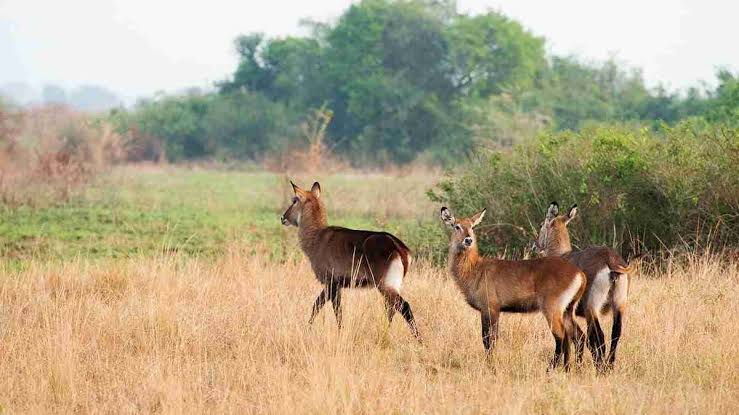
- ☐ Defassa waterbuck — riverine woodland and swamp margins
- ☐ Warthog — common on all northern game-drive loops
- ☐ Spotted hyena — heard at night; seen near kills on dawn drives
- ☐ Patas monkey — early Buligi drives; savannah specialist
Mammals: River and Forest
The 2010 aerial survey counted roughly 955 hippos along the Nile. Budongo Forest holds an estimated 600 chimpanzees, with habituated groups at Kaniyo Pabidi via the Kichumbanyobo road; chimp permits run around US$130, separate from park entry.
- ☐ Hippopotamus — Paraa Jetty, launch cruise sandbanks, delta channels
- ☐ Chimpanzee — Kaniyo Pabidi guided trek; see our chimpanzee guide
- ☐ Olive baboon — road verges, Paraa, forest edges
- ☐ Vervet monkey — woodland and lodge grounds throughout
- ☐ Red-tailed monkey — Kaniyo Pabidi and Rabongo Forest canopy
- ☐ Blue monkey — forest interior at Kaniyo Pabidi
- ☐ Black-and-white colobus — Rabongo Forest and Kaniyo Pabidi trails
Birds: Nile, Delta and Savannah
The upstream launch from Paraa Jetty — roughly 17 kilometres to the falls — passes cliff-nesting bee-eaters and riverine raptors. Downstream, the Albert Delta — a Ramsar wetland of 17,293 hectares — holds the shoebill stork. Northern plains add ground hornbills and bustards; Kaniyo Pabidi adds forest specials. See our bird checklist for a longer list.
- ☐ Shoebill stork — Albert Delta papyrus channels; delta cruise or swamp walk
- ☐ Goliath heron — river edges on launch and delta cruises
- ☐ Saddle-billed stork — sandbanks and shallow delta channels
- ☐ African fish eagle — riverine trees along the Victoria Nile
- ☐ Red-throated bee-eater — cliff colonies below the falls (upstream launch)
- ☐ African skimmer — delta sandbars; best in dry months
- ☐ Abyssinian ground hornbill — open grassland north of the Paraa ferry
- ☐ Secretary bird — savannah plains on Buligi and Albert tracks
- ☐ Grey crowned crane — grassland and wetland edges
- ☐ Martial eagle — acacia woodland on northern circuits
- ☐ Chocolate-backed kingfisher — Kaniyo Pabidi forest understorey
- ☐ White-thighed hornbill — Budongo canopy at Kaniyo Pabidi
- ☐ Red-winged grey warbler — southern bank woodland
Reptiles
Murchison’s reptiles range from five-metre Nile crocodiles on every launch cruise to forest snakes glimpsed only on guided walks. Activity peaks in dry months when animals bask on sandbanks and rocky outcrops.
- ☐ Nile crocodile — Victoria Nile sandbanks; Uganda’s largest population
- ☐ Nile monitor — river margins and delta channels
- ☐ Common agama — rocky Buligi outcrops
- ☐ Flap-necked chameleon — woodland fringe on forest walks
- ☐ African rock python — grassland and riverine forest; rare but present
- ☐ Puff adder and boomslang — Budongo and Rabongo; guided walks only
Match Species to Activities
Dawn game drive on Buligi — elephant, buffalo, lion, giraffe, kob, ground hornbill, patas monkey. A UWA ranger guide costs around US$25 per day; gates open at 07:00.
Upstream launch cruise — hippo, crocodile, Goliath heron, bee-eater colonies. Delta cruise — shoebill, skimmers, Nile monitor. Kaniyo Pabidi trek — chimpanzee, colobus, hornbills. Two to three nights typically covers the northern plains, one river outing and either delta or forest.
Frequently Asked Questions
- How many wildlife species are in Murchison Falls National Park?
-
UWA records 144 mammals, 556 birds and 51 reptiles across the conservation area. A focused long weekend typically yields 30–50 mammal and bird ticks with a good guide.
- Where is the best place to see lions and giraffe?
-
The northern Buligi tracks — Queen’s, Albert and Victoria routes — and the Pakuba sector from Tangi or Chobe gates.
- Can I see shoebill and chimpanzees on the same trip?
-
Yes. Book a delta cruise for shoebill and a separate Kaniyo Pabidi chimp permit. Most three-night itineraries allow both with careful morning planning.
- Are rhino inside Murchison Falls National Park?
-
No. Visit Ziwa Rhino Sanctuary en route from Kampala to complete the Big Five.
- When is the best season for this checklist?
-
Dry seasons from December to February and June to September concentrate game. Shoebill delta sightings are often most reliable from January to March.
Plan Your Safari
Turn this checklist into real sightings — dawn on Buligi for lions and giraffe, a Nile cruise for hippos and crocodiles, a delta morning for shoebill, a forest walk for chimps. Browse our Murchison Falls safari packages, read the game drive guide and explore the Murchison Falls National Park overview to build a route around the species at the top of your list.