


Murchison falls national Park wildlife
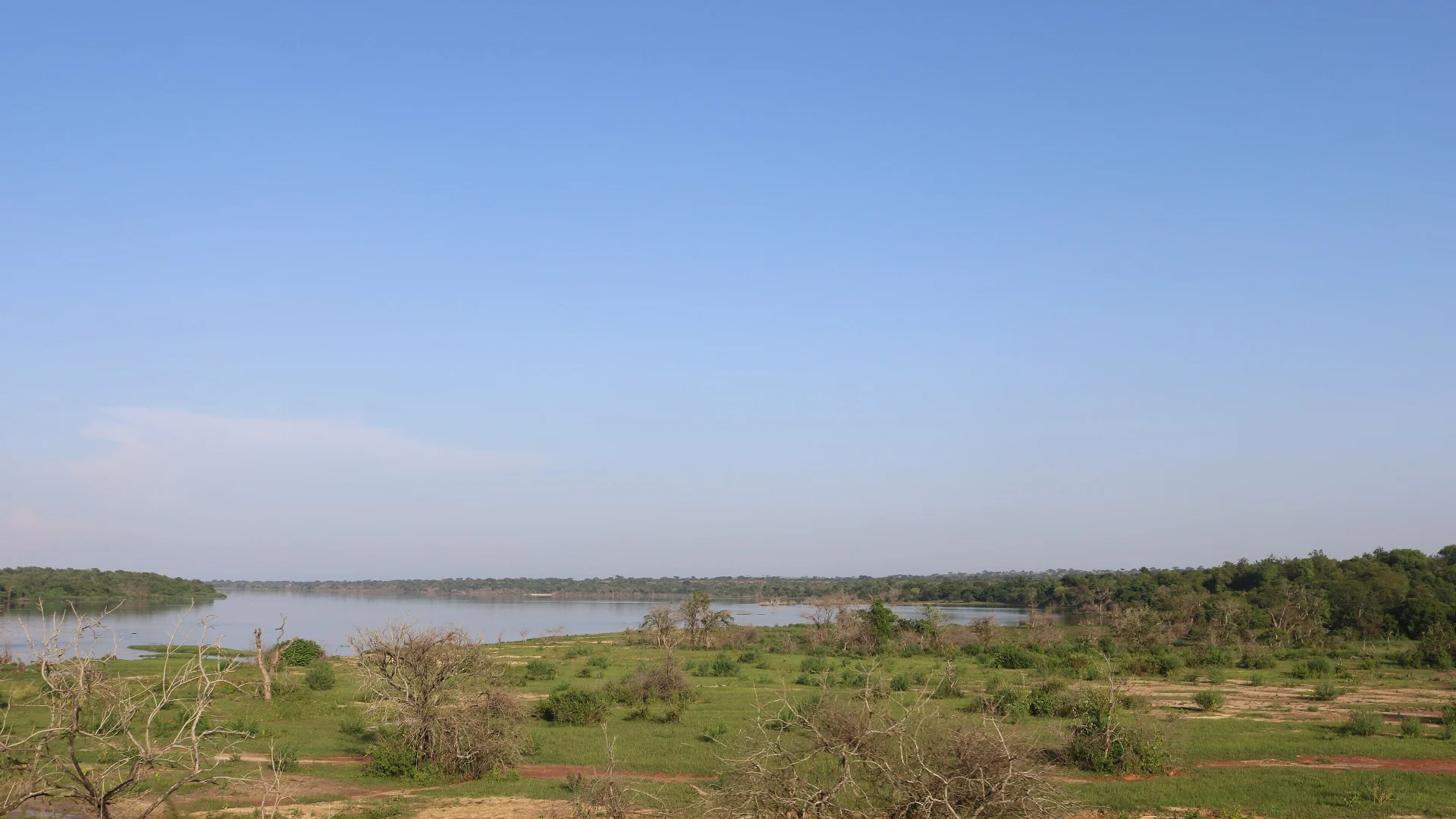
A dawn game drive on the Buligi plains can deliver buffalo in columns hundreds strong, Uganda kob across the grass, Nubian giraffe browsing acacia tops and, with patience, a lion pride in the shade. Murchison Falls National Park — roughly 3,840 square kilometres bisected by the Victoria Nile — holds four of the Big Five on open savannah, one of Africa’s densest hippo and crocodile corridors, forest primates in Budongo and a delta where shoebill stork hunt beside Goliath herons.
This guide covers the mammals, birds and reptiles you can realistically see, where they live and which activities put you in front of them. Pair it with our ecosystem guide and the Buligi game drive guide for habitat and track detail.
How Rich Is the Wildlife Here?
Surveys across the Murchison Falls Conservation Area recorded 144 mammal species, 556 bird species and 51 reptile species. Aerial counts in 2010 estimated roughly 9,200 buffalo, 900 elephants, 36,600 Uganda kob and 930 giraffe, with most large herbivores continuing to grow under UWA protection. Murchison has been a Lion Conservation Unit since 2005.
Mammals: Northern Savannah and Predators
Classic safari sightings happen north of the Nile on the Buligi circuit — roughly 170 kilometres of tracks including the Queen’s, Albert and Victoria routes. Buffalo now exceed 10,000; kob herds run into the tens of thousands. Elephants, Jackson’s hartebeest, oribi, waterbuck and warthog share the plains. The rare patas monkey rewards early drives with a patient guide.
Lions are the headline predator — recent surveys estimated roughly 240 lions at about 7.4 per 100 square kilometres, the highest density in Uganda. Prides split across the northern plains and Nile Delta. Leopards occur throughout but remain shy; night drives where permitted cost roughly US$40 per person. Spotted hyena are present; cheetah are absent.
The tall browsers are Nubian giraffe — formerly Rothschild’s — holding roughly half of all wild Nubian giraffe on Earth, with GCF surveys recording more than 1,800 individuals mostly on the northern bank. See our Nubian giraffe guide. Reach the northern tracks via Tangi, Wankwar or Chobe gates, Pakuba Airstrip, or the Paraa ferry (07:00–19:00 daily sailings).
Forest Primates and the Southern Bank
Budongo Forest holds an estimated 600 chimpanzees, with habituated groups tracked at Kaniyo Pabidi via the Kichumbanyobo road. Chimp permits run separately, currently around US$130. Red-tailed monkeys, blue monkeys, black-and-white colobus and olive baboons share the canopy. Compact Rabongo Forest offers shorter walks. The southern bank holds the translocated giraffe herd and woodland birds such as the red-winged grey warbler.
Birdlife: From Hornbills to Shoebill
With more than 556 recorded species, Murchison ranks among East Africa’s richest lowland birding destinations. The savannah delivers Abyssinian ground hornbills, secretary birds and grey crowned cranes; the Nile adds Goliath herons, saddle-billed storks and pied kingfishers.
The prize for many visitors is the shoebill stork, fishing papyrus channels where the Victoria Nile meets Lake Albert. Delta cruises are most productive from roughly January to March. Budongo adds forest specialists — white-crested turaco, chocolate-backed kingfisher and white-thighed hornbill. Our complete birding guide maps routes by habitat.
Reptiles: Crocodiles, Monitors and Forest Snakes
Murchison holds 51 reptile species. The most visible is the Nile crocodile — Uganda’s largest population lives along the Victoria Nile and Albert Delta, with individuals exceeding five metres on sandbanks below the falls. Launch cruises from Paraa Jetty pass them at close range alongside hippo pods estimated at roughly 955 animals in the 2010 survey.
The Nile monitor (Varanus niloticus) stalks river margins and delta channels — a two-metre semi-aquatic predator among the most frequently recorded reptiles in Albert Delta research. Common agama display on rocky Buligi outcrops; chameleons turn up in woodland fringe. The African rock python inhabits grassland and riverine forest but is rarely seen; puff adders and boomslangs occur in Budongo and Rabongo on guided forest walks. Reptile activity peaks during dry months from December to March and June to September.
Where to See Wildlife: Activities by Habitat
Game drives on northern Buligi tracks are the savannah centrepiece. Gates open at 07:00 and close at 19:00; a UWA ranger guide costs around US$25 per day. Morning sessions outperform afternoon heat during dry seasons from June to September and December to February.
Boat cruises from Paraa Jetty — about 17 kilometres upstream to the falls base — cover hippos, crocodiles, Nile monitors and riverine elephants. Downstream, the Albert Delta — a Ramsar site of 17,293 hectares listed in 2006 — holds shoebill, pelicans and African skimmers. See our Nile delta cruise guide. Forest walks at Kaniyo Pabidi or Rabongo add primates and smaller reptiles.
Add rhino at Ziwa Rhino Sanctuary en route from Kampala to complete the Big Five. Two to three nights typically pairs one northern dawn drive, one launch cruise and either a delta outing or chimp trek.
Frequently Asked Questions
- What wildlife can I see at Murchison Falls National Park?
-
Elephant, buffalo, lion, leopard, hippo, Nile crocodile, Uganda kob, hartebeest, oribi, warthog and large herds of Nubian giraffe on the northern plains. The Nile corridor adds waterbirds, shoebill and Nile monitors; Budongo holds chimpanzees and colobus at Kaniyo Pabidi.
- Are there reptiles in Murchison Falls?
-
Yes — 51 species across the conservation area. Nile crocodiles and Nile monitors are common on boat cruises; rock pythons, agamas and chameleons occur in savannah and forest but need patience or a guided walk.
- Where is the best place to see lions and giraffe?
-
The northern Buligi tracks — Queen’s, Albert and Victoria routes — and the Pakuba sector from Tangi or Chobe gates. Both concentrate on open savannah north of the Paraa ferry.
- When is the best time for wildlife viewing?
-
Dry seasons from December to February and June to September concentrate game at water and shorten grass. Shoebill delta cruises are often best from January to March.
- Do I need the Paraa ferry to see the main wildlife?
-
Yes, if your lodge sits south of the Nile and drives target Buligi. Northern-bank lodges and Pakuba fly-in guests reach the main tracks without crossing.
Plan Your Safari
Murchison Falls rewards travellers who match activities to habitats — dawn on Buligi for lions and giraffe, a Nile cruise for hippos and crocodiles, a delta morning for shoebill, a forest walk for chimps. Browse our Murchison Falls safari packages, read the game drive guide and explore the full Murchison Falls National Park overview to build an itinerary around the species you most want to see.