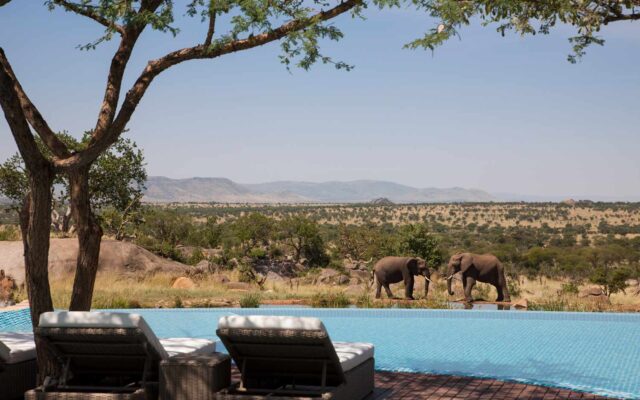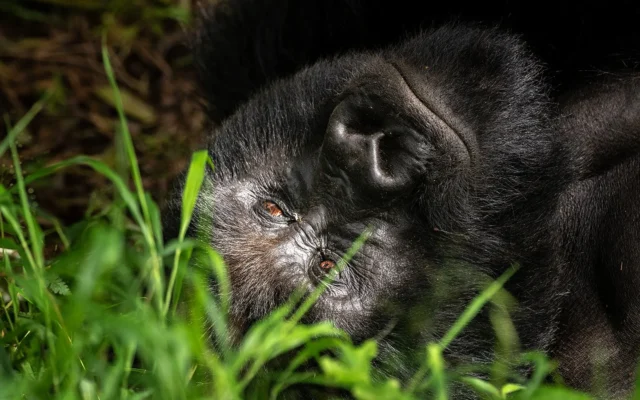
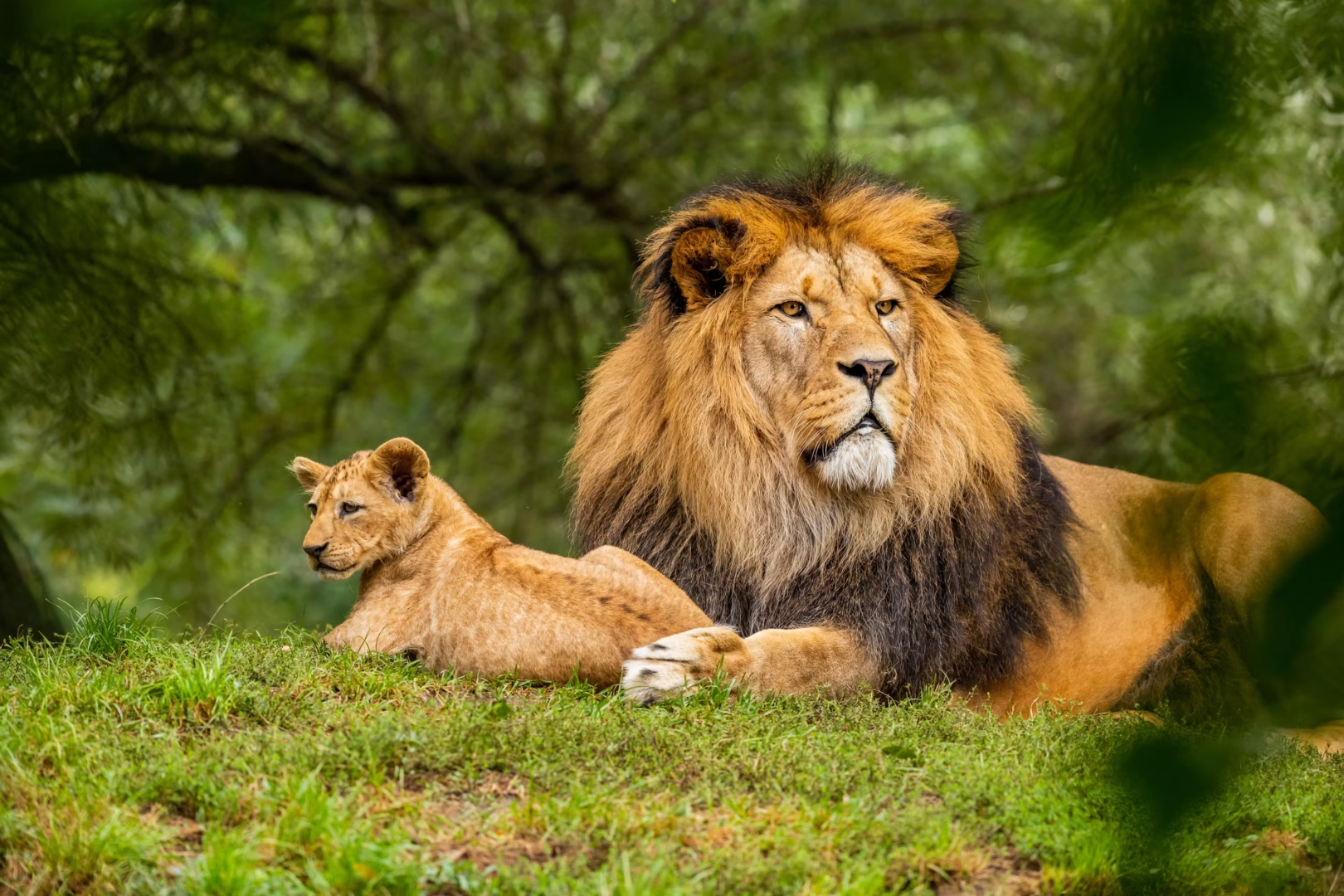
Seven days is the length most travellers land on for a first Uganda safari, and for good reason. It is enough to pair the country’s savannah wildlife with a primate encounter or two without feeling rushed at every turn — but it is also short enough that the routing matters. Get the order and the transfers right and a week delivers a genuinely complete trip; get them wrong and you spend half of it staring at the road.
This guide walks through the strongest 7-day packages we run, with real itineraries, the distances and drive times behind them, and what each option costs. The two questions that shape every plan are the same: do you want mountain gorillas in the mix, and are you willing to fly one leg to make room for them?
What seven days realistically buys you
Uganda’s headline parks sit far apart. Murchison Falls is in the north-west, about 305 km and a five-hour drive from Kampala; Bwindi, home of the gorillas, is tucked into the far south-west, roughly 460–540 km and eight to ten hours from the capital. Kibale Forest and Queen Elizabeth National Park lie on the western corridor between them.
In a week you can comfortably cover two, or at a push three, of these if you plan a one-way loop rather than doubling back. Add a mountain gorilla trek and the maths tightens sharply — which is why the best 7-day packages fall into two camps: a wildlife-and-chimpanzee circuit built around Murchison, or a fly-supported route that squeezes in the gorillas.
Itinerary one: Murchison, Kibale and Queen Elizabeth
This is the classic overland week and, for many first-timers, the most rewarding value. It threads the western circuit without a single punishing marathon drive.
Days 1–2: Drive north from Entebbe, breaking at Ziwa Rhino Sanctuary — 176 km from Kampala and the only place in Uganda to track white rhino on foot (about US$50 per person). Reach Murchison in the late afternoon for two nights: a morning game drive on the northern bank for lions, elephants, buffalo and Rothschild’s giraffe, and a Nile launch cruise to the foot of the falls, where the river is forced through a seven-metre gorge.
Days 3–4: Head south to Kibale Forest, Uganda’s primate capital, for chimpanzee tracking among a habituated community of over 1,500 chimps, plus a guided walk in the Bigodi wetland.
Days 5–7: Continue to Queen Elizabeth for the Kazinga Channel boat cruise — one of the densest concentrations of hippo and waterbirds in Africa — and a chance at the tree-climbing lions of the Ishasha sector before returning to Entebbe. Our 7 Day Murchison Falls, Kibale & Queen Elizabeth Safari follows exactly this shape.
Itinerary two: Murchison plus gorillas
If gorillas are non-negotiable and you only have a week, honesty helps: doing it entirely overland means two brutal full-day drives with little to show for them. The fix is to fly at least one leg.
Days 1–3: Transfer to Murchison via Ziwa, then two nights of game drives and the Nile cruise as above.
Day 4: Take a light aircraft from Pakuba or Bugungu airstrip near Murchison to Kihihi airstrip (for Bwindi’s Buhoma and Ruhija sectors) — about an hour in the air against nine or more on the road — then a short transfer to your lodge.
Days 5–7: Trek gorillas on day five (a trek runs anywhere from two to eight hours through steep, dense forest), rest or add a Batwa cultural visit, then fly or transfer out via Kigali, which is often closer than driving back to Entebbe. A flexible-length Murchison Falls & Bwindi gorilla safari can be built around this pace. If your dates allow even one more day, the overland 8 Day Murchison, Kibale & Bwindi Safari adds Kibale’s chimps without flying.
Drive or fly: the routing decision
The single biggest lever in a 7-day plan is how you move between parks. Scheduled light-aircraft flights run daily with operators such as Aerolink and Fly Uganda, linking Entebbe or Kajjansi with Pakuba, Kihihi and Kisoro airstrips for roughly US$250–300 one way. That hour in the air is the difference between arriving fresh for a trek and reaching the lodge after dark, exhausted.
Driving, by contrast, is cheaper, more flexible and genuinely scenic — the Albertine Rift escarpment, tea estates and the terraced hills near Lake Bunyonyi all pass your window. A sturdy 4×4 with a driver-guide is essential throughout; self-drive is possible but rarely wise on these distances. As a rule, drive the wildlife circuit and fly the gorilla leg.
What a 7-day package costs
Permits usually dominate the budget. A Uganda gorilla permit is US$800 per person (US$600 in the low-season months of April, May and November), and a Kibale chimpanzee permit is US$250. On top sit park entry fees — Murchison is US$45 per person per 24 hours — plus the Nile cruise (about US$30), rhino tracking and lodges across the tiers.
Pulling it together, a mid-range wildlife-and-chimp week without gorillas typically runs US$2,000–3,500 per person. Add the gorilla trek and a fly-in leg and a comparable week climbs to roughly US$4,000–6,500 per person. Budget travellers using simpler lodges and shared vehicles can trim these figures; luxury fly-in trips with premium camps push well beyond them. Our guide to how much a Uganda safari costs breaks the numbers down line by line.
Frequently Asked Questions
Can you see gorillas and Murchison Falls in seven days?
Yes, but only comfortably if you fly one leg. Attempting both parks overland in a week means two exhausting nine-hour-plus drives; a light-aircraft transfer between Murchison and Kihihi turns it into a realistic, enjoyable trip. Our full guide on combining Murchison with gorilla trekking covers the trade-offs.
Is seven days enough for a first Uganda safari?
For most travellers, yes. A week comfortably covers two or three parks and one or two primate experiences. If you want gorillas, chimps and a full savannah circuit all together without flying, eight to ten days is more relaxed.
When is the best time to go?
The drier months — June to September and December to February — give the firmest forest trails and the most reliable game viewing. April, May and November are wetter but bring discounted gorilla permits and quieter lodges. See our note on the best time to visit Uganda for safari.
How far in advance should I book?
Gorilla permits are capped and now require full payment at booking. For peak months, secure them six to ten months ahead; three to six months usually suffices in the shoulder and low seasons.
Plan Your Safari
The best 7-day Uganda package is the one matched to your priorities — whether that is a relaxed wildlife circuit or a fly-supported dash to the gorillas. Browse our 9 Day Uganda Wildlife & Gorilla Safari if you have a little more time, read how to plan a Uganda safari step by step, or tell us your dates and we will secure permits early and tailor the pace to suit you.