



Most Asked Questions About Murchison Falls National Park
Every week we field the same cluster of questions from travellers planning their first Uganda safari: how far is Murchison Falls from Kampala, what does park entry actually cost, can you see lions, and is two days enough? The answers matter because this is not a compact reserve you can skim in an afternoon — Uganda’s largest national park is split by the Victoria Nile, priced separately from its activities, and best understood through a handful of practical details that generic travel blogs often get wrong.
This guide collects the questions we hear most often — location, access, fees, wildlife, timing, safety and logistics — with specific numbers drawn from Uganda Wildlife Authority tariffs and on-the-ground experience. For day-by-day planning, pair it with our first-time visitors guide and full Murchison Falls travel guide.
Where Is Murchison Falls National Park?
Murchison Falls National Park sits in north-western Uganda at the northern end of the Albertine Rift, where the Victoria Nile flows from Lake Kyoga toward Lake Albert. The park covers roughly 3,840 square kilometres — Uganda’s largest protected area — and spans parts of Nwoya, Buliisa and Masindi districts, with the nearest town being Masindi, about 85 kilometres south of Paraa. See our page on which district the park lies in for boundary detail.
The park’s centrepiece is the waterfall itself: the entire Nile is forced through a gorge barely seven metres wide and drops roughly 43 to 45 metres into the Devil’s Cauldron before spreading calmly downstream. Tourism revolves around Paraa — Luo for “home of the hippo” — the riverside hub where the vehicle ferry crosses, boat cruises depart and most lodges cluster.
How Do You Get to Murchison Falls?
Most visitors drive from Kampala or Entebbe International Airport. Paraa is about 305 kilometres from Kampala — typically four to five hours on the road, six to seven from Entebbe. The most direct southern route enters through Kichumbanyobo Gate, 16 kilometres north of Masindi, passing through Budongo Forest. A longer but scenic alternative runs via Bulisa through the rift escarpment above Lake Albert. Northern gates at Tangi, Wankwar and Chobe suit routes from Gulu or Pakwach and can avoid the ferry entirely if your lodge sits on the northern bank.
Because the Nile splits the park in two, southern-bank lodges often require the Paraa vehicle ferry, which runs hourly from 07:00 to 19:00 with a break at 13:00. Miss the first morning crossing and your dawn game drive on the Buligi Peninsula slips away. Fly-in guests reach Pakuba (about 19 kilometres from Paraa), Bugungu (13 kilometres) or Chobe airstrips in roughly one hour from Entebbe via scheduled or charter flights. Read our guides on how to get to Murchison Falls, Entebbe to Murchison and domestic flights.
How Much Does It Cost to Visit?
Under the UWA Conservation Tariff valid to June 2026, Murchison Falls sits in the Category A+ tier — slightly above parks like Queen Elizabeth. Park entry for foreign non-residents is US$45 per adult per 24 hours, counted from the moment you enter. Children aged 5–15 pay US$25; under-fives enter free. Foreign residents pay US$35; East African citizens pay UGX 25,000. Entry covers access to the park but not activities — those are priced separately.
The headline extras most visitors book include the launch cruise to the base of the falls (US$30 per foreign non-resident), the top-of-the-falls hike (US$15), a day game drive with a UWA ranger guide (US$25 per guide, not per vehicle), and chimpanzee tracking in Budongo Forest at Kaniyo Pabidi (US$130). Vehicle entry for a tour-company 4×4 is US$150 per 24 hours. Payment by card or mobile money is available at major gates. Full breakdowns sit in our cost of visiting Murchison Falls and safari cost guide.
How Many Days Do You Need?
Two full days inside the park covers the essentials — a northern-bank game drive, the launch cruise and the top-of-the-falls viewpoint — but only if you arrive the previous afternoon. A two-day safari from Kampala means one day dominated by driving and a rushed choice between a dawn drive or the afternoon boat. Three days, with two nights at Paraa, is what we recommend to most first-timers: one complete middle day with no transfer at all.
Four days opens the Nile delta shoebill cruise, chimpanzee trekking in Budongo or a stop at Ziwa Rhino Sanctuary without stacking everything into a single morning. A one-day visit from Kampala is technically possible but wastes most of the daylight on the road — see our page on doing Murchison in one day. The detailed comparison lives in our guide on how many days you need.
What Wildlife Can You See?
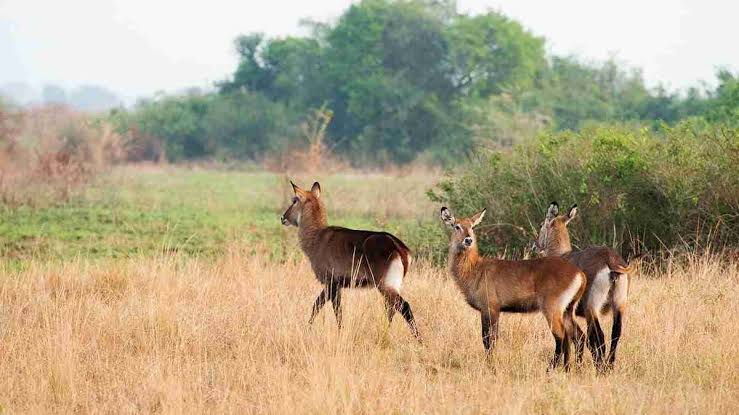
UWA records 76 mammal species and more than 450 bird species across Murchison’s savannah, riverine forest, wetland and Budongo fringe. Four of the Big Five — lion, leopard, elephant and buffalo — live on the open northern plains around the Buligi Peninsula, with healthy populations and genuinely good sightings on a well-timed drive. There are no wild rhino inside the park; track southern white rhino on foot at Ziwa Rhino Sanctuary en route from Kampala.
Murchison holds the world’s largest wild population of Nubian giraffe — long known as Rothschild’s giraffe — with numbers recovering from fewer than 200 in the 1970s to well over 1,500 today. The Nile corridor adds hippo pods, large Nile crocodiles and the prehistoric shoebill stork in the Albert Delta papyrus, particularly from January to March. Chimpanzees are tracked at Kaniyo Pabidi in Budongo Forest on the southern boundary — not mountain gorillas; those live in Bwindi and Mgahinga, several hours south-west. Our Buligi game drive guide and is it worth visiting page go deeper.
When Is the Best Time to Visit?
Murchison is open year-round, but wildlife viewing is easiest in the dry seasons from December to February and June to September. Grass is shorter, animals congregate at remaining water sources and murram roads stay firm. These months also draw the most visitors — book lodges and launch cruises ahead for June–September and the December holiday period.
The wet seasons of March to May and October to November bring lush scenery, excellent birding and lighter crowds, though some tracks become slick and afternoon showers can delay activities. Temperatures typically range from about 18°C at night to 32°C by day. For a month-by-month breakdown across Uganda, see our best time to visit Uganda for safari guide.
Is Murchison Falls Safe for Tourists?
Yes — Murchison is one of Uganda’s most established safari destinations, with UWA rangers at gates and on guided activities, a mature lodge network and well-travelled road corridors from Kampala via Masindi. Standard safari precautions apply: stay inside your vehicle on game drives unless at designated stops, keep distance from hippos and elephants, and never swim in the Nile — crocodiles and hippos make that genuinely dangerous.
The park sits far from Uganda’s border trouble spots that occasionally appear in travel advisories, and the Gulu–Pakwach corridor has been stable for tourism for many years. Self-drivers should carry a reliable 4×4, fuel up in Masindi, and respect park speed limits. Read our dedicated pages on safety for tourists and self-drive safety.
Do You Need a Guide or Can You Self-Drive?
Self-drive is permitted — UWA charges US$10 per vehicle for a self-guided game drive without a private or UWA ranger — but most visitors benefit from a UWA ranger guide (US$25) or an experienced driver-guide who knows Buligi’s loops and ferry timing. A ranger dramatically improves predator sightings and keeps you on permitted tracks. Organised safaris handle permits, lodge bookings and the Paraa ferry schedule; self-drivers must manage all of that themselves.
Boat cruises and chimpanzee treks always run with UWA or licensed operators — you cannot self-guide those. Compare approaches in our guided vs self-drive safari and visiting without a guide pages.
Frequently Asked Questions
- What is the entrance fee for Murchison Falls National Park?
-
US$45 per foreign non-resident adult per 24 hours under the current UWA tariff (valid to June 2026). Children aged 5–15 pay US$25. This fee covers park access only — boat cruises, game drives, chimp permits and vehicle entry are charged separately.
- How far is Murchison Falls from Kampala?
-
About 305 kilometres to Paraa — roughly four to five hours by road via Masindi and Kichumbanyobo Gate. From Entebbe International Airport, allow six to seven hours. Scheduled flights to Pakuba airstrip take about one hour.
- Can you see the Big Five at Murchison Falls?
-
Four inside the park: lion, leopard, elephant and buffalo. Complete the set with rhino tracking at Ziwa Rhino Sanctuary, roughly halfway between Kampala and the southern gates.
- Are there gorillas in Murchison Falls National Park?
-
No mountain gorillas. Murchison offers chimpanzee trekking in Budongo Forest at Kaniyo Pabidi (US$130 permit). Mountain gorilla trekking is in Bwindi Impenetrable and Mgahinga Gorilla National Parks in south-western Uganda.
- How long is the boat cruise to the falls?
-
The standard launch trip from Paraa Jetty upstream to the base of the falls takes about two to three hours return — roughly 17 kilometres each way — with shared departures typically at 09:00 and 14:00. You can disembark and hike 45 to 60 minutes to the clifftop viewpoint.
- Do I need malaria tablets for Murchison Falls?
-
Uganda is a malaria-endemic country and prophylaxis is recommended for most travellers. Consult your doctor before departure, use DEET-based repellent, wear long sleeves at dawn and dusk, and sleep under the mosquito nets provided at lodges. Risk persists year-round but is lower in the dry seasons.
- Is Murchison Falls worth visiting compared with other parks?
-
For most wildlife travellers, yes. The combination of a powerful waterfall, Nile boat safaris, four of the Big Five, the world’s largest wild Nubian giraffe population, delta shoebill and optional chimp trekking is difficult to replicate elsewhere in East Africa at comparable park fees. Queen Elizabeth offers more habitat variety; Bwindi is essential if gorillas are your priority.
- What should I not miss on a first visit?
-
A dawn game drive on the northern Buligi circuits, the launch cruise to the base of the falls with the top-of-the-falls hike, and — if you have a third day — either the Albert Delta shoebill cruise or chimpanzee tracking in Budongo. Factor the Paraa ferry into every morning if your lodge is on the southern bank.
Plan Your Safari
The questions above cover most of what travellers need before booking — but the right itinerary still depends on your arrival airport, budget and whether you drive or fly. We build Murchison Falls safaris daily and know which gate, lodge and ferry timing suits your dates.
Browse our Murchison Falls safari packages, read the planning guide and things to do page, or tell us your must-do list — we will recommend an itinerary that matches how this park actually works on the ground.