



Murchison Falls Knowledge Base
Planning a Murchison Falls safari means juggling distances, gate names, ferry times, permit tiers and wildlife seasons — details that rarely appear in a single brochure. This knowledge base gathers the verified facts we use on the ground: park size, species counts, current UWA fees, route timings and the logistics that shape a workable itinerary. Treat it as a reference shelf you can return to while building your trip.
Each section below links to deeper guides on this site. Numbers come from UWA, the Giraffe Conservation Foundation, Ramsar listings and our own operating experience — not generic travel copy. If you need a narrative walkthrough, start with our expert guide or the Murchison Falls index; use this page when you want the facts in one place.
Park Facts at a Glance
Murchison Falls National Park is Uganda’s largest and oldest national park — roughly 3,840 to 3,893 square kilometres, depending on boundary surveys — gazetted as a game reserve in 1926 and upgraded to national park status in 1952. Together with the adjoining Bugungu and Karuma Wildlife Reserves, it forms the Murchison Falls Conservation Area, totalling about 5,072 square kilometres at the northern end of the Albertine Rift.
The Victoria Nile runs west for roughly 80 to 115 kilometres through the park before squeezing through a gorge about six to seven metres wide and dropping 43 to 45 metres into the Devil’s Cauldron. Samuel and Florence Baker mapped the falls in the 1860s; the Albert Delta where the Nile meets Lake Albert is a Ramsar wetland designated in 2006. UWA records 144 mammal species, more than 450 to 556 bird species, 51 reptiles and 51 amphibians across the park’s varied habitats.
Nearest town: Masindi, roughly 30 miles north of the southern gates. Districts touched include Masindi, Buliisa, Nwoya and Kiryandongo. Read our about Murchison Falls National Park and Greater Murchison Conservation Area pages for history and boundary detail.
Wildlife and Conservation Data
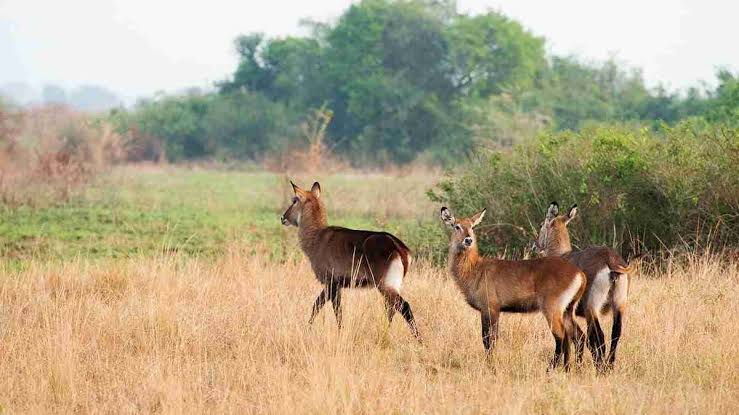
Four of the Big Five — lion, leopard, elephant and buffalo — are present on the northern savannah. White rhino are not wild inside the park; track them at Ziwa Rhino Sanctuary on the Kampala–Masindi road. Murchison has been a Lion Conservation Unit since 2005. Aerial surveys recorded more than 900 elephants; buffalo exceed 10,000 and Uganda kob around 35,000 — numbers that explain why game drives here feel busy compared with smaller parks.
The headline conservation story is the Nubian giraffe (formerly Rothschild’s giraffe), now recognised as a distinct subspecies and listed as critically endangered. After lows near 250 individuals in 2010, GCF monitoring recorded roughly 1,770 unique giraffe across three survey rounds in April and December 2024 and April 2025 — the world’s largest wild population, with the northern sector holding the vast majority. In 2016–17, 37 giraffe were translocated across the Nile in Operation Twiga to re-establish a southern-bank population. Ongoing threats include wire snares (concentrated near the western delta) and giraffe skin disease, monitored jointly by GCF and UWA.
Below the falls, hippo pods and Nile crocodiles line the banks in large numbers. The Albert Delta is among Africa’s most reliable shoebill stork habitats — best from roughly January to March on a dedicated delta cruise. Chimpanzees live in Budongo Forest at Kaniyo Pabidi; mountain gorillas remain in Bwindi and Mgahinga, a separate circuit. See our ecosystem guide, giraffe guide and birding guide.
Gates, Routes and the Nile Crossing
Five main gates serve different approaches. From Kampala or Entebbe, Paraa is about 305 kilometres — typically four to five hours from Kampala, six to seven from the airport. The standard southern route enters at Kichumbanyobo Gate, roughly 16 kilometres north of Masindi, then runs about 85 to 87 kilometres through Budongo Forest to the Nile. The scenic Bugungu Gate descends the rift escarpment above Lake Albert; Mubako Gate serves the western corridor. Northern gates at Tangi, Wankwar and Chobe suit routes from Gulu, Pakwach or Kidepo and drop you straight into the game zone without a ferry if your lodge sits on the north bank.
At Paraa — Luo for “home of the hippo” — the Nile bisects the park. The northern bank holds open savannah and the Buligi game-track network; the southern bank is woodier, with Rabongo Forest and Budongo access. The UWA vehicle ferry typically runs at 07:00, 09:00, 11:00, 12:00, 14:00, 16:00, 18:00 and 19:00 daily — no separate crossing fee beyond park entry, though schedules can shift for maintenance. Treat the 07:00 sailing as fixed if your Buligi drives start from a southern-bank lodge. Light aircraft from Entebbe reach Pakuba (about 19 kilometres from Paraa), Bugungu (about 13 kilometres) or Chobe in roughly one hour.
Route detail: Kampala to Murchison, Entebbe to Murchison, Kichumbanyobo Gate, fly-in vs road safari.
Fees, Permits and Payments
Under the UWA Conservation Tariff valid through June 2026, Murchison sits in Category A+ — the highest park tier. Foreign non-resident adults pay US$45 per 24 hours; children aged 5–15 pay US$25; under-fives enter free. Foreign residents pay US$35; East African citizens pay UGX 25,000. A day’s ticket runs from time of entry, not calendar midnight. Activity fees are separate.
Key activity tariffs for foreign non-residents: launch cruise to the base of the falls US$30; Top of the Falls guided walk US$15; chimpanzee tracking at Budongo US$130; UWA ranger guide on game drives around US$25 per day; night drives where available around US$40 per person. Vehicle entry fees apply separately — tour-company 4x4s around US$150 per 24 hours. Payments at major gates are cashless via card or mobile money; keep your receipt. Full tables: cost of visiting Murchison Falls and boat cruise fees.
Activities Reference
Buligi game drives — roughly 170 kilometres of murram tracks on the peninsula between the Victoria and Albert Niles. Dawn loops clockwise from Queen’s and Victoria tracks back along the Albert margin routinely deliver lion, elephant, buffalo and giraffe groups of ten or more. Hire a UWA ranger; the radio network makes a measurable difference.
Launch cruise to the falls — two to three hours return from Paraa Jetty, roughly 17 kilometres upstream. Shared UWA departures typically around 09:00 and 14:00. Many visitors disembark below the falls and hike 45 to 60 minutes to the clifftop viewpoint. Albert Delta cruise downstream targets shoebill and waterbirds — book as its own morning, not after Buligi. Kaniyo Pabidi chimp trek adds a Budongo rainforest half-day with limited daily slots.
Compare priorities in our complete activities guide, Buligi game drive guide, morning vs afternoon drives and Kaniyo Pabidi chimp trekking.
Seasons, Duration and Lodge Strategy
Dry windows from December to February and June to September concentrate game at remaining water, firm up tracks and fill lodges first — book three to six months ahead for peak dates. Wet seasons from March to May and October to November bring lush scenery, breeding birds and lighter vehicle pressure, though western Buligi tracks can turn slick.
The core triangle — one northern game drive, one launch cruise, one Top of the Falls visit — needs two full days inside the park. Three days with two nights at Paraa suits most first-timers; four opens the delta shoebill cruise, Budongo chimps or a second dawn drive. Lodge location is a logistics decision: northern-bank bases at Pakuba or Chobe put you on Buligi tracks at first light; southern-bank lodges suit river frontage and chimp access but require an early ferry for north-bank drives. See how many days you need, lodges guide and first-time visitors guide.
Frequently Asked Questions
- What is the difference between this knowledge base and your other guides?
-
This page organises verified facts — sizes, fees, timings, species data — in one reference. Our expert guide and themed pages go deeper on strategy, routes and experience. Use both: facts here, narrative there.
- How many Nubian giraffe are in Murchison Falls?
-
GCF surveys in 2024–2025 recorded roughly 1,770 unique individuals across three monitoring rounds, with the northern sector holding the majority. Uganda holds about half of all wild Nubian giraffe on the continent.
- Which gate should I use?
-
Kichumbanyobo from Masindi is the standard southern approach — 16 kilometres north of town, then 85 kilometres to Paraa. Choose Tangi, Wankwar or Chobe for northern-bank lodges without a ferry. Bugungu suits scenic arrivals from the rift escarpment.
- Is the Paraa ferry included in park entry?
-
Yes — the vehicle ferry crossing is covered by your park entrance fee under current UWA practice, with no separate charge unless UWA announces a change. Schedules still matter: missing the 07:00 sailing typically costs the best predator and giraffe hours on Buligi.
- When is the best month for shoebill in the delta?
-
January to March is the most reliable window on a dedicated Albert Delta morning cruise — separate from the upstream launch to the falls. Allow a full morning; shoebill searches cannot be rushed into a Buligi afternoon.
Plan Your Safari
This knowledge base is the factual backbone — distances, fees, ferry times and species context — that turns a wish list into a workable itinerary. Browse our Murchison Falls safaris, read how to plan a Murchison Falls safari, or tell us your dates and we will map gates, lodge side, ranger bookings and daily timings so your days follow the wildlife rather than fight the schedule.